









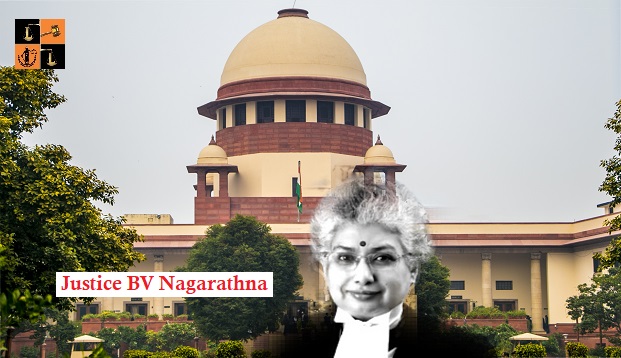
In a powerful address that drew attention to one of India’s most enduring social challenges, Justice B.V. Nagarathna of the Supreme Court of India expressed grave concern over the deteriorating sex ratios in certain states, linking the trend to the continuing menace of female foeticide and infanticide. Speaking at the National Stakeholders’ Consultation on “Safeguarding the Girl Child: Towards a Safer and Enabling Environment for Her in India”, organised by the Supreme Court’s Juvenile Justice Committee (JJC) in collaboration with UNICEF India, she emphasised that equality for the girl child must extend beyond survival to genuine opportunity and empowerment.
“Put differently, the odds of her being born at all, having access to the right nutrition, care, education and material resources, a secure and safe environment, developing a distinct sense of self and being able to achieve whatever she sets her mind to have to be equivalent to that of a boy child born in this country. She should not merely survive but actively thrive,” she stated.
Justice Nagarathna, who chairs the Supreme Court’s Juvenile Justice Committee, drew attention to the child sex ratio (0–6 years), which, according to the National Family Health Survey-5, has improved only marginally from 914 girls per 1,000 boys in the 2011 Census to 929 girls per 1,000 boys. She warned that “there are also recent concerning reports of worsening sex ratios caused by likely female infanticide/foeticide in certain states,” reflecting persistent societal biases and gender-based discrimination.
Highlighting the nutritional inequities faced by young girls, Justice Nagarathna observed that “it is often the case that girl children are deliberately fed lesser or lower quality food than their brothers.” While recognising the progress of welfare schemes such as the Midday Meal Scheme, Anaemia Mukt Bharat, and POSHAN Abhiyan, she cautioned that “the cascading and deleterious effects of early years’ malnutrition on the girl child’s ability to be physically active, think and problem-solve be sufficiently publicised.”
On the issue of child marriage, Justice Nagarathna referred to a steady decline in its prevalence over the past fifteen years, attributing the progress to legislative measures such as the Prohibition of Child Marriage Act, 2006 and India’s adherence to its international obligations under the UN Convention on the Rights of the Child. However, she urged the adoption of “holistic solutions that are adequately tailored to regional peculiarities, to ensure that interventions undertaken are most effective.”
Addressing the sphere of education, Justice Nagarathna noted that while school attendance among girls aged 15–17 has improved significantly, post-secondary dropout rates remain high. “The girl child may be expected to sacrifice her education in its entirety or study a course that she is not very interested in so as to ensure that her brother is able to pursue his dreams. It is crucial that such virulent factors are adequately addressed,” she observed, adding that education “must be free of stereotypes, of bias and ideology and must be able to mould the individual who undergoes it to become an upstanding member of society.”
Justice Nagarathna also drew attention to the low conviction rates in human trafficking cases, noting that “between 2018 and 2022, only about 4.8 per cent of individuals arrested for human trafficking were convicted during this period, despite the large number of charge sheets filed.” She emphasised the need to expand trauma-informed and child-sensitive procedures across courts and police stations to ensure justice delivery systems are responsive to the unique vulnerabilities of children.
The consultation was attended by Chief Justice of India B.R. Gavai, Justice J.B. Pardiwala, and Union Minister for Women and Child Development Annapurna Devi, along with senior judges, government officials, and experts in child rights.
Disclaimer: This news/ article includes information received via a syndicated news feed. The original rights remain with the respective publisher.
Picture Source :




















