









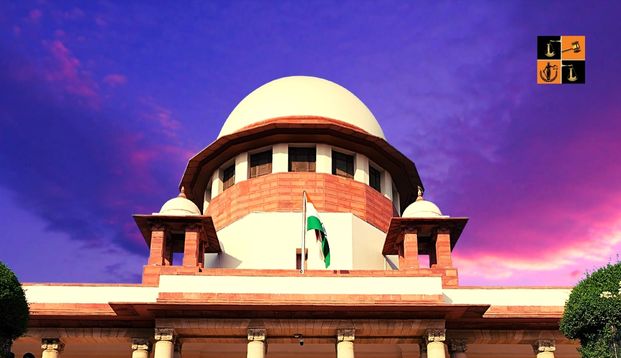
The Supreme Court stepped in to examine delays in setting up exclusive Special Courts to try offences under Central Penal Laws, raising concerns that jurisdictional confusion, particularly across NCR states, is allowing organised and hardcore criminals to exploit systemic gaps, with serious consequences for society and national interest.
The controversy unfolded during the Court’s continuing monitoring of petitions seeking dedicated Special Courts for speedy trials under Central laws. As the matter came up for hearing, Additional Solicitors General Aishwarya Bhati and S.D. Sanjay placed documents and brief notes before the bench outlining the progress made so far by the Union Government.
The submissions focused on infrastructure readiness, recurring expenditure, and timelines for operationalising such courts, while stakeholders, including the High Court of Delhi, sought time to place affidavits on record. Alongside institutional reforms, the Court was also seized of pending bail prayers linked to the underlying cases.
Taking a forward-looking yet cautionary approach, the Court expressed optimism over the Centre’s stated commitment but underlined the urgency of execution. The bench recorded that it was “hopeful that with the commitment shown by the Union of India, for providing infrastructural and the recurring expenditure, necessary steps for the establishment of the Special Courts shall be taken,” directing all stakeholders to complete the required formalities within four weeks. Notably, the Court delivered a sharp warning on how procedural and territorial ambiguities are being misused, observing that in serious Central offences involving organised criminals, “the eventual benefit goes to the unscrupulous criminals, which may not be in the interest of society or the nation.”
Flagging cases where offences span multiple states but jurisdiction remains disputed, the Court remarked that the issue “requires consideration… including the desirability of the formulation of an effective law for optimum utilization of the existing legal architecture.” Consequently, the Court posted the matter on 10 February 2026 to review progress on the creation of Special Courts, fixed 6 January 2026 for hearing bail pleas, granted three weeks to the Delhi High Court to file its affidavit, and noted that in Delhi alone, 16 identified courts are expected to be established within three months.
Case Title: Mahesh Khatri @ Bholi vs. State Nct of Delhi
Case No.: Special Leave to Appeal (Crl.) No(s).1422/2025
Coram: Chief Justice Surya Kant, Justice Joymalya Bagchi
Advocate for Petitioner: Adv. Trideep Pais (Sr. Adv.), Sanya Kumar, Saloni Ambastha, Harsh Jain, Sakshi Jain, Ankita Gupta (AOR), Ishan Kapoor, Joshini Tuli, Joginder Tuli, Gargi Khanna (AOR), Kartik Murukuthla, Farrukh Rasheed (AOR), Shifa, Abu Bakr Sabbaq
Advocate for Respondent: Advs. Aniruddha Deshmukh, Siddharth Dharmadhikari, Aaditya Aniruddha Pande (AOR), Shrirang B. Varma, S.D. Sanjay, Additional Solicitor General; Swati Ghildiyal, AOR; Nimesh Bhatt, Aishwarya Bhati, Additional Solicitor General; Ruchi Kholi, Bhuvan Kapoor, Raman Yadav, Chitrangda Rashtravara, Gyanendra Singh, Digvijay Dam, Anmol Chandan, Rohit Khare, Manisha Chava, Shagun Thakur, Advocate; Annirudha Singh, Arvind Kumar Sharma, AOR. G. Siddi Ramulu, Satya Darshi Sanjay, Additional Solicitor General; Piyush Beriwal, Raman Yadav, Sunanda Shukla, Jagdish Chandra, Santosh Ramdurg, Indira Bhakar, Khushal Kolwar, Shubh Sharma, Shubham Prakash Mishra, Parthvi Ahuja, Mukesh Kumar Maroria (AOR) Shreekant Neelappa Terdal, AOR; Sudhir Bisla, Jayant Mohan, AOR; Sumitra Bisla, Meenakshi Chatterjee, Adya Shree Dutta, Dorjee Ongmu Lachungpa, Ankit Agrawal, Kanhaiya Singhal, Rishabh Bhardwaj, Prasanna, Vani Singhal
Read Order @Latestlaws.com
Picture Source :




















