









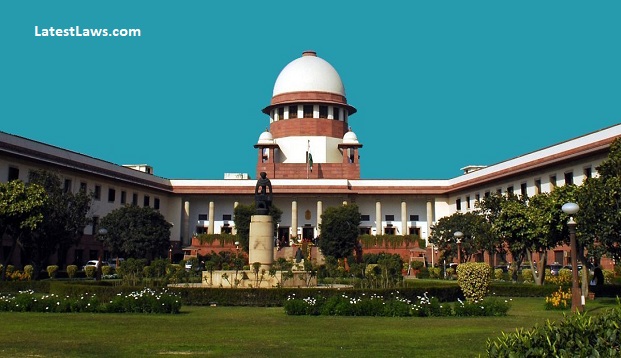
In the latest of a series of pro-free speech & media freedom orders, the Apex Court on Thursday ruled no journalist could be arrested on sedition charges merely for harshly criticising the government or the establishment if the scribe didn't incite violence against the Govt or hatred between communities.
Quashing a year-old sedition FIR registered by Himachal police against journalist Vinod Dua for his social media video criticising the government & hitting out at PM Modi for the miseries of migrant labourers in the wake of last year’s lockdown, Justices U U Lalit and Vineet Saran said going by the allegations in the FIR & after perusing the content of Dua’s video, ingredients of the offences of sedition or defamation were not made out. The SC also warded off the threat of invoking the Disaster Management Act against Dua.
SC: Dua’s views don’t constitute any offence
The Supreme Court said the views expressed by Vinod Dua did not constitute any offence under the Disaster Management Act or any provision of the Indian Penal Code. But the Court refused to equate journalists with doctors in whose favour the Top Court had ruled that a medical practitioner facing charge of negligence should not be arrested without a preliminary inquiry.
The Court rejected Dua’s plea, made by senior advocate Vikas Singh, for a direction to the Centre & states to set up a committee to examine the charges levelled in an FIR against any journalist with ten years’ experience. Dua had pleaded a journalist should be arrested only when the committee was satisfied that the charges required arrest.
Writing the 117-page judgment, Justice Lalit extensively referred to the 60-year-old, 5-Judge constitution bench judgment in Kedar Nath Singh case, in which the apex court had laid down the definition of what constituted the offence of sedition & had ruled that a citizen’s right to criticism, however harsh, could never be a ground to prompt police to lodge an FIR under Section 124A of IPC (sedition).
The Bench said, “The principles culled out from the decision in Kedar Nath Singh show a citizen has a right to criticise or comment upon the measures undertaken by the government & its functionaries, so long as he does not incite people to violence against the government established by law or with the intention of creating public disorder; & that it is only when the words or expressions have pernicious tendency or intention of creating public disorder or disturbance of law & order that Sections 124A & 505 of the IPC must step in".
It added that “Every journalist will be entitled to protection in terms of Kedar Nath Singh, as every prosecution under Sections 124A & 505 of the IPC must be in strict conformity with the scope & ambit of said sections as explained in, & completely in tune with, the law laid down in Kedar Nath Singh".
Source Link
Picture Source :




















