









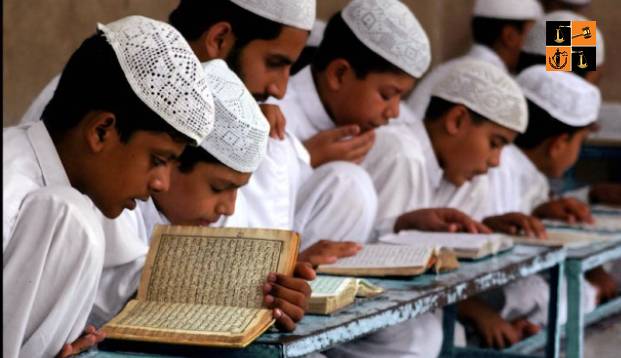
Recently, the Supreme Court upheld the constitutional validity of the Uttar Pradesh Board of Madarsa Education Act, 2004, reversing a previous judgement by the Allahabad High Court that had declared it unconstitutional. The Supreme Court determined that the High Court had erred by asserting that the Act violated the basic structure principle of secularism, clarifying that a statute can only be invalidated if it infringes fundamental rights or legislative competence. The Court emphasized that challenges to a statute on the grounds of secularism must demonstrate a direct violation of constitutional provisions regarding secularism.
The case originated from challenges to the Uttar Pradesh Board of Madarsa Education Act, 2004, brought before the Supreme Court after the Allahabad High Court's ruling. The High Court had declared the Act unconstitutional, asserting that it compromised the principle of secularism enshrined in the Constitution. The Supreme Court examined the Act's provisions, finding that while it appropriately regulated the standards of education in recognized Madarsas, it conflicted with the University Grants Commission (UGC) Act concerning the 'fazil' and 'Kamil' degrees, rendering that aspect of the Act unconstitutional.
The Supreme Court’s bench which included Chief Justice D.Y. Chandrachud, Justice J.B. Pardiwala and Justice Manoj Misra, emphasized that the Madras Act serves the state’s obligation to ensure educational competency among students, allowing them to integrate into society and pursue livelihoods. The Court articulated that Article 21A and the Right to Education Act should align with the rights of religious and linguistic minorities to establish educational institutions.
The Supreme Court concluded that the Madarsa Act is consistent with the educational rights of minority communities and does not violate Article 21A. It noted that the Act’s provisions align with the state's legislative competence, as outlined in Entry 25 of List III of the Constitution. Furthermore, the Court highlighted that while Madarsas may provide religious education, their primary function is education.
The Court addressed the High Court’s misinterpretation of the Madarsa Act, asserting that it was wrong to view it solely as a mechanism for religious instruction. The petitioners argued that the Act is designed to regulate education for Muslim children, ensuring they receive quality instruction. Conversely, intervenors, including the National Commission for Protection of Children’s Rights (NCPCR), contended that Madarsa education undermines the promise of quality education guaranteed by Article 21A. While the Supreme Court upheld the High Court's judgment earlier this year, it ultimately ruled that the Madarsa Act's objectives are legitimate and beneficial to the community. The Court underscored that religious instruction may occur in recognized educational institutions but emphasized that participation in such instruction should not be mandatory.
The petitions in the Supreme Court were brought forth by various associations representing Madarsa management and teachers, highlighting the necessity of understanding the Act’s true purpose in providing a structured educational framework for Muslim children.
Case Title: Anjum Kadari & Anr v. Union of India & Ors.
Citation: Special Leave Petition (C) No.8541 of 2024
Coram: Chief Justice D.Y. Chandrachud, Justice J.B. Pardiwala and Justice Manoj Misra
Picture Source :



















