









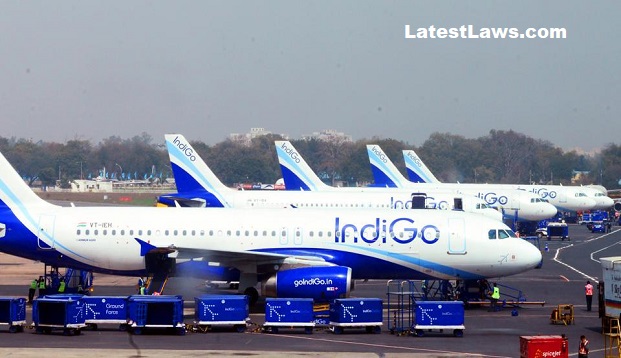
On Tuesday, Rahul Bhatia, a Co-Promoter of IndiGo Airlines, submitted a request for Arbitration in the London Court of International Arbitration late against Rakesh Gangwal, the second co-promoter of the airline.
The information on what is being sought couldn't be obtained as Bhatia responded to a WhatsApp message with, “I cannot comment”.
“I think, it suggests that the two promoters aren’t able to resolve the issues among themselves, and thus, they have gone for arbitration. This indicates that the issues are deep and difficult to resolve. Arbitration can help in independent settlement unless the relationship worsens, which can then become a dispute,” Tarun Bhatia, Managing Director and Head, South Asia at Kroll.
As per the reports, the feud between the two Promoters broke out earlier this year and is unlikely to lead to a truce, and that a fragile situation continues to exist.
Gangwal has accused Bhatia of not following Corporate Governance in the Company and also accused him of entering into related-party transactions.
Gangwal has also raised the issue of women directors on the board and increasing the size of the board to 10 from the current six. All these issues were addressed at the airline’s Annual General Meeting earlier this year, with the number of women directors being increased and the board size also being increased to 10.
The airline recently announced that Pallavi Shroff, Managing Partner, Shardul Amarchand Mangaldas and Company, with over 37 years of extensive experience, would be part of the Indigo board. She is head of the dispute resolution practice at the law firm with extensive knowledge in matters of litigation and arbitration.
Arbitration Court
Commenting on Bhatia’s decision to approach an Arbitration Court in London in his dispute with IndiGo’s other co-promoter Gangwal, Simranjeet Singh, Partner, Athena Legal pointed out that arbitration depends on the dispute resolution clause in the agreement. "It seems that the said dispute resolution clause proposes institutional arbitration under the London Court of International Arbitration (LCIA) rules thus the parties have approached the said forum,” he told.
When queried on the timeline when a resolution can be expected between the two IndiGo co-promoters, Singh said that as per data provided by LCIA, the median duration was 16 months for the arbitrations instituted between 2013 to 2016.
"However one must remember that every case would have a complex set of issues so a proper timeline cannot be given. In any case, if the parties so decide the process under LCIA can be fast-tracked by the appointment of the emergency arbitrator or getting arbitrators appointed in an expedient manner and further requiring the arbitrators to set a faster timetable,” he added.
Asked to comment on what Bhatia going to LCIA shows, Singh said that there is a fundamental dispute that has arisen between the parties that could not be resolved through the internal processes in relation to compliance with the shareholders agreement and the articles of association of the Company between the Inter Globe Enterprise group and the Rakesh Gangwal group.
"This is clear from the Disclosure made by the company on Tuesday to the NSE and BSE in terms of the Disclosure under Regulation 30(3) of SEBI (Listing Obligations arid Disclosure Requirements) Regulations 2015 (‘Listing Regulations’),” he added.
V. Srinivasa Raghavan, Senior Counsel, Senior Counsel and Co-Founder IndusLaw felt that the decision to go in for arbitrations indicates that they want to keep it confidential and not to affect the company which will not have been the case had they tried courts or tribunals. Going for arbitration also means that it will be restricted to contractual violations and issues of oppression would not be gone into.
Source Link
Picture Source :




















