









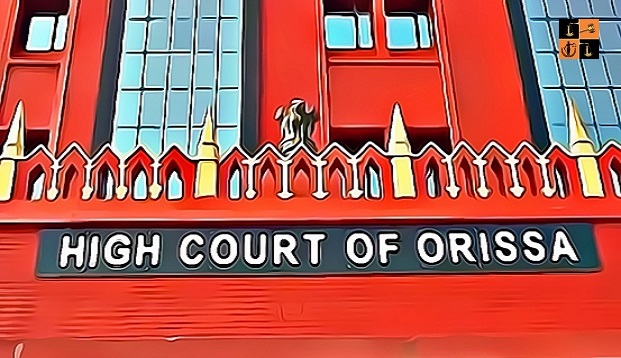
The Orissa High Court examined a series of petitions challenging teacher transfer orders issued on the basis of recommendations from MPs and MLAs, observing that statutory transfer rules must prevail over political influence to safeguard academic integrity.
The petitioners, a set of government school teachers, challenged the transfer orders issued to them, claiming that the transfers violated statutory guidelines and were influenced by political recommendations from MPs and MLAs. Some transfers were said to be recorded as “mutual requests” even though no such requests were made, and transfer allowances were denied in certain cases. The petitioners contended that these irregularities disrupted their professional stability and were administratively unjustified. They also sought directions to restore them to their original postings until the end of the academic year.
The petitioners argued that the transfers were contrary to statutory guidelines, issued without proper authority, and tainted by political influence. They contended that the impugned letter enabling MPs and MLAs to recommend transfers lacked legal basis and led to extraneous considerations dominating the decision-making process. The respondents, represented by Addl. Government Advocates, countered that all civil servants are subject to transfers, that departmental appeals exist for redress, and that the MPs/MLAs recommendations were only inputs to the Transfer Committee, which retained ultimate discretion. They also argued that the Guidelines were directory in nature and did not confer a choate cause of action.
The Court observed that the statutory transfer guidelines issued under the relevant education laws carry binding force and are not merely executive instructions. It emphasized, "Where a power is given to do a certain thing in a certain way, the thing must be done in that way or not at all and other methods of performance are necessarily forbidden."
The Court noted that teachers hold a unique position as educators shaping future generations, and political interference or extraneous considerations in transfers could compromise academic freedom and institutional integrity. The court also highlighted the dangers of the impugned letter, stating that the recommendations of MPs/MLAs were “virtually treated as commands” in several instances, creating undue influence over the Transfer Committee. Furthermore, the Court underscored that alternate departmental remedies could not bar the Writ Court from examining transfers issued without jurisdiction, "An order without jurisdiction can be examined by the Writ Court even when alternate remedy is available. The doctrine of alternate remedy cannot be treated as Great Wall of China to prevent worthy litigants from accessing justice."
The Court ultimately allowed the petitions, quashing the impugned letter which enabled MPs and MLAs to recommend transfers, along with the transfer orders issued pursuant to it. The Court directed that the petitioners be permitted to continue at their original postings until the end of the academic session so that the educational environment of students remains undisturbed.
It further directed that all pending departmental appeals be disposed of within four weeks in adherence to statutory transfer guidelines.The Court clarified that the ruling does not restrain the State from issuing fresh transfer orders in future, provided such transfers strictly comply with the statutory procedure, free from extraneous considerations or influence.
Case Title: Ranjan Kumar Tripathy & Ors. v. State of Odisha & Ors.
Case No.: W.P.(C) No. 20875 of 2025
Coram: Justice Dixit Krishna Shripad
Advocate for Petitioner: Adv. M/s. Kunal Ku. Swain, K. Swain, J.R. Khuntia, Sukanta Ku. Dalai, P. Swain, S. Mahapatra, B. Bhuyan, J. Bhuyan, S.K. Panda, Durgesh Narayan Rath, A.K. Saa, S. Das, Ramdas Achary, S. Das, S. Srichandan, P. Agarwal, Biswabihari Mohanty, Mohit Ku. Pati, M. Pati, S. Kar, S.S. Pati, Dr. Purusottam Chuli, P. Nath, P. Punyatoya, Sameer Ku. Das, P.K. Behera, N. Jena, Agasti Kanungo, C. Nayak, N.K. Mishra & S. Sukla
Advocate for Respondent: Advs. Saroj Ku. Jee, (Additional Govt. Advocate), M/s. R.R. Ray, N.K. Sen, P.K. Samal, S.R. Mishra, K.K. Rout, S.K. Rout, S.K. Baral, P.N. Pattnaik, T.S. Swaraj, S. Sthitaprajna, S. Sahoo & S.K. Bhuyan
Read Judgment @Latestlaws.com
Picture Source :



















