









The Allahabad High Court while allowing an application filed under section 482 has held that in order to prosecute a person under Section 306 IPC for abetment to suicide, it is necessary to see whether the actions taken by the accused have abusive elements for suicide.
“On the basis of the facts, as discussed above and the law as referred to hereinabove, although the death of the daughter of the Opposite Party No. 2 was an unfortunate event, the material on record fall hopelessly short of any positive act as defined under Section 107 of the IPC which can even have the semblance of instigation or any conspiracy on the part of the applicants or any intentional aid for the commission of the act of suicide by the 28 of 29 daughter of the Opposite Party No. 2 so as to frame charge under Section 306 IPC.
Consequently, the application is allowed and the charge sheet dated 7.5.2010 as well as proceedings of Case No. 1687 of 2010 (State v. Vikashh and others) arising out of Case Crime No. 76 of 2010, under Section 306 IPC, Police Station Partarpur, District Meerut pending before Special CJM, Meerut is quashed.”
The above order has been passed by the Single Bench of Justice Pankaj Bhatia while dealing with an application filed by Anand Singh and others to quash the charge sheet as well as the proceedings of Case registered against them, namely, State v. Vikashh and others arising out of case registered under Section 306 IPC in Police Station Partarpur, District Meerut pending before Special CJM, Meerut.
Background of the case
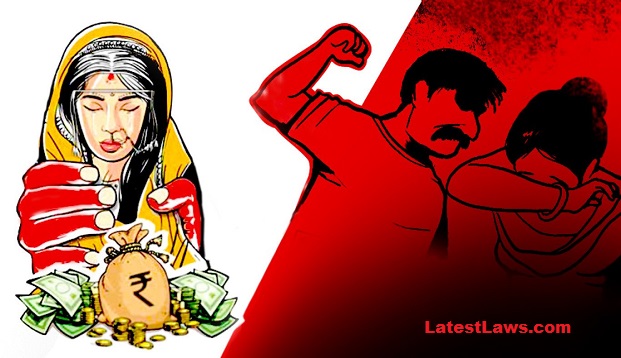
In the FIR, it was alleged that the marriage ceremony of the daughter of the informant, Anu was fixed with the Applicant No. 2 and the marriage was scheduled to be held on February 16, 2010. It was further alleged that on various occasions, the applicants had demanded dowry. Applicant no. 2 is accused of putting pressure on the victim Anu and her family for marriage. It is alleged that the petitioners were demanding a heavy amount as dowry, due to which Anu set herself on fire 15 days before the wedding. She later died in Safdarjung Hospital, Delhi.
The Counsel for the Opposite Party No. 2 had defended the charge sheet and mainly argues that from the perusal of the statements on record, it is clear that the deceased committed suicide on account of persistent demand of dowry and on account of the such persistent demand, she had no other option but to commit suicide and thus, prays that the application is liable to be dismissed.
The counsel for the applicants after placing reliance on various judgments has argued that for
driving home a charge of abatement of suicide punishable under Section 306 IPC, it is essential that the abetment, as described under Section 107 of the IPC, should exist, failing which the charge sheet under Section 306 IPC is liable to be quashed.
It has further submitted that on the basis of the statements so recorded in the charge sheet as well as in the FIR, the allegations are with regard persistent demand of dowry and nothing more or anything else and in the absence of any positive act, which led or compelled the person to commit 8 of 29 the suicide, summoning/trial under Section 306 IPC is not possible.
“However, the materials on record, prima facie, disclose an offence committed by the applicants under Section 4 of Dowry Prohibition Act and read with Section 7 (1) (b) of the Dowry Prohibition Act, the Magistrate ought to have taken cognizance under Section 4 of the Dowry Prohibition Act.”
Observing the above stated, the court has directed the opposite party that,
“It is directed that the applicants shall be tried for offences under Section 4 of the DowryProhibition Act. The applicants shall appear before the concerned Court within one month from today for trial in accordance with law.”
Case details
Case :- APPLICATION U/S 482 No. - 19450 of 2010
Applicant :- Anand Singh And Others
Opposite Party :- State of U.P. and Others
Counsel for Applicant :- O.P.Rai, A.N.Singh
Counsel for Opposite Party :- Govt.Advocate, Vivek Kumar Singh
Bench: Justice Pankaj Bhatia
Read Order@LatestLaws.com
Share this Document :Picture Source :




















