









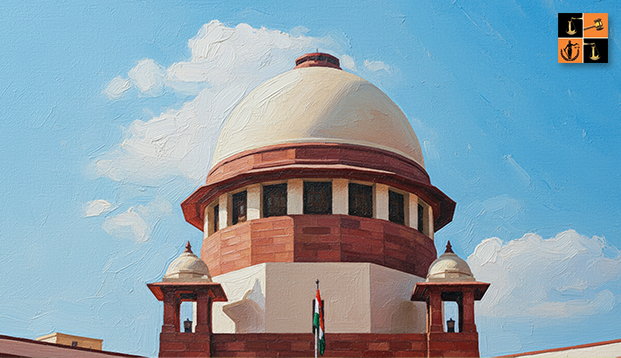
The Supreme Court held that the dismissal of a civil suit does not prevent an appellate court from granting interim relief during the pendency of an appeal. The Court observed that an appellate court retains full authority to preserve the subject matter of the litigation and may grant status quo if a strong prima facie case is made out. This ruling came in a matter where both the appellate court and the Gujarat High Court had refused interim protection in a Regular First Appeal arising from a challenge to a consent decree alleged to be tainted by fraud.
The appellants had instituted two civil suits questioning two consent decrees on allegations of fraud. One suit was allowed and the consent decree challenged therein was set aside, while the other suit was dismissed. Aggrieved by the dismissal, the appellants filed a Regular Civil Appeal before the District Judge and sought an interim order directing that the parties maintain status quo over the suit property. The appellate court rejected the request on the premise that no interim relief could be granted once the suit had already been dismissed. The High Court affirmed this reasoning, leading the appellants to approach the Supreme Court.
The appellants submitted that an appeal is a continuation of the original suit, and therefore the appellate court has full power to extend appropriate interim protection to prevent irreparable prejudice. They urged that the refusal of the lower courts was based on an incorrect understanding of law, as the dismissal of the suit does not extinguish the appellate court’s jurisdiction to safeguard the property in dispute. Despite having been served, the respondents chose not to appear before the Top Court.
The Apex Court disapproved the reasoning adopted by the lower courts and found their conclusion “prima facie unusual.” The Court held that the dismissal of the suit does not bar the appellate court from granting interim relief, and that the appellate court is empowered to reassess the matter independently. The Court stated that an appellate court may re-examine questions of fact and law, re-appreciate evidence, and determine whether interim protection is necessary to prevent the appeal from becoming infructuous.
It noted that reliance placed by the appellate court on Order XLI Rule 5 CPC was misplaced, as that provision applies only when a stay of execution of a decree is sought, which was not the situation in the present case.
The Court reiterated that interim relief exists to preserve the subject matter and prevent irreparable harm while proceedings remain pending. It emphasised that such relief must be considered on established parameters, including a prima facie case, irreparable injury, and balance of convenience, and cannot be denied merely because the suit stood dismissed. The Court stressed that an appeal is a continuation of the suit, and the appellate court must independently assess whether the circumstances justify interim protection.
The Court set aside both the High Court’s order and the District Court’s order refusing status quo. It remitted the matter to the District Court for a fresh hearing of the appellants’ Exhibit-5 application in the Regular Civil Appeal. The District Court has been directed to hear the matter on merits and dispose of it within two months. Until then, the interim protection earlier granted by the Apex Court will continue to operate. The parties were directed to appear before the District Court on the scheduled date, and the appeal was accordingly disposed of.
Case Title: Mohammadhanif Mohammadibrahim Patel & Ors. vs. Pallaviben Rajendra Kumar Patel & Ors.
Case No.: Special Leave Petition (C) No. 27549/2025
Coram: Justice J.B. Pardiwala, Justice K.V. Viswanathan
Picture Source :



















