









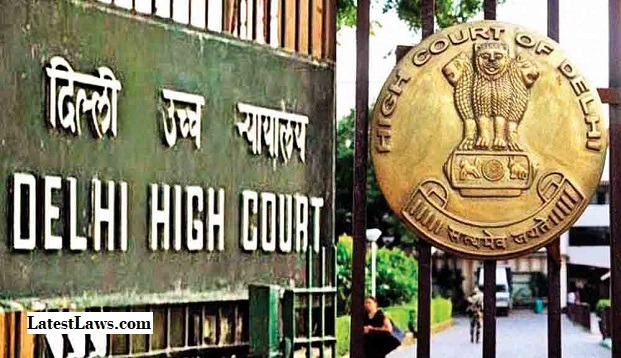
The Delhi High Court recently comprising of a bench of Justice Subramonium Prasad while denying bail to a Nepal citizen accused of dealing in narcotics substances observed that consequences of drug abuse menace can be experienced across the board from causing economic issues to social disintegration. (MADAN LAMA v. NARCOTICS CONTROL BUREAU)
The Court said, "The harmful effects of drugs on an individual and on the society have been researched extensively and are well known. The menace of drug abuse is also on the rise in the country and the consequences of the same can be experienced across the board from causing economic issues to societal disintegration."
Facts of the case
A secret information was received on December 18, 2020 that one Nepali national might be carrying some narcotic drugs for the purpose of delivery to his client. A team reached the place and apprehended the petitioner accused.
During preliminary inquiry, the petitioner accepted that he was carrying charas in his bag and that he used to sell the same to his clients.
A case was therefore registered at Narcotics Control Bureau for offences under Sections 8, 20(b) and 29 of Narcotic Drugs and Psychotropic Substances Act, 1985.
The petitioner was in custody since December 19 last year and his bail application was rejected by Special Judge, NDPS, Patiala House Courts in March this year. In view of this, an application seeking regular bail was filed by him in the High Court.
Contention of the Parties
It was stated by learned counsel for the petitioner that the one packet recovered from the petitioner therein was not separately weighed or sampled and all the samples were sent together for chemical analysis. It was further stated that the samples were drawn after 50 days of the alleged recovery which is in violation of NCB Standing Order 1/88. He further stated that the case of Haresh Rawal and the petitioner stood on the same footing and that even Haresh Rawal is guilty of possessing 47 packets and both are guilty of possessing 475 grams of charas. He contends that now the learned SPP for NCB cannot distinguish between the petitioner and Haresh Rawal and therefore the petitioner ought to be granted bail. It is also stated that the quantity which has been seized from the petitioner is intermediate quantity and the rigour of Section 37 of the NDPS Act cannot be applied.
It was further stated that one of the reasons given in the order granting bail to Haresh Rawal, the petitioner therein was that the petitioner therein is in custody and charge is yet to be framed and trial will take substantial time. Learned counsel for the petitioner states that the same applies to the petitioner herein and therefore the petitioner may be granted bail.
The learned SPP stated that the petitioner is a Nepalese citizen who does not have roots in the society. It was argued that the petitioner is a supplier of drugs and therefore it cannot be ruled out that the petitioner will not indulge in same activity when granted bail. It is also submitted that the case of the petitioner and Haresh Rawal is different. The petitioner was carrying 46 packets of charas and Haresh Rawal was a purchaser and not the supplier of the drugs. He therefore contends that the petitioner cannot stand on equal footing of the petitioner therein.
Courts Observation and Judgment
The bench observed, "The petitioner being a citizen of Nepal has no roots in society and can be considered a potential flight-risk. Thus he satisfies the factor that there exists the danger of him absconding or fleeing from justice, if released on bail. Furthermore, if the petitioner is released on bail, it cannot be ruled out that he will not indulge in such activities again. It is also to be noted that the petitioner has indulged in offences under the NDPS Act and the same cannot be equated with the offences under the IPC or other offences. The harmful effects of drugs on an individual and on the society have been researched extensively and are well known. The menace of drug abuse is also on the rise in the country and the consequences of the same can be experienced across the board from causing economic issues to societal disintegration."
The bench dismissing the bail application remarked, "The purpose of enacting the NDPS Act was to curb this menace. This purpose must be kept in mind while considering the grant of bail in matter pertaining to the NDPS Act. The petitioner is also alleged to have committed an offence which is punishable up to ten years of imprisonment. Furthermore, the case herein is different from the case of Haresh Rawal, who was granted bail vide order dated 03.06.2021 as charges have are yet to be framed in the instant case and the chances of the petitioner jumping bail cannot be ruled out as he is not the resident of India.
In the facts and circumstances of the present case, this Court does not feel that this is a fit case for grant of bail. The application is dismissed."
Accordingly, the petition was disposed of.
Read Judgment @Latestlaws.com
Share this Document :Picture Source :




















