









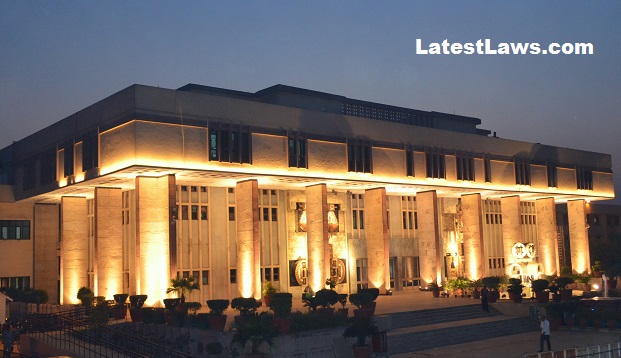
Recently, the Delhi High Court addressed a Public Interest Litigation (PIL) concerning the unauthorised use of original artistic works by Artificial Intelligence (AI) software. The Court took note of issues involving copyright infringement, privacy violations and the misuse of deepfake technology. Observing the significance of safeguarding creative personal rights, the Court emphasised that the government’s committee must consult stakeholders and develop comprehensive regulations to address these challenges.
The PIL was filed by professional model Kanchan Nagar, photographer Vikas Saboo, and a company operating the stock photography website 'Images Bazaar.' The petitioners highlighted the unauthorized use of their original artistic works by AI platforms and sought regulatory measures to prevent such misuse. They contended that this unauthorized use not only infringes copyright but also violates personality rights and the privacy of individuals, particularly women, whose images are often exploited without consent. The plea specifically emphasized the unauthorized usage of women models' photos, often leading to privacy violations. The PIL seeks various directions, including amending the Copyright Act, 1957, and the Information Technology Rules to address cheating by impersonation through AI and deepfakes. It further seeks to block unregulated applications enabling the creation of AI-generated images and to penalize the sale of such images without the artist’s permission. Additionally, the petition calls for the appointment of a nodal officer to address complaints related to copyright infringement by AI technologies.
The Court acknowledged the growing challenges posed by AI and deepfake technologies, particularly in the context of artistic and personal rights. Referring to a prior directive, the Court noted that the Union Ministry of Electronics and Information Technology had constituted a committee to study the issue of deepfakes and related concerns. The Bench emphasised that the committee must engage with all relevant stakeholders, including internet intermediaries, telecom service providers, victims of deepfakes and platforms enabling their creation. Chief Justice Manmohan remarked on the complexity of the issue, stating, “We don’t have a magic wand in our hands. We have directed them to look into this aspect. Everyone is facing the challenge”. The Court’s November 21 order underscored the need for stakeholder consultation to ensure a balanced regulatory framework.
The Bench highlighted the recurring misuse of AI and deepfake technologies, particularly concerning the exploitation of women’s images without consent. The petitioners’ counsel emphasized the broader privacy implications, arguing that such unauthorized use affects consent beyond physical boundaries and disproportionately impacts women. The counsel submitted, “Not everybody has the means or courage to approach the courts. A lack of clear provisions fails to act as a deterrent. For commercial purposes, at least the faces of women must not be used without consent”.
Picture Source :




















