









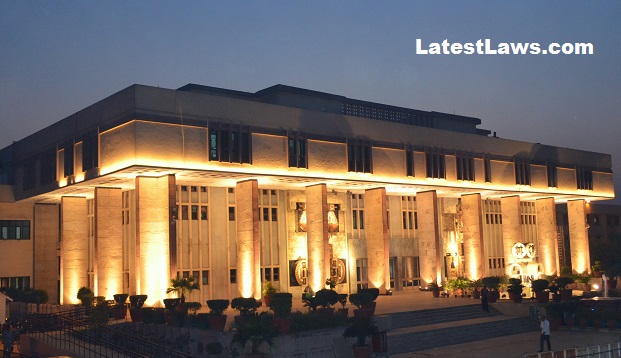
The Delhi HC on Monday sought the Centre's response within three weeks on a batch of petitions seeking constitution of a judicial commission to draft a uniform civil code.
A bench of Chief Justice DN Patel & Justice C Hari Shankar issued a notice to the Central govt on four such petitions & listed the matter for further hearing on Mar 23.
In a petition, BJP leader & lawyer Ashwini Kumar Upadhyay has sought framing of a uniform civil code to promote national integration & gender justice, equality & dignity of women. Four other similar petitions seeking uniform civil code have been filed on which the court sought the Centre's response on Monday.
The court also issued a notice to Mr Upadhyay & the Centre on an application by the All India Muslim Personal Law Board (AIMPLB) seeking to be impleaded as a party in the petition filed by the BJP leader.
In May last year, the court sought Centre's response on Mr Upadhyay's petition. However, the govt is yet to file its reply & on Monday, sought more time to place its stand on record.
After Mr Upadhyay, lawyer Abhinav Beri moved a similar petition in August last year for direction to the Centre to constitute a judicial commission or a high-level committee to draft the uniform civil code.
A third petition was filed by Firoz Bakht Ahmed, the chancellor of Maulana Azad National Urdu University & grandnephew of first education minister Maulana Abul Kalam Azad, in October last year.
The fourth petition was moved by Amber Zaidi, who claims in her petition to be a social activist & media personality. Mr Zaidi has contended that India "urgently needs a uniform civil code or Indian Civil Code in the spirit of Article 44 read with Article 14" of the Constitution.
She has claimed she moved the petition with the "sole purpose to secure gender justice, gender equability & dignity of women".
The fifth petition was filed by Nighat Abbass, who claims to be a social activist, media panellist & political analyst.
The five petitions have sought directions to the Centre to constitute a judicial commission or a high-level expert committee to draft the uniform civil code within three months, while considering the best practices of all religions & sects, civil laws of developed countries & international conventions.
All the petitioners, in their respective petitions, have contended that India "urgently needs a uniform civil code" to promote national integration as well as gender justice, equality & dignity of women.
The petitioners have contended that gender justice & gender equality, guaranteed under Articles 14-15 of the Constitution & dignity of women, guaranteed under Article 21 of the Constitution, cannot be secured without implementing Article 44 (the State shall endeavour to secure for citizens a uniform civil code throughout the territory of India).
The petitions have claimed that a uniform civil code would replace the personal laws, based on the scriptures & customs of various religious communities, with a common set of rules governing every citizen of the country.
The BJP, in its manifesto before the 2019 Lok Sabha election, had mentioned the uniform civil code, saying Article 44 of the Constitution lists it as one of the Directive Principles of State Policy.
Mr Upadhyay, in his plea, has claimed that the issue of uniform civil code is there in BJP's manifesto since the time of Jan Sangh in 1952. He has contended that the Centre has "failed" to put in place a UCC as provided under Article 44.
Mr Beri's petition has sought a direction to the Law Commission to draft a uniform civil code within three months & publish that on its website for at least 90 days for wide public debate & feedback.
In last 70 years, the constitution has been amended 125 times & judgment of the Supreme Court has been nullified five times but the executive has not taken serious steps to implement uniform civil code, the petition has said.
In Dec 2015, the Supreme Court bench headed by then Chief Justice of India TS Thakur had declined to hear Mr Upadhyay's petition in which he had sought to bring the civil code which brings all religious personal laws under one umbrella. He had then withdrawn the petition.
In Oct 2015, while dealing with a divorce case under the Christian Divorce Act, a Supreme Court bench headed by Justice Vikramajit Sen asked the govt to take a quick decision on the uniform civil code to end the confusion over personal community laws.
In July 2003, an Supreme court bench led by the then CJI VN Khare said Article 44 was based on the premise that there was no necessary connection between religious & personal law in a civilised society.
The Supreme court was hearing a petition challenging section 118 of the Indian Succession Act, 1925, which prevents Christians from bequeathing property for religious & charitable purposes.
The simmering debate over the uniform civil code hit the headlines in 1985 after the Supreme Court awarded maintenance to a 60-year-old divorced Muslim woman, Shah Bano.
Source Link
Picture Source :



















