









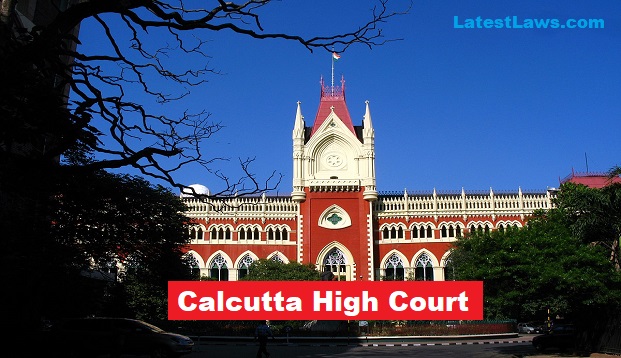
February 13,2019:
Name of Legal Stalwart: Pramit K. Ray
Areas of Practice: Civil Law and Criminal Law
Email id. - pramitkumarray@gmail.com
Phone no.- 9831086238
The interviewer, Teresa Dhar, is a 2nd Year, BA.LLB (H) student of Chanakya National Law University. She is currently interning with LatestLaws.com.
INTRODUCTION
Pramit K. Ray, son of Pranab Kumar Ray who was a practicing Barrister of Calcutta High Court and Supreme Court and the recipient of the national Award in 2002 for his contribution in the sphere of Law and Justice. Pramit is a Senior Advocate, Barrister-at-law practicing in Calcutta High Court for the past 26 years.He has built an enviable practice in civil matters mostly but he also deals with criminal matters. He was the Secretary of the Bar Library Association from. Presently, he is the Law Chairman for High Court Club.
Q1. Tell me something about your early childhood & schooling.
A. I was in Julian Day School since LKG and in 4th grade I became the topper. However, that time my father’s practice was growing, that he needed more space and my parents were frantically looking for a bigger place. One afternoon, I realized that we were shifting to a bigger place in Ballygunge and I remember, forcing myself to get into the car to check out the new place which was bought soon after. From 5th grade, I decided to study in Patha Bhavan nearby my new place, but only in 8th grade when we shifted to the new house, it was a walking distance and I did my higher secondary from there.
Q2. Are you a first-generation lawyer?
A. No, my father was a lawyer. Even my father-in-law was a lawyer too. Infact, my father was legal giant in his era. He was an important civil court practitioner.
Q3. When did you decide to pursue law as a profession & why?
A. I decided to pursue law because one of my senior college, now a sitting Calcutta high court judge, told me that if I were to marry my childhood sweetheart, I had to become a barrister.
This I was told during my graduation when I was doing my Political Science Honors. I started applying for foreign universities. I got an opportunity in University of Leeds from where I did my L.L.B and became a barrister.
Q4. How was your experience in the Law School?
A. When I first went to Leeds, I was delayed because the Reserve Bank of India didn’t give me the permission to remit for foreign exchange. So, I had to wait for a sponsorship from my uncle. I missed a few days for this but eventually joined 3 days later. However, 10 days later I was determined to come back to Calcutta. I couldn’t think about staying there for 3 years for I was terribly homesick. However, I didn’t have the money to buy the tickets back to home.
But soon, the urge to go back home evaporated. There were probably very few days when I used to eat my meals at home otherwise almost every day I was invited by people especially the Bengali community since I used to actively organize dramas, take funds from local city council.Q5. How do you think the Law School education changed since then?
A. Well, to begin with, the legal instruments I.e, online legal searching tools such as Manupatra and SCC Online weren’t available at our times. These had a tremendous impact in the researching area and is something that law schools capitalize on. Also, with advent of computers, the way of thinking and legal statutes have changed. Now, we have cyber laws and more advanced laws which are huge changes in the law school education.
Q6. Would you like to share any experience of your first day/case in court?
A. Well, as I have said before, my father being a prominent lawyer helped me a lot in this field. I was briefed in a matter which was definitely a complimentary brief in an execution matter.
In those days, there were a lot of stock hire-purchase cases in which a person who has taken a vehicle has defaulted in payment A court decree would dictate a sum of money to be paid to retrieve the vehicle.
These were sacrosanct briefs that would be manufactured in solicitor’s offices. In one of these cases in which the brief came to me, a senior advocate in the court told the judge,” He is P.K Ray’s son.” There was a lot of commotion in the court due to the pressure of quantum. I couldn’t understand what was going on but the people started say,” It’s done. Go back so we can do our matters.” And before I knew it, I was being pushed back. That is when I realized that I had got the order I want by the virtue of me being P.K Ray’s son.
There is a plus point, I got my first order in my favor but after the initial honeymoon period, it became clear to the solicitors that briefing me didn’t guarantee my father’s presence. I wasn’t very regular in my chamber because there were big dogs which I was scared of. So, there was this one week when I was briefless but I found a savior in one of the current sitting judge in the High Court who would come out and accompany me to my chamber. Then eventually cases came pouring in till I couldn’t even afford to go to my senior’s chamber.
Q7. Please share 2-3 memorable cases you dealt with in your professional journey?
A. Let me tell you a case that might interest you. Somewhere in Salt Lake, there was a land for which both ITC Ltd. and Taj Hotels had bid for but the Kolkata Municipal Corporation had given it to ITC Ltd. Taj Hotels instituted a case before a single bench, J.Satyabrata Sinha who later went on to become a judge in Supreme Court. Later, ITC Ltd. Clearly won and soon there was fallout between the counsels for Taj Hotels.
So, the case was briefed to my father as the Senior-most counsel. It came before the bench of J. Umesh Banerjee whohad headed the Banerjee Commission on Godhra riots. ITC Ltd and Taj Hotels came to a compromise and Taj Hotels was allocated a land beside ITC Ltd. After 10 years, ITC Ltd. came up but Taj didn’t construct any property. Rather they transferred the land to individuals who built the Spring club, car showrooms and the fancy restaurants that one sees today on E.M Bypass road.
The first case of some importance that I handled as lead counsel opposed by J.Girirsh Chandra Gupta and J.Amitava Lala had passed the order which we couldn’t unfortunately sustain the order before either the division bench or Supreme court. Our case was that previously all bad matters used to be tried in the Calcutta HC or civil courts.
But then came the act - The Recovery of Debts Due to Banks and Financial Institutions Act, 1993 before the SARFAESI Act. Under The Recovery of Debts Due to Banks and Financial Institutions Act, 1993, a new tribunal was created which was the Bank Tribunal where all the bank matters were to be heard. At that point, we had to file a counter claim but there was no single forum to hear claims and counter-claims. Since such forum didn’t exist, we declared it a bad law.
And we actually succeeded in the Shri Parvathi Cold Storage case. However, after that law was abandoned and it was changed so that after banks filed a claim, the borrower could file a counter-claim in the same tribunal. Unfortunately, we couldn’t sustain that order but it is an interesting case for me so far as my career is concerned.
Q8. Please share three strengths of the Indian Legal System, which make it strong pillar of democracy.
A. Please quote me when I say that this question is a red herring. That is because the legal system is not a strong pillar of democracy and the crudest and surest way way to prove that is to cite the situation where four most senior judges of Supreme court came out openly in public and in media to allege that the Chief justice of India was not a fit person to hold the post. But having said so, the Indian legal system could have been the strongest pillar of democracy because Indian legal system doesn’t go to the electorates (who are basically illiterates) for vote and they can decide for themselves- in fact, set aside an Act of the Parliament as ultra vires to the Constitution. It could have been the strongest pillar of democracy if they could ensure that the elected representatives weren’t men of criminal character, with a mentality of helping their own kin and “little groups” and were fit enough to legislate laws on behalf of the citizens. On these occasions, Indian legal system could have improved but it did not.
Q9. What according to you are the areas in which Indian legal system needs to be improved?
A. First, the infrastructure in which Indian Judiciary works should be revamped aggressively. The judiciary, especially the lower judiciary don’t have the proper infrastructure to work in.
Then, misuse of protocol services by judges such as separate parking, violation of traffic rules and begging for arbitration cases from their junior judges.
This has a negative impact in the minds of the public. Also, judges should treat litigants in the way they wantthemselves to be treated as.
Q10. What is your wisdom and success mantra for young legal professionals?
A. Hardwork, hard work and more hard work but with discipline and Patience, of course.
Picture Source :




















