









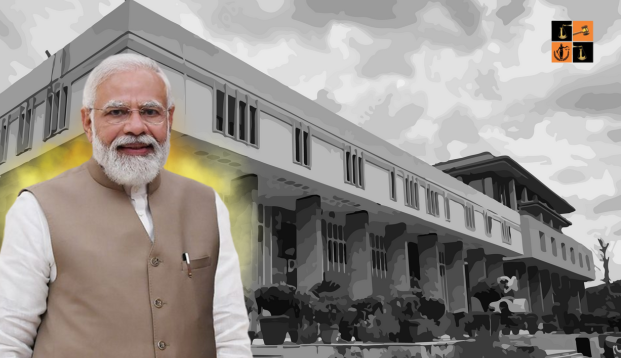
On Monday, the Delhi High Court set aside a 2017 direction of the Central Information Commission (CIC) which had required Delhi University (DU) to disclose details concerning Prime Minister Narendra Modi’s graduation records.
Justice Sachin Datta, while pronouncing judgment on the appeals filed by DU, held that the CIC’s order could not be sustained in law and accordingly quashed it.
The controversy stemmed from an RTI application filed in 2016 by Neeraj Sharma, seeking information on all students who had cleared the Bachelor of Arts programme at DU in 1978, the year PM Modi stated in his election affidavit that he obtained a BA in Political Science. DU declined to part with the information, citing lack of public interest and the private nature of student records.
Following this, the matter reached the CIC, where Information Commissioner Prof. M. Sridhar Acharyulu directed the University to publish the register of students who had passed in 1978. DU challenged the order before the High Court, which stayed it in January 2017.
During hearings, Solicitor General Tushar Mehta, representing DU, stressed that the right to information under the RTI Act is not absolute and must be balanced against the fundamental right to privacy under Article 21. Citing the Supreme Court’s landmark judgment in Justice K.S. Puttaswamy v. Union of India, he argued that individual educational records are protected as personal information and cannot be compelled to disclosure unless an overriding element of public interest is established.
“An academic record of a person who graduated nearly five decades ago cannot be said to have any nexus with discharge of present public functions. The RTI Act is not meant to serve political ends or to harass public authorities by fishing for old documents", Mehta submitted, cautioning against misuse of the statute as a tool of intimidation.
Senior Advocate Sanjay Hegde, appearing for the RTI applicant, disputed DU’s claim of holding student records in a fiduciary capacity, contending that degree-related information was not inherently private and disclosure would serve transparency. He urged that the decision whether disclosure promotes public good must be evaluated in each case.
The Court, however, accepted DU’s challenge and concluded that the CIC had exceeded its mandate. By allowing the University’s appeal, the single judge has effectively shielded Modi’s degree details, while reaffirming the broader principle that personal information cannot be compelled under RTI in the absence of demonstrable public interest.
Picture Source :



















