









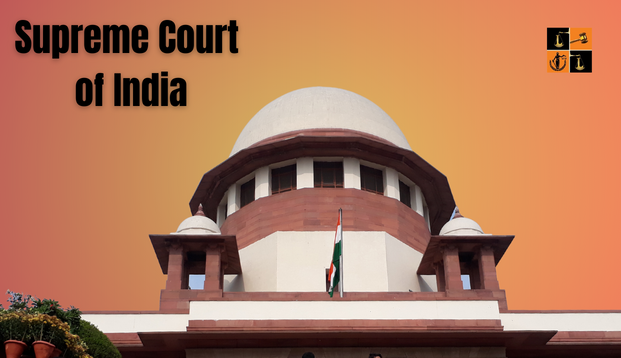
In a recent judgment, the Supreme Court emphasized that “protection under Section 197 CrPC is not meant for public servants to camouflage the commission of a crime under the supposed color of public office.”
The Court's scrutiny focused on whether acts of public servants in the course of duty could be shielded from prosecution, especially when the actions in question may be linked to illegal activities such as cheating, fabrication of records and misappropriation.
Brief Facts:
On December 10, 2007, Om Prakash Yadav lodged an FIR in Firozabad, alleging that his brother, Suman Prakash Yadav, was murdered, and his nephew, Harsh, was severely injured by a group of assailants, including Ashok Dixit. The police launched an investigation, which led to the filing of a charge sheet against 12 individuals, including Dixit. However, it was later revealed that Dixit had been granted bail in Gwalior in a separate case involving the illegal possession of liquor, raising questions about the legitimacy of his involvement in the Firozabad case.
As the investigation progressed, it was discovered that a conspiracy had been orchestrated to fabricate an alibi for Dixit, implicating several police officers in the process. This prompted the authorities to file a supplementary charge sheet against these officers, including respondent no. 1. In 2015, the Sessions Court in Firozabad convicted the 12 accused involved in the murder and revealed the plot to falsify Dixit’s arrest. The investigation and subsequent proceedings led to the suspension of the implicated police officers, who were found guilty of conspiring to obstruct justice.
Contentions of the Petitioner:
Mr. Ravindra Singh, senior counsel for the appellant, argued that the alibi plea presented by the accused, Ashok Dixit, was properly considered and rejected by the Trial Court in Firozabad. The court found that Dixit, in collusion with police officials from Murar Police Station, Gwalior, had fabricated a false case under the Excise Act. The investigation revealed that Dixit's arrest was staged, and the police officers involved were charged and suspended. Thus, Dixit’s claim of being wrongly implicated in the Firozabad case was without merit.
Counsel further contended that the High Court erred in quashing the criminal proceedings, arguing that the Trial Court had already convicted Dixit for murder. The High Court also wrongly required sanction for prosecution under Section 197 of the Criminal Procedure Code (CrPC), as Dixit's actions were not related to the discharge of official duties.
Additionally, it was asserted that Dixit, along with other police officers, manipulated the registration of a false FIR to create an alibi. Independent witnesses had confirmed Dixit’s involvement in the conspiracy, further undermining the High Court's decision.
Contentions of the Respondent:
Mr. R. Basant, senior counsel for Respondent No. 1, argued that there was no evidence to suggest that Respondent No. 1 was involved in the registration of Case Crime No. 967 of 2007, as he was posted 120 km away at Shivpuri. Even assuming his involvement, sanction for prosecution was denied by the D.I.G. of Gwalior.
The counsel further highlighted the respondent's age (72 years) and his retirement, suggesting that prosecuting him would serve no purpose. He also pointed out that the charge sheet lacked substantial evidence, with only two delayed witness statements being the basis for prosecution. Additionally, contradictions in witness testimonies regarding the presence of Ashok Dixit in both Gwalior and Firozabad were cited.
The counsel for Respondents No. 3, 4, and 5 contended that their clients were falsely implicated due to rivalries between police departments. There was no evidence linking them to the murder conspiracy, and the High Court's decision to quash the proceedings for lack of sanction was appropriate.
Observation of the Court:
The Court examined whether the CJM, Firozabad could take cognizance of charge sheets against the respondents without sanction for prosecution under Section 197 CrPC. It noted that Section 197 protects public servants from prosecution for acts committed "while acting or purporting to act in the discharge of official duty." The Court emphasized that this provision aims to shield public servants from vexatious legal action, allowing them to perform duties without fear of unjust prosecution.
The Court referred to Dr. Hori Ram Singh v. The Crown (AIR 1939 FC 43), explaining that an act "purported to be done" must be in the execution of official duty or believed to be so. It stated: "A public servant can only be said to act or to purport to act in the discharge of his official duty, if his act is such as to lie within the scope of his official duty."
The Court clarified that Section 197 applies only when the act is connected to official duties. As stated in Amrik Singh v. State of Pepsu: "If the act complained of is directly concerned with his official duties... then sanction would be necessary." Similarly, in Matajog Dobey v. H.C. Bhari, the Court required a “reasonable connection” between the act and official duties, asserting: "There must be a reasonable connection between the act and the discharge of official duty."
The Court rejected the idea that mere involvement in official duties automatically invokes Section 197, citing R. Balakrishna Pillai v. State of Kerala (1996): “The question whether the acts complained of had a direct nexus or relation with the discharge of official duties by the public servant concerned would depend on the facts of each case.” It further emphasized in Shambhoo Nath Misra v. State of U.P. (1997) that protection under Section 197 is not for illegal acts disguised as official duties: "Such immunity cannot be utilized by public servants to camouflage the commission of a crime under the supposed color of public office."
The Court also referenced Rajib Ranjan v. R. Vijaykumar and Inspector of Police v. Battenapatla Venkata Ratnam, asserting that acts like cheating and fabrication of records are not official duties: "The alleged indulgence of the officers in cheating, fabrication of records or misappropriation cannot be said to be in discharge of their official duty."
The Court concluded that if the case was based on a false FIR, the refusal to grant sanction would not bar prosecution: "If the Case Crime No. 967 of 2007... was a false case, then there is no doubt that the refusal to grant sanction would not operate as a bar for their prosecution."
It reiterated that the applicability of Section 197 depends on the direct connection between the alleged act and the official duty. The Court also emphasized that the necessity of sanction may emerge during the trial, as noted in Pukhraj v. State of Rajasthan (1973): "The necessity may reveal itself in the course of the progress of the case."
The Court reaffirmed that the question of sanction should be examined based on all materials and not just the complaint, as the facts of each case must determine its applicability.
The decision of the Court:
The appeals filed by the appellant were allowed, and the impugned order passed by the High Court was set aside. The present appeals were disposed of in light of the aforesaid directions. Any pending application(s), if any, were also disposed of.
Case Title: Om Prakash Yadav v. Niranjan Kumar Upadhyay
Case no: CRIMINAL APPEAL NOS. 5267-5268 OF 2024
Citation: 2024 Latest Caselaw 771 SC
Coram: Hon'ble Mr. Justice J.B. Pardiwala and Hon'ble Mr. Justice Manmohan
Advocate for Petitioner: Adv. Syed Mehdi Imam
Advocate for Respondent: Adv. Nanita Sharma [For Respondents -3, 4 And 5], Adv. Ujjwal Singh [For Respondent-1], Adv. Sarvesh Singh Baghel [For Respondent-2]
Read Judgment @LatestLaws.com, Click Here
Picture Source :




















