









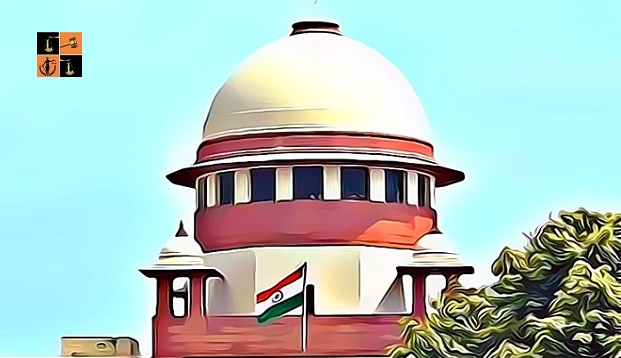
The Division Bench of the Supreme Court consisting of Justices M.R. Shah and B.V. Nagarathna opined that even otherwise, driving a vehicle under the influence of alcohol is not only a misconduct but it is an offence also.
Facts
The employee Brijesh Chandra Dwivedi (since deceased) was a driver posted at the 12th Battalion, P.A.C. at Fatehpur. While he was on duty driving a truck carrying the P.A.C. personnel from Fatehpur to Allahabad on Kumbh Mela duty, it was involved in a motor accident with a jeep. He was charged for having caused the accident by dashing his truck on the back side of the jeep while driving under the influence of alcohol. On medical examination conducted on the same date, he was found to have been under the influence of alcohol. A departmental enquiry was initiated against him. On completion of the enquiry, Inquiry Officer proposed punishment of dismissal. Second show-cause notice was issued by the Disciplinary Authority and after considering his reply thereto the punishment of dismissal was awarded which was confirmed by the Appellate Authority. Feeling aggrieved, the employee filed a writ petition before the High Court. It was also submitted that punishment of dismissal is disproportionate to the misconduct proved. By the impugned judgment and order, the High Court dismissed the writ petition and has also held that in the facts and circumstances of the case, a punishment of dismissal cannot be said to be disproportionate to the misconduct committed. Feeling dissatisfied, the employee had preferred the present appeal. During the pendency of the proceedings before this Court, the employee has died and thereafter his heirs were brought on record and the present appeal is being prosecuted by the heirs of the deceased.
Contentions Made
Appellant: Since it was a minor accident, which resulted into some loss to the vehicle and considering his 25 years long service, the order of dismissal is disproportionate to the misconduct proved. It was, therefore, requested to take the lenient view and to convert the dismissal into compulsory retirement.
Respondent: Having considered the past record and the misconduct committed by the deceased employee in the past and having found that he was a habitual consumer of liquor, and he was remaining absent and once he misbehaved with the senior officers and was punished, the award of punishment of dismissal cannot be said to be disproportionate. Driving the vehicle carrying the soldiers under the influence of alcohol cannot be tolerated and it can be said to be gross indiscipline. The deceased employee is not entitled to any leniency.
Observations of the Court
The Bench observed that:
“The fact that he was driving the truck under the influence of alcohol has been established and proved, even on the medical examination conducted on the same date. Driving a truck carrying the P.A.C. personnel under the influence of alcohol is a very serious misconduct and such an indiscipline cannot be tolerated and that too in the disciplined Military. When the employee was driving a truck carrying the P.A.C. personnel, the lives of those P.A.C. personnel who were travelling in the truck were in the hands of the driver. Therefore, it can be said that he played with the lives of those P.A.C. personnel.”
“Considering the statement of the employee at the time of the enquiry and the explanation given by him that on going to duty on taking the vehicle from battalion, he had not consumed the liquor and after the accident with the objective to suppress the fear on coming to battalion and on parking the vehicle, he went directly to bus terminal, Ghazipur and consumed 100 ml of country-made wine, though has not been accepted but that might be plausible and considering his 25 years of long service and fortunately it was a minor accident which resulted into some loss to the vehicle and considering the fact that the employee has since died, we find that the punishment of dismissal can be said to be too harsh and may be treated one for compulsory retirement.”
Judgment
On converting the punishment of dismissal to that of compulsory retirement, death-cum-retirement benefits as also the benefit of family pension, if any, shall be paid to the legal heirs of the deceased employee in accordance with law and bearing in mind that punishment of dismissal has now been converted into one of compulsory retirement.
Case Name: Brijesh Chandra Dwivedi (Dead) Thr. LRs. vs Sanya Sahayak & Ors
Citation: CIVIL APPEAL NO. 7382 OF 2021
Bench: Justice M.R. Shah, Justice B.V. Nagarathna
Decided on: 25th January 2022
Read Judgment @Latestlaws.com
Picture Source :




















