









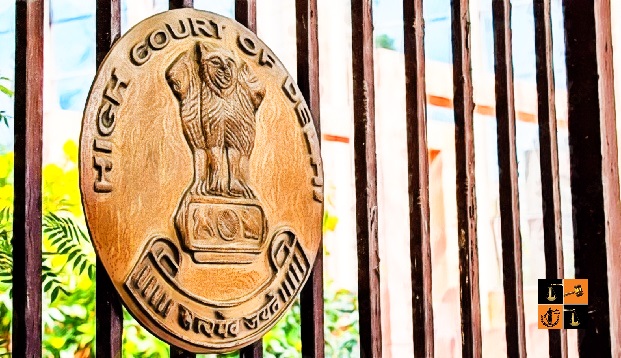
Recently, the Delhi High Court examined a bail plea in a dowry death case where the accused was booked for cruelty and abetment. While addressing the role of statutory presumptions under Section 113B of the Evidence Act, the Court clarified that such presumptions aren’t automatic and must be backed by clear evidence linking the cruelty to dowry demands.
Brief Facts:
The prosecution’s case is based on the unnatural death of Shivani Singh, wife of the Applicant, who was found dead by hanging at their matrimonial home on 18th March 2024. Investigation revealed allegations of sustained domestic cruelty, including physical abuse and dowry-related harassment by the Applicant. The deceased’s family alleged that the Applicant had an extramarital affair and regularly pressured the deceased for money to pay car loan EMIs. WhatsApp call records and video evidence were submitted by the prosecution, showing alleged abuse and the Applicant’s affair. The Applicant, however, presented videos suggesting cordial family relations and denied all allegations. A chargesheet was filed under Section 498A, Section 304B, and alternatively Section 306 IPC.
Contentions of the Petitioner:
The Counsel appearing for the Applicant argued that the Applicant was falsely implicated. The prosecution's case was primarily based on uncorroborated allegations by the deceased’s family, without substantive evidence directly implicating the Applicant. It was contended that the marriage was a love marriage with no dowry demands, and the EMI payments were made by the Applicant himself, negating claims of financial pressure. The video evidence relied upon by the prosecution was dated and lacked relevance to the events “soon before death.” Further, the deceased’s own WhatsApp posts indicated an amicable separation decision, and the medical report negated any physical abuse before death. The Applicant’s counsel highlighted the absence of any contemporaneous complaint or report of cruelty and argued that the alleged extramarital affair did not amount to legal cruelty under Section 498A IPC.
Contentions of the Respondent:
The State and the Complainant’s counsel opposed bail, emphasising the gravity of the dowry death charges under Section 304B IPC, which attracts a statutory presumption of culpability under Section 113B of the Evidence Act. The prosecution submitted that the material evidence, including testimonies, video recordings, and digital communication, demonstrated a pattern of continuous physical and emotional cruelty linked to dowry demands. The evidence suggested harassment and coercion immediately preceding the death, satisfying the requirement of “soon before death.” Given the seriousness and the statutory presumption, the prosecution urged that no case for bail was made out.
Observations of the Court:
The Court noted the serious nature of allegations, especially under Section 304B IPC, which mandates proof of death within seven years of marriage, occurrence under suspicious circumstances, and cruelty related to dowry demands. Citing the Supreme Court in Rajinder Singh v. State of Punjab, the court reiterated the four essential ingredients of the offence: death under unnatural circumstances, within seven years of marriage, cruelty or harassment soon before death, and connection to dowry demand.
However, the Court emphasised that the presumption under Section 113B Evidence Act is conditional and not automatic. It requires establishing foundational facts of cruelty linked to dowry and temporal proximity to death. At the bail stage, the court is not to undertake exhaustive evidence evaluation but conduct a prima facie review to decide on bail viability.
In the present case, the Court found the first two limbs, unnatural death and occurrence within seven years of marriage, were met. Yet, the presence of cruelty and its link to dowry remained contested and was under investigation. The Court noted discrepancies in the prosecution’s timeline and evidence, such as the timing of calls and the deceased’s statements expressing contentment with the family. The medical report showing no external injuries further complicated the prosecution’s narrative of physical cruelty.
While the statutory presumption poses a significant hurdle, the court observed that the Applicant’s right to bail could not be denied merely on that basis without a prima facie examination of evidence. The Court also stressed the need to consider the Applicant’s right to a fair trial.
The decision of the Court:
After a careful consideration of the material and rival submissions, the Court declined to grant bail, underscoring the seriousness of dowry death allegations and the statutory presumption under Section 113B Evidence Act. The Court held that the Applicant had not sufficiently rebutted the presumption at this stage. The bail application was dismissed, with the liberty to approach again at a later stage if circumstances so warranted.
Case Title: Anshul vs. The State of NCT of Delhi through SHO PS Geeta Colony
Case No: Bail Appln. 482 of 2025
Coram: Justice Sanjeev Narula
Advocate for Petitioner: Adv. Ramesh Gupta (Senior Advocate), M. Begum, Shailendra Singh, Harsh Chaudhary, Ishaan Jain, Avneet Kaur, Sumit Singh, Surya Pratap
Advocate for Respondent: Adv. Hemant Mehla (APP for State), M.N. Jha, Sarvesh Kumar, Meenakshi
Picture Source :




















