









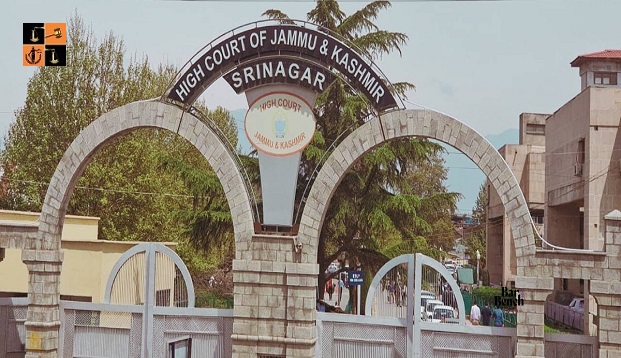
Recently, the Jammu and Kashmir High Court delivered a decisive ruling in the high-stakes dispute between Zareena Akhter and the Indian Oil Corporation, stemming from the termination of her petrol outlet dealership and conflicts over the leased land. The case attracted attention due to the filing of two separate writ petitions and raised questions about contractual obligations, regulatory compliance, and procedural strategy under Indian law.
Brief Facts:
The case arose from the appointment of Zareena Akhter as a Retail Outlet Dealer for petroleum products under a Dealership Agreement. Subsequently, a lease agreement was executed for the land on which the filling station was established. During a joint inspection, samples from the outlet were found adulterated, leading to the registration of an FIR under Sections 3 and 7 of the Essential Commodities Act and relevant provisions of the Petroleum Act. Following this, the dealership was terminated. Separate writ petitions were filed challenging the termination of the dealership and the lease agreement. While both petitions were initially clubbed, the first was dismissed due to the arbitration clause in the Dealership Agreement, yet the Writ Court allowed the second, directing the Corporation either to purchase the leased land or revoke the lease to enable its sale free of encumbrances.
Contentions of the Appellant:
The counsel appearing on behalf of the Appellant submitted that the lease agreement entered between the parties was for a period of 30 years and the said period has not yet expired, therefore, the parties are bound by the terms and conditions of the lease agreement, as such, in view of the “Arbitration Clause”, any dispute has to be decided by the Arbitral Tribunal, ousting the jurisdiction of the Court, therefore, for this reason also, the impugned Judgment suffers from jurisdictional error.
Contentions of the Respondent:
The counsel appearing on behalf of the Respondent contended that the dealership agreement was terminated in the year 2010, and ever since, the leased land has not been put to any use. It was furthermore submitted that the Respondent is in dire need of huge funds, thus the leased land is required to be sold, and the same can be done once the lease agreement between the parties is revoked or terminated.
Observation of the Court:
The Court highlighted that the cardinal principle of Order 2 Rule 2 and Section 11 of the Code of Civil Procedure is to prevent a Plaintiff from vexing the Defendant twice for the same cause of action, encapsulated in the maxim “nemo debet bis vexari pro una et eadem causa”, and the other principle is based on the maxim “res judicata pro veritate accipitur”. Both these provisions contained in the CPC operate proactively, ensuring all claims are brought in one Suit, while Section 11 CPC operates proactively, barring re-litigation of decided matters.
Referring to the case, Rahul Yadav & Anr. v. M/S Indian Oil Corporation Ltd. & Ors, and Indian Oil Corporation Limited v. Shree Ganesh Petroleum Rajgurunagar, the Court held that it is well settled that both the agreements, i.e., “Dealership Agreement” and “Lease Agreement”, are independent of each other and, if there is any grouse in respect of stoppage of operation of the Outlet and termination of dealership, that was an independent cause and, thus Respondent was not enjoined to bring the cause of actions arising under “Dealership Agreement” and “Lease Agreement”, respectively, in one Writ Petition.
On the issue of arbitration clause contained in the lease agreement, the Court stated that “the rights and liabilities of the parties are undoubtedly governed by the terms of lease agreement and both the parties have duly consented to it and also obligated to adhere to its terms and conditions, therefore, once the parties are signatory to the instrument, then they are bound to abide by the contractual obligation, thus, as a corollary, the specific mechanism provided therein by way of arbitration for adjudication of any dispute or difference, the parties have to adhere to it in letter and spirit.”
The Court observed that the causes of action arising from the “Dealership Agreement” and “Lease Agreement are independent and distinct, and therefore need not be pursued in a single litigation. It further noted that, in the absence of any procedural irregularity, violation of natural justice, or infringement of constitutional rights under Part III, a writ under Article 226 of the Constitution of India cannot be entertained where an alternative and efficacious remedy, such as arbitration under the lease agreement, exists.
The decision of the Court:
Under the light of the foregoing discussion, the Court held that the judgment passed by the Writ Court is unsustainable in law and allowed the appeal.
Case Title: Chairman, Indian Oil Corporation V. Zareena Akhter
Coram: Justice Sindhu Sharma, Justice Shahzad Azeem
Case No.: LPA No. 70/2025 in WP (C) No. 3441/2023
Advocates for the Appellant: Senior Advocate D.C. Raina, Advocate Sajjad Ashraf Mir
Advocates for the Respondents: Advocates Shuja-ul-Haq Tantray, Faizan Ahmad Ganie, Tahir Majid Shamsi
Picture Source : twitter.com



















