









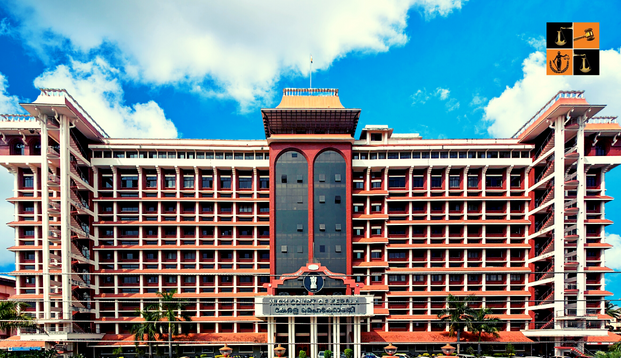
Recently, the Kerala High Court clarified the procedural rights of complainants under the Bharatiya Nagarik Suraksha Sanhita (BNSS), 2023, holding that victims who are also complainants can file appeals against acquittals without seeking prior leave of the Court. The Bench emphasized that statutory provisions empower victims to exercise their right to appeal directly, highlighting the Court’s observation that this remedy is “much efficaciously remedied by right of appeal, provided without obtaining leave.”
Brief Fact:
The appeal arose after the Judicial First Class Magistrate Court-II, Ernakulam, acquitted the accused of offences under Sections 354 and 354D IPC. The victim, who had filed the original private complaint, challenged the acquittal under Section 413 of BNSS, 2023, without seeking leave from the High Court. The matter raised key questions about victims’ rights to appeal under BNSS versus procedural requirements for appeals under Section 378 CrPC.
The High Court examined relevant provisions, including Section 372 CrPC, Section 413 BNSS, and Section 138 of the Negotiable Instruments Act, referring to the Supreme Court’s guidance in M/S Celestium Financial v. A. Gnanasekaran.
Contentions of the Petitioner:
The counsel for the appellant argued that, as the complainant in the private case, the appellant also held the status of a victim under Section 413 BNSS and the proviso to Section 372 CrPC. The appellant contended that this status allowed filing an appeal directly against the acquittal without applying for leave under Section 378(4) CrPC. The argument emphasized that repeated formalities for leave were unnecessary and burdened victims, as the statutory scheme intended to protect their right to seek justice efficiently.
Contentions of the Respondent:
The Public Prosecutor representing the State of Kerala contended that procedural safeguards under Section 378 CrPC required that appeals against acquittals be filed only with prior leave, particularly in cases instituted on private complaints. The Respondent highlighted that maintaining judicial discipline and ensuring proper filing channels were critical, cautioning against circumvention of the procedural framework. However, the Respondent acknowledged that statutory provisions like Section 413 BNSS and the CrPC proviso recognized the complainant’s status as a victim.
Observations of the Court:
The Court undertook a detailed analysis of the BNSS and CrPC provisions, emphasizing the distinct position of complainants who also qualify as victims. The Court noted that “if a victim, whether he is a complainant or not, files an appeal in terms of proviso to Section 372 of Cr.P.C. or under Section 413 of BNSS, then the mandate of seeking special leave to appeal would not arise.” Citing the Apex Court’s decision in Celestium Financial, the Bench clarified that the procedural requirement under Section 378(4) CrPC is unnecessary for victims, as they possess an independent statutory right to appeal.
The Court elaborated that this framework applies across offences, including those deemed under Section 138 of the Negotiable Instruments Act, ensuring that the remedy is available to victims without additional judicial permissions. The judgment strongly observed that the repeated filing of appeals seeking leave where statutory right exists is redundant and must be curtailed.
The decision of the Court:
The Court returned the appeal memorandum to the appellant, directing it to be re-presented before the competent Sessions Court, clarifying that victims can exercise their statutory right to appeal without seeking leave. The operative principle (Ratio Decidendi) established that complainants possessing the status of victims under BNSS and CrPC can appeal acquittals directly, reinforcing statutory safeguards for victim empowerment while eliminating unnecessary procedural barriers.
Case Title: Judicial Magistrate Of First Class-Ii, Ernakulam vs. State Of Kerala Ans
Case No.: CRA(V) NO. 2 OF 2026
Coram : Hon'ble Justice A. Badharudeen
Advocate for the Petitioner: Adv.T.R.Krishnadas ,Adv .S.Abhilash (A-1937), Adv .Rahul R.Pai
Advocate for the Respondent: Adv, Pp - Noushad.A
Read Judgment @Latestlaws.com
Picture Source :



















