









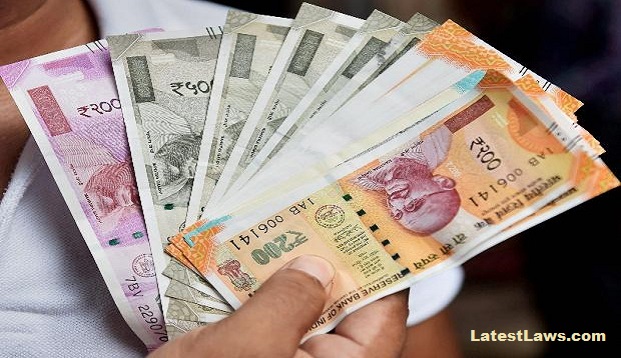
The single judge bench of Justice Avneesh Jhingan of the Punjab and Haryana High Court in the case of Chiman Lal V. Bhupinder Singh, Revenue Patwari, and Another held that proof of demand and acceptance of unlawful gratification is required; simply recovering money notes is insufficient.
BRIEF FACTS
The factual matrix of the case is that the appellant and Joginder Singh made a statement before the police that they are possessing and cultivating central governments’ land. The land was to be assigned in accordance with government policy, so the appellant and Joginder Singh proceeded to the office of the SDM Raikot and produced the land documents. The case was sent to Naib Tehsildar, who submitted it to the respondent for investigation. Following that, the respondent wanted a bribe in order to take the requisite steps, and a settlement was struck for Rs.4000/-. Following that, the complainant and Joginder Singh reported the incident to the Vigilance Bureau, and a trap was set up. The appellant was given currency notes tainted with Phenolphthalein powder to hand over to the respondent on demand. The shadow witness was told to observe and hear the appellant and respondent's interaction. When the appellant arrived, he was directed to the respondent's office. After receiving the signal from the shadow witness, the team entered the office and recovered money bills off the table in front of the respondent. In order to prove its case, the prosecution called nine witnesses. After that, the trial court acquitted the respondent after considering all the evidence and the facts of the case.
The learned counsel appearing on behalf of the appellant contended that despite the fact that laced currency notes were found from him, the trial Court erred in acquitting the respondent. The prosecution's case was said to be supported by the appellant and the shadow witness.
COURT’S OBSERVATION
The hon’ble court stated the counsel appearing on behalf of the appellant’s contention that the trial court erred in acquitting the respondent, in spite of the recovery of the laced currency from him, lacks merits. The recovery of the currency notes from the respondent in itself is not enough for the conviction. The prosecution has to prove the demand and acceptance of illegal gratification by the accused. The court supported this by relying on the judgment titled, ‘K. Shanthamma v. The State of Telangana in which it was stated that
“The proof of demand of illegal gratification, thus, is the gravamen of the offense under Sections 7 and 13(1)(d)(i) and (ii) of the Act and in absence thereof, unmistakably the charge therefor would fail. Mere acceptance of any amount allegedly by way of illegal gratification or recovery thereof, dehors the proof of demand, ipso facto, would thus not be sufficient to bring home the charge under these two sections of the Act. As a corollary, failure of the prosecution to prove the demand for illegal gratification would be the fatal and mere recovery of the amount from the person accused of the offense under Section 7 or 13 of the Act would not entail his conviction thereunder.”
The other contention made by the counsel appearing on behalf of the appellant is that the complainant and the shadow witness who supported the case of the prosecution are noted to be rejected. As the appellant handed over the laced currency notes to the respondent on his demand and he accepted the bribe. It cannot be lost sight that as per the respondent, a fee of Rs.4000/- was due for the copies of Fard obtained by the appellant.
The hon’ble court while considering the scope of interference relied on the judgments titled, Mrinal Das & others v. The State of Tripura and State of Punjab v. Hansa Singh. The court held that no case is made out for interference in the judgment of the trial court.
CASE NAME- Chiman Lal V. Bhupinder Singh, Revenue Patwari, and Another
CITATION- CRA-S-394-SB of 2015 (O&M)
DATED- 18.08.2022
CORUM- Justice Avneesh Jhingan
Read Judgment @Latestlaws.com
Picture Source :



















