









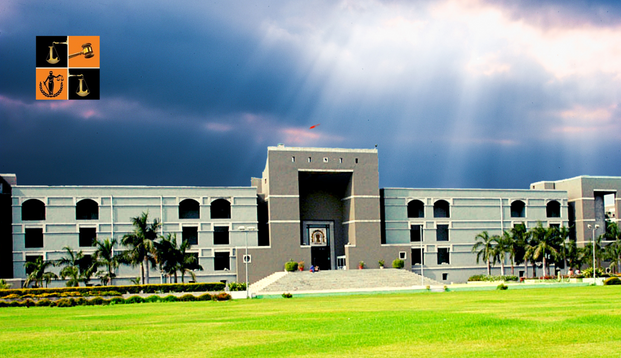
Recently, the Gujarat High Court set aside a resolution of the Surat Municipal Corporation debarring a contracting firm for two years, holding that the allegations of filing a false affidavit in the tender process were unsustainable. The matter concerned alleged suppression of criminal cases and past blacklisting, and the Court underscored that complaints under the Minimum Wages Act cannot be treated as "police cases."
Brief Facts:
The municipal corporation had invited online tenders for providing sanitation services at a hospital. The petitioner participated in the process and was declared the lowest bidder, after which the administrative committee decided to issue the work order.
However, following a complaint from a newspaper editor alleging that the petitioner had furnished incorrect details in its affidavit, the corporation initiated a vigilance inquiry. The petitioner was heard and also submitted a detailed representation clarifying its position. Despite this, the corporation passed a resolution debarring the firm for two years, forfeiting the EMD, and directing the filing of a criminal complaint for allegedly submitting a false affidavit. This led to the present writ petition.
Contentions of the Petitioner:
The petitioner argued that no false information was given in the affidavit. It was submitted that cases under the Minimum Wages Act are not “police cases,” and the affidavit required disclosure only of police cases or those filed by agencies like the CBI, FEMA, or tax authorities. The petitioner further stated that the earlier blacklisting from 2017 had been cancelled in 2018, leaving nothing to disclose in the 2023 tender. Since the impugned resolution relied only on the alleged non-disclosure of Minimum Wages Act complaints, the petitioner maintained that the affidavit was accurate.
Contentions of the Respondent:
The corporation argued that the petitioner had suppressed material information in its affidavit, stating that criminal cases filed under Section 22 of the Minimum Wages Act should have been disclosed and that the failure to do so amounted to a false declaration. It further contended that the earlier blacklisting, though later annulled, was a significant fact that ought to have been revealed during the tender process. On this basis, the corporation maintained that the debarment was justified. It also informed the Court that following the resolution, fresh tenders were issued and a new lowest bidder had already been identified.
Observation of the Court:
The Court closely examined the affidavit, particularly the clauses requiring disclosure of criminal liabilities. In a significant observation, the Court held, “A ‘police case’ is governed by Section 154 Cr.P.C. (now Section 173 of the BNSS) and refers only to cognizable offences registered through FIRs. Complaints filed under the Minimum Wages Act before a Magistrate cannot be construed as police cases.”
The Court noted that although Section 22 of the Minimum Wages Act prescribes penalties, such proceedings do not originate as police cases, and therefore the petitioner had no obligation to disclose them. On the question of blacklisting, the Court found that, “There is no mandate in the tender format requiring disclosure of a past blacklisting that stands cancelled. The impugned resolution itself does not rely on this ground.”
The Court further held that the corporation failed to establish any false assertion in the affidavit, and that the Standing Committee had ignored the petitioner’s detailed clarification submitted before the impugned decision.
The decision of the Court:
The Gujarat High Court quashed and set aside the Surat Municipal Corporation’s Resolution No. 804 of 2025 and directed that the petitioner’s EMD be released within two weeks. It further ordered the corporation to reconsider the petitioner’s case in light of the Court’s findings, particularly as fresh tenders had already been issued and a new L1 bidder had emerged. The corporation was instructed to hear all affected parties and take a fresh decision within two weeks.
Case Title: M/S DG Nakrani Through Its Authorized Partner Dipak G. Nakrani vs. Smimer Hospital & Ors.
Case No.: R/Special Civil Application No. 6805 of 2025
Coram: Justice A.S. Supehia, Justice L.S. Pirzada
Advocate for Petitioner: Adv. Mihir Thakore (Senior Advocate), Rajan J. Patel
Advocate for Respondent: Advs. Kaushal D Pandya, Shruti Dhruve (AGP)
Read Judgment @Latestlaws.com
Picture Source :




















