









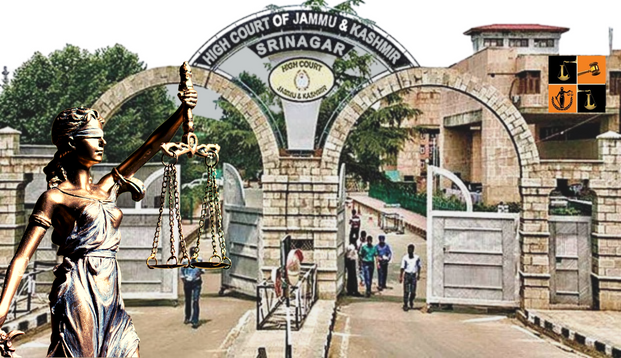
This article is authored by Advocate Sanjeev Sirohi.
In a defining moment, it was certainly most refreshing, most reassuring, most rational and most realistic to see how none other than the Jammu and Kashmir and Ladakh High Court at Srinagar in a most progressive, pragmatic, persuasive and powerful judgment titled Mohammad Sultan Nagoo vs Custodian Evacuee Property and others in OWP No.322/2016 and cited in 2023 LiveLaw (JKL) 158 that was reserved on February 16, 2023, and then finally pronounced on June 09, 2023, has minced just no words to underscore that the government has a responsibility to safeguard, maintain and effectively utilize evacuee properties. Of course, the Bench also sought to clarify that it cannot make arbitrary decisions or treat these properties as if it is the rightful owner with the power to sell them off. The Single Judge Bench of Hon’ble Mr Justice Vinod Chatterjee Koul made these extremely commendable observations while it was hearing a petition that was seeking the court’s intervention pertaining to a matter that was connected to the transfer of land on lease. It is a no-brainer that there is no valid reason as to why the Government should not abide in totality by what the Court has laid down so very laudably in this leading case!
At the very outset, this most learned, laudable, landmark and latest judgment authored by the Single Judge Bench comprising of Hon’ble Mr Justice Vinod Chatterjee Koul of Jammu and Kashmir and Ladakh High Court at Srinagar sets the ball in motion by first and foremost putting forth in para 1 that, “Through the medium of this writ petition, petitioner seeks grant of a writ of certiorari quashing Order dated 26th October 2015 passed by J&K Special Tribunal, Srinagar, in Revision Petition titled as Mohammad Sultan Nagoo v. Hakeem Mohammad Amin and others and in consequence thereof setting-aside Order dated 12th June 2014 passed by Custodian General, J&K in a Revision Petition titled as Hakim Mohammad Amin and others v. Custodian Evacuee Property, Kashmir. A direction is also sought to be passed directing the Tribunal to rehear the whole matter and decide it in accordance with law after appreciating the arguments of petitioner and respondents.”
To put things in perspective, the Bench envisages in para 2 that, “It is the contention of petitioner in the instant writ petition that it appears that respondent no.1 transferred the land admeasuring 4030 Sqfts and structure raised thereon situated at Sarai Payeen, Srinagar, belonging to Evacuee Sheikh Aziz-ud-din, which was allotted to one Ghulam Qadir Nagoo, father of petitioner and respondent no.3, in the name of one of the sons of Ghulam Qadir Nagoo (respondent no.3) and one Hakeem Mohammad Amin (respondent no.2), without affording an opportunity of being heard to petitioner. After the death of the father of the petitioner, a mutual agreement was executed on 18th June 2005, in which respondent no.3, father of respondent no.3, petitioner, Mst. Khatija and others were party with regard to the property in question. It is being averred by the petitioner that it seems that respondent 2&3 got the property in question allotted and transferred in their names by Custodian Kashmir on 1st April 2005 for a period of 40 years without affording an opportunity of hearing or without the consent of the petitioner and other shareholders. This order was passed on 7th September 2009 by Custodian, Kashmir. Against this order, a revision was filed before Custodian General, Evacuee Property, Kashmir, by Hakeem Mohammad Amin and Musthaq Ahmad Nagoo (respondents 2&3), inter alia, on the ground that they paid Rs.15.00 Lacs as consideration amount, which is not a fact, whereas only Rs.6.00 Lacs was deposited by them. It is also stated that when the petitioner came to know about the pendency of the revision petition, he filed an application before Custodian General, J&K at Srinagar, for his impleadment as party respondent. According to the petitioner, his application for impleadment was decided on 29th March 2012 on the ground that the petitioner’s right is not recognized by law and the claim so raised is belated in nature and if he has any remedy of his exclusion for allotment of subject matter land proportionately, he may do so before the proper forum in an appropriate manner. Petitioner sought a review of the Order dated 29th March 2012, which, however, was also dismissed vide order dated 12th June 2014. Against this order, the petitioner approached the Tribunal with a revision petition. However, the Tribunal has also dismissed the revision petition.”
As we see, the Bench observes in para 5 after hearing the learned counsel for the parties and considering the matter as specified in para 4 that, “Perusal of the record on the file would reveal that subject-matter of writ petition, viz. land measuring 4030 Sqfts, situated at Sarai Payeen, Srinagar, is an Evacuee Property. It was leased out in favour of Hakim Mohammad Amin S/o Haji Ghulam Mohammad and Mushtaq Ahmad Nagoo S/o Ghulam Qadir Nagoo residents of Peer Bagh and Batamaloo, Srinagar, respectively by Custodian Evacuee Property, Kashmir, vide Order dated 25th April 2005 for commercial purpose, against the premium of Rs.15.00 Lacs. Prior to that, it had been in the name of the father of the petitioner, namely, Ghulam Qadir Nagoo.”
Truth be told, the Bench concedes in para 6 that, “Although the parties in the case in hand try to show that the subject matter of writ petition is the parties inter se matter, yet it cannot be denied that property in question is an evacuee property, which is to be dealt with strictly in consonance and accordance with provisions of the Act and Rules framed thereunder and the Constitution of India.”
For the sake of clarity, the Bench then clarifies in para 7 that, “Insofar as evacuee properties are concerned, these are regulated by the J&K State Evacuees’ (Administration of Property) Act 2006 (1949 A.D.). The Act has been enacted with the purpose to provide for the administration of evacuees’ property in Jammu and Kashmir.”
It deserves mentioning that the Bench states in para 8 that, “Section 2(a) provides that “allotment” means the grant by the Government or by Custodian or by any other person duly authorized by the Custodian in this behalf of a temporary right of use and occupation of any immovable property of an evacuee to any person otherwise than by way of a lease. Section 2 (g) envisions that an “unauthorized person” means any person, whether he is duly empowered by the evacuee or otherwise, who after the 14th day of August 1957, has been occupying, supervising or managing the evacuee’s property without the approval of the Custodian.”
Do also note, the Bench notes in para 9 that, “Section 3 of the Act says that the provisions of the Act and the Rules and orders made thereunder shall have effect notwithstanding anything inconsistent therewith contained in any other law for the time being in force or in any instrument having effect by virtue of any such law. While removing doubts, Subsection (2) of Section 3 of the Act provides that nothing in any other law controlling the rents of, or evictions from, any property shall apply or deemed ever to have applied to evacuee property.”
Quite clearly, the Bench specifies in para 10 that, “Section 5 of the Act makes it clear that all evacuee properties situated in Jammu and Kashmir shall be deemed to have vested in the Custodian.”
Further, the Bench mentions in para 11 that, “Section 7 of the Act says that if any person in possession of any evacuee property refuses or fails on demand to surrender possession thereof to the Custodian or to any person duly authorized by him in this behalf, the Custodian can use such force as is necessary for taking possession of such property and can after giving reasonable warning remove or break open any lock, bolt or any door or do any other act necessary for the said purpose.”
Furthermore, the Bench also discloses in para 12 that, “Section 8 says the Custodian can take such measures which he considers necessary or expedient for administering, imposing, preserving and managing any evacuee property and generally for enabling him satisfactorily to discharge any of duties imposed on him by or under the Act and can do all acts.”
What’s more, the Bench reveals in para 13 that, “Section 9-A of the Act relates to the prohibition of erection or re-erection of buildings without permission/sanction in writing of the Custodian. Subsection (1) of Section 9-A provides that no person in possession of occupying any evacuees’ property whether as an allottee or otherwise shall erect or re-erect any building thereon without the sanction in writing of the Custodian. Subsection (2) provides that where any building is erected or re-erected without the sanction as referred to in Subsection (1) of Section 9-A of the Act or in contravention of any condition subject to which such sanction has been granted, such erected or re-erected portion of the building shall be deemed to be the evacuee property under this Act and the person erecting, re-erecting, possessing or occupying the property whether as an allottee or otherwise shall have no right or claim for the ownership of such erected or re-erected portion or any compensation in lieu thereof.”
In addition, the Bench lays bare in para 14 that, “Section 10 provides that the Custodian can cancel any allotment or terminate any lease or amend the terms of any lease or of any agreement on which any evacuee property is held or occupied by any person, whether such allotment, lease or agreement was granted or entered into before or after commencement of the Act.”
Practically speaking, the Bench expounds in para 15, “Let me now advert to the case in hand. It appears from the perusal of the file that the property in question (an evacuee property) had been initially leased out to the father of the petitioner, namely, Ghulam Qadir Nagoo. This important aspect of the matter appears to have been buried by respondent-Evacuee Department. It is admitted position of respondent-department that the property in question had been leased out to Ghulam Qadir Nagoo. Whether his consent was enough to give evacuee property to any other person or respondents 2&3. Answer thereto is no. Respondent-Evacuee Department cannot be permitted to indulge in such acts as it is the U.T. of J&K which maintains all evacuee properties and incurs huge amounts on such evacuee properties.”
Quite significantly, the Bench observes in para 16 that, “When Section 10 of the Act and Rule 14 of J&K State Evacuees (Administration of Property) Rules, Samvat 2008 are read conjointly, the provide prohibition for transfer of evacuee property. Respondent-Evacuee Department is, thus, required to protect the property of evacuees and evict unauthorized occupants. However, in the present case, the allotment was made in favour of respondent 2&3. What has been the basis for that is not coming forth from the pleadings of respondents. Whether respondent 2&3, in whose favour allotment has been made by respondent-Evacuee Department, possesses extra qualifications and special features that a common resident/citizen of J&K does not possess. Such an act on behalf of the respondent department is, as such, violative of Article 14, which provides the right of equality to all.”
While striking the right note, the Bench further states in para 17 that, “As said above, evacuee property right from coming into being of the Act is under the custody of respondent-department. Respondent-department is a government department as provided under and in terms of provisions of Article 12 of the Constitution and as a result of which, any property being maintained and controlled by it since the year 1949 is also a government property and is to be taken care of strictly on the same lines on which other government properties are being taken care of and handled.”
Most significantly, the Bench then sagaciously propounds in para 18 stating that, “The Supreme Court on the subject of allotment of government properties has in the plethora of judgments repetitively held is similar to the distribution of largesse and such properties cannot be given, allotted or distributed otherwise than by following the procedure, which should be in consonance with provisions of Article 14 of the Constitution and there should be fairness in State action. As noted above respondent department is a statutory authority created under and in terms of the Act of 1949 and is, therefore, duty-bound to preserve, protect and better utilize evacuee properties. It cannot act arbitrarily and deal with properties of evacuee as being owner thereof with rights of alienation.”
Equally significant is what is then postulated in para 19, “Although there is no specific provision in the Act of 1949 or Rules framed thereunder, which may provide for mode and manner in which evacuee property having commercial value and potential is to be allotted or leased out, yet Order no.LB/7-C of 1958 dated 5th of June 1958 lays down a detailed procedure for allotment of evacuee agriculture land in favour of certain persons. A perusal of LB/7-C of 1958 reveals that allotment to be made under the said Rules cannot be done arbitrarily inasmuch as it provides the elaborate procedure for such allotment, which is in conformity with Article 14 of the Constitution. To this extent principles have been laid down by the Supreme Court in Manohar Lal Sharma v. Principal Secy., (2014) 9 SCC 516; Bharti Airtel Limited v. Union of India, (2015) 12 SCC 1; and Goa Foundation v. Sesa Sterlite Ltd., (2018) 4 SCC 218.”
As things stand, the Bench specifies in para 20 stating that, “Let me now advert to the case in hand. The petitioner herein moved an application before Custodian General for his impleadment as a party in a Revision Petition of respondents 2&3, which was vide order dated 29th March 2012 dismissed. Against that order, he preferred Review Petition. While deciding the revision petition of respondent 2&3, Custodian General rejected the plea of the petitioner as according to Custodian General, the petitioner is a stepson and has not been able to convince Custodian General either by arguments or by any documentary evidence.”
Most forthrightly, the Bench holds in para 21 that, “In terms of order impugned dated 12th June 2014, after discussing facts of the case, the Custodian General found order dated 31st August 2009, terminating the lease, as a harsh treatment and consequently set-aside the said order. Petitioner’s plea that he was not impleaded as a party has no force in consequence of the passing of the order dated 12th June 2014, as it has decided the whole matter and there remains nothing to be adjudicated upon.”
As it turned out, the Bench discloses in para 22 that, “Against the order of Custodian General, the petitioner preferred Revision Petition before the Tribunal, but there as well he failed as the Tribunal vide order dated 26th October 2015 rejected petitioner’s revision and upheld an order of Custodian General.”
Most remarkably, the Bench mandates in para 23 that, “Insofar as the grievance of the petitioner is concerned, he has been given liberty by the Custodian General to avail appropriate remedy with regard to his rights vis-à-vis subject-matter of revision petition before an appropriate forum. So, impugned orders do not warrant any interference.”
Finally and as a corollary, the Bench concludes by holding in para 24 that, “For the reasons discussed above, the instant writ petition is devoid of any merit and is, accordingly, dismissed with connected CM(s). Interim direction, if any, shall stand vacated.”
In conclusion, we thus see that the Jammu and Kashmir and Ladakh High Court has made it quite pretty clear that Government is duty-bound to protect evacuee property. It was also made clear by the Court that Government cannot make arbitrary decisions or treat them as their own properties as rightful owners with the power to sell! No denying it! It also merits no reiteration that the Government must definitely pay heed to what the Court has directed so clearly in this notable case and comply fully!
Picture Source :




















