









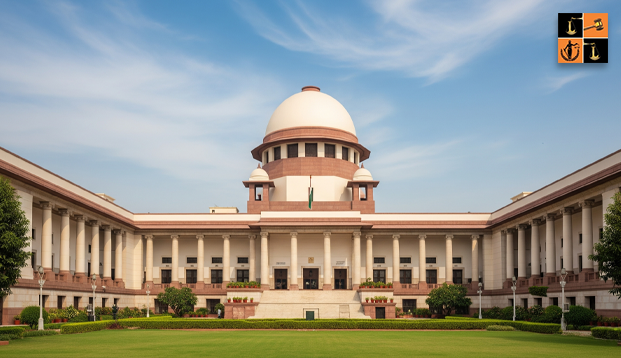
Today, the Supreme Court turned its focus to a long-standing debate on inter se seniority within the Higher Judicial Service. Faced with competing claims from regular promotees, departmental exam qualifiers, and direct recruits, the Constitution Bench examined whether seniority could legitimately vary based on the source of entry. Drawing upon decades of evolving jurisprudence on fairness, merit, and cadre harmony, the Court revisited a foundational question shaping the architecture of judicial service progression in India.
Brief facts:
The case stemmed from an interlocutory application filed by the Amicus Curiae, Senior Advocate Siddharth Bhatnagar, in the long-pending public interest proceedings concerning judicial service conditions nationwide. The application brought to the forefront a persistent concern across several States, officers who begin their careers as Civil Judges (Junior Division) seldom progress to the post of Principal District Judge, and even fewer attain elevation to the High Court. This stagnation, the Amicus submitted, has progressively discouraged capable young lawyers from entering the subordinate judiciary at the initial tier. The issue prompted the Apex Court to re-examine the principles governing inter se seniority in the Higher Judicial Service, a cadre drawing personnel from three distinct streams, Regular Promotees, officers advancing through the Limited Departmental Competitive Examination, and Direct Recruits from the Bar. Recognising the need to reconcile competing interests and noting divergent judicial views on the subject, the matter was referred to a Constitution Bench, which distilled the central question to: “What should be the criteria for determining seniority in the cadre of Higher Judicial Services?”
Contention of the Petitioner:
The Petitioner contended that direct recruits enjoy a pronounced age advantage at the time of induction, enabling them to secure faster progression into Selection Grade, Super Time Scale, key administrative postings in districts, and even elevation to the High Court well ahead of their promotee counterparts. It was argued that the depth of judicial experience acquired by officers in the lower judiciary far outweighs prior practice at the Bar, and that such experience, gained as Civil Judge (Junior Division) and Civil Judge (Senior Division), ought to be expressly acknowledged, with reliance placed on the ruling in Rejanish K.V. v. K. Deepa. The Petitioner further submitted that the entry of comparatively younger direct recruits into the Higher Judicial Service has created a sense of disadvantage among promotees, whose long years of service lose comparative value under the existing scheme. It was additionally urged that in situations where candidates qualifying through the departmental competitive examination are insufficient in any recruitment cycle, the unfilled positions should be carried forward, ensuring that their rightful place in the roster is maintained even if corresponding vacancies are unavailable at that stage.
Contentions of the Respondent:
The Respondent contended that there is no compelling basis to devise any preferential system for promotees, as the composition of the Higher Judicial Service varies across different States, with direct recruits holding an advantage in some jurisdictions and promotees in others. It was submitted that High Courts, being closely familiar with local service conditions and statistical patterns, are best positioned to determine inter se seniority in accordance with the specific requirements of each State Judicial Service. The Respondent further argued that once officers enter the Higher Judicial Service, the source of recruitment becomes irrelevant, as all incumbents merge into a common cadre where prior service in the feeder ranks carries no independent weight. According to the Respondent, seniority continues to be governed by the initial roster position assigned at the time of entry, and the “birthmark” of one’s entry channel cannot influence subsequent progression. It was additionally urged that the allotted roster position must be preserved even in years where sufficient vacancies are not available.
Observation of the Court:
Examining the dispute on determining seniority within the Higher Judicial Service, the Court began by clarifying that advancement within the judicial hierarchy is governed by constitutional principles rather than service-based entitlements. At the outset, the Bench emphasised that “there can be no separate quota insofar as the recommendations for elevation to the High Court are concerned,” emphasising that such elevation is neither a promotional right nor a claim linked to financial progression or seniority.
The Court then revisited the evolution of directions issued across successive stages of the All India Judges Association proceedings. It noted that the long-standing writ petition has been retained as an ongoing mandamus to safeguard judicial independence and strengthen the administration of justice. Through various decisions, the Court had addressed issues such as designations, retirement age, requisite qualifications, and the proportionate intake of candidates in the Higher Judicial Services from three streams, regular promotion, limited departmental examination, and direct recruitment.
The Court highlighted how earlier judgments gradually shaped the service structure, from prescribing practice requirements and eliminating non-bar pathways into judicial office, to introducing LDCE as a mode of merit-based advancement and fixing the intake ratio for the HJS. These decisions, the Court observed, aimed at ensuring a capable and autonomous judiciary by improving working conditions, recruitment standards, and opportunities for progression.
Further, the Court emphasised that the High Court remains the primary repository of control over the subordinate judiciary under Article 233, Article 234, and Article 235 of the Constitution. It referred to rulings such as B.S. Yadav v. State of Haryana and State of Bihar v. Bal Mukund Sah, which held that although service rules may be framed under Article 309, they must conform to the High Court’s supervisory authority under Article 235. Accordingly, the State Legislature or Governor, while regulating recruitment and service conditions, must operate within constitutional limits that preserve judicial independence.
At the same time, the Bench clarified that no constitutional impediment restrains the Supreme Court from issuing uniform directions under Article 32, Article 141 and Article 142 of the Constitution. The Court explicitly stated that it possesses the authority “to lay down uniform guidelines governing the structure and functioning of the judicial services across the country,” especially where the aim is to enhance institutional strength and foster excellence in judicial administration. These guidelines, the Court clarified, do not curtail the High Courts’ constitutional domain but create a uniform baseline for all States.
The Bench then addressed the workings of the annual four-point roster, holding that seniority must attach strictly in the sequence of two regular promotees, one LDCE candidate, and one direct recruit. It explained that this mechanism ensures predictability and preserves inter se balance among sources. Where appointments from a particular source are delayed, the Court held that candidates may still claim their rightful roster position only if the recruitment process is completed within the same cycle and no subsequent-year appointments have taken place. If the recruitment is not initiated in the year in which vacancies arise, seniority must shift to the year when the process actually concludes.
The Court further observed that positions earmarked for LDCE or direct recruitment that remain unfilled due to non-availability of suitable candidates should be filled through regular promotion. Importantly, such promotees would not occupy the roster positions meant for other sources but only subsequent RP slots, ensuring that the annual ratio remains intact for future computations. The Court then turned to the data placed on record, characterising it as inconsistent and incapable of supporting the claim that promotees across the country face systemic disadvantage. It noted that the composition of the judicial service has constantly evolved due to shifts in qualification norms, age of recruitment, and promotional pathways. The Bench remarked that the fluidity of these factors over the last several decades renders broad claims of structural imbalance untenable.
The Court rejected the suggestion that prior service in the lower judiciary should carry weight for seniority in the HJS. It held that such a measure would conflict with core principles of service jurisprudence, particularly because the HJS is a distinct cadre with entry through regular promotion, LDCE, and direct recruitment, all of which are merit-screened channels. Providing additional weightage for earlier service, the Bench warned, would produce inequalities, diminish incentives for accelerated promotion, and shift focus away from performance within the HJS itself.
The Bench cautioned against resorting to separate seniority lists for each source or creating fixed quotas for higher grades such as Selection Grade and Super Time Scale. Once an officer enters the common cadre of District Judges, the Court held that the origin of recruitment must have no further relevance. It expressly reiterated that “on the entry into a common cadre from different sources (RP, LDCE and DR) and assignment of seniority as per the annual roster, the incumbents lose their ‘birthmark’ of the source from which they are recruited.”
The Bench concluded that neither perceived resentment nor statistical assumptions could justify altering seniority norms. Judicial officers, the Court noted, must advance on merit within the HJS and not based on past service in lower cadres. Ambition, the Court observed in a striking passage, is an inherent aspect of service life, but “seniority cannot be fixed” on the basis of such aspirations. The Court therefore held that, save for the mechanism laid down through the present judgment, the reliefs sought through the interlocutory application could not be granted.
The decision of the Court:
In light of the foregoing discussion, the Court held that no special preference or distinct seniority treatment can be accorded to any recruitment source within the Higher Judicial Service. Seniority will now be governed strictly through a uniform annual four-point roster, two regular promotees, one LDCE officer, and one direct recruit, with delayed appointments adjusted only in accordance with the principles set out in the judgment. Unfilled LDCE or direct recruitment vacancies may be filled by regular promotees, who will be placed only in subsequent RP positions. The Court also directed all States and Union Territories to amend their respective service rules, in consultation with the High Courts, to bring them in conformity with these guidelines, and disposed of the interlocutory application along with the connected applications.
Case Title: All India Judges Association and Ors. Vs. Union of India and Ors.
Case No: I.A. NO. 230675/2025
Coram: Hon’ble Chief Justice of India B.R. Gavai, Hon’ble Justice Surya Kant, Hon’ble Justice Vikram Nath, Hon’ble Justice K. Vinod Chandran, Hon’ble Justice Joymalya Bagchi
Advocate for the Petitioner: AOR Mayuri Raghuvanshi, Adv. Vyom Raghuvanshi
Advocate for the Respondent: Sr. Adv. Siddharth Bhatnagar, AORs Kunal Chatterji, and Ankit Yadav, Advs. Maitrayee Banerjee, Rohit Bansal, Varij Nayan Mishra, Aditya Sidhra, and Ananya Nair
Read Judgment @Latestlaws.com
Picture Source :




















