









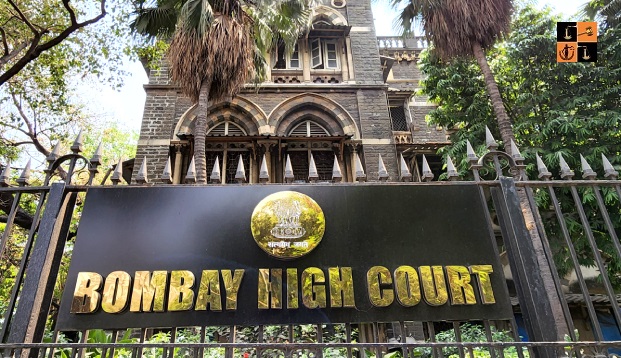
Recently, the Bombay High Court clarified the scope of judicial powers in matrimonial disputes, holding that while courts are empowered to order medical examination of a spouse in divorce proceedings under Section 13(1)(iii) of the Hindu Marriage Act, such power cannot be exercised mechanically or without sufficient foundational material. The Court underscored a crucial safeguard, judicial discretion must not be used casually, especially when it directly impacts an individual’s dignity and privacy.
Brief Facts:
The dispute arose from a matrimonial petition filed by the husband seeking divorce under Sections 13(1)(ia), (ib), and (iii)(a) & (b) of the Hindu Marriage Act, alleging that his wife was suffering from incurable unsoundness of mind and a serious mental disorder. During the proceedings, the husband moved an application before the trial court requesting that the wife be directed to undergo a medical examination to assess her mental and physical condition. The trial court allowed this application. Challenging this direction, the wife approached the High Court by way of a writ petition, arguing that such an invasive order was passed without any credible material on record to justify the necessity of a medical examination.
Contentions:
The counsel for the petitioner-wife contended that the trial court had acted mechanically and without application of mind. It was argued that there was no prima facie evidence to suggest that the petitioner suffered from any mental illness or unsoundness of mind. Reliance was placed on judicial precedent to emphasize that directing medical examination without foundational proof amounts to an unwarranted intrusion into personal liberty and dignity.
On the other hand, counsel for the respondent-husband argued that the court is vested with the authority to order medical examination to ascertain the truth of allegations under Section 13(1)(iii). It was submitted that such examination is often necessary to assist the court in determining whether the statutory grounds for divorce are satisfied. Reliance was placed on precedents including Sharda v. Dharmpal and other judgments to support the proposition that courts can seek medical evaluation in appropriate cases.
Observations of the Court:
The High Court undertook a careful balancing of competing interests, the necessity of medical evidence in matrimonial disputes and the protection of individual rights. It acknowledged that medical examination can play a vital role in determining claims of mental disorder under Section 13(1)(iii). However, the Court firmly cautioned against indiscriminate use of such power.
In a significant observation, the Court held, “Matrimonial Court possesses sufficient powers to direct medical examination… however, that does not mean that Court shall casually pass order directing medical examination without satisfying itself as to existence of ground on basis of evidence tendered into service.”
The Court further warned that passing such directions in the absence of prima facie material would amount to “an abuse of discretionary power at the hands of Court.” It emphasized that the burden lies on the party seeking divorce to first establish, through credible evidence, that a medical examination is necessary to determine the existence and extent of alleged mental illness. Without such foundational proof, compelling a party to undergo medical examination would be unjustified and intrusive.
The decision of the Court:
In light of these findings, the High Court allowed the writ petition and set aside the trial court’s order directing medical examination.
Case Title: D VS N
Coram: Justice S.G. Chapalgaonkar
Case No.: WRIT PETITION NO.12217 of 2025
Advocate for the Petitioner: Ms. Rutuja L. Jakhande, Advocate
Advocate for the Respondent: Mr. H. V. Tungar, Advocate
Read judgement @latestlaws.com
Picture Source :



















