









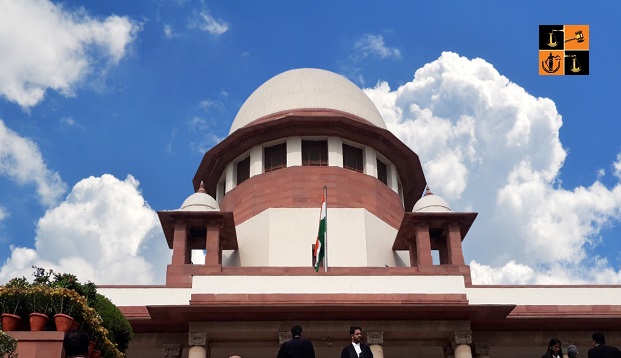
Recently, the Supreme Court set aside orders of the High Court and Revenue Board that had reopened a decades-old land dispute, restoring a 1975 decree declaring khatedari rights in favour of the appellant. The Court came down strongly on the attempt to revive litigation after an inordinate delay of 31 years, emphasizing that such belated challenges, unsupported by credible grounds, cannot be entertained, particularly when the original proceedings reflected full participation by the contesting party.
Brief Facts:
The case arose from a suit filed under Section 88 of the Rajasthan Tenancy Act, 1955, wherein the appellant sought declaration of khatedari rights over agricultural land measuring 158.3 bighas and recovery of possession from alleged encroachers. The claim was based on succession from his father, whose name stood recorded in revenue entries since 1961. The defendants, however, asserted rights on the basis of an alleged sale deed dated 1963. The trial court, after prolonged proceedings spanning nearly a decade, decreed the suit in 1975, noting failure of the defendants to substantiate their claim.
Remarkably, the decree remained unchallenged for over three decades until 2006, when an appeal was filed citing lack of knowledge and alleging fraud. While the appellate authority dismissed the appeal due to gross delay, the Board of Revenue remanded the matter, a decision later upheld by the High Court, primarily on the ground that the defendant, an illiterate widow, was not given adequate opportunity during trial.
Contentions of the Petitioner:
The appellant contended that the remand order was legally unsustainable, as the records clearly demonstrated that the defendant had actively participated in the trial proceedings through counsel and had even examined witnesses. It was argued that the plea of fraud was a later improvement, unsupported by any material evidence, and that the long delay of 31 years in filing the appeal was fatal. The appellant further emphasized that the defendants failed to produce the alleged sale deed, the very foundation of their claim, warranting an adverse inference under settled principles of evidence law. Reliance was placed on precedents including Gurnam Singh v. Surjit Singh and Ajay Kumar D. Amin v. Air France to argue that withholding best evidence weakens the defence irreparably.
Contentions of the Respondent:
The respondents, on the other hand, argued that the decree was obtained without proper notice and opportunity, especially considering the defendant’s illiteracy and vulnerability. It was contended that procedural irregularities, including absence of signatures in proceedings as required under Rule 143 of the General Rules (Civil), cast doubt on the fairness of the trial. The respondents further asserted that the original sale transaction was known to the appellant’s family and that the failure to seek declaration against the sale deed weakened the appellant’s case. Allegations of fraud and manipulation of court records were also raised to justify the delay and support the remand.
Observations of the Court:
The Court undertook a meticulous examination of the trial records and found the narrative of lack of participation to be wholly untenable. It noted that the defendant had appeared both personally and through counsel, filed applications, and led evidence, thereby negating any claim of denial of opportunity. Rejecting the belated plea of fraud, the Court observed that such allegations were “improved upon at every stage” and lacked factual foundation.
Crucially, the Court underscored the evidentiary failure of the defendants in not producing the alleged sale deed, stating that when a party withholds “the best evidence,” an adverse inference must follow. It further clarified that the plaintiff was not required to seek cancellation of the sale deed when the document itself was neither produced nor proved. On the issue of delay, the Court was categorical that condonation cannot be granted as a matter of routine, observing that “delay condonation cannot be an act of generosity defeating the cause of substantial justice.” It also found the respondents’ claim of ignorance of the decree to be contradicted by their own pleadings.
Significantly, the Court questioned the legitimacy of the alleged sale itself, noting that it involved a minor without requisite court permission, thereby attracting Section 8(2) of the Hindu Minority and Guardianship Act, 1956. The Court also doubted the credibility of subsequent purchasers, highlighting absence of title recitals and due diligence in later transactions. Overall, the Court concluded that the remand order was based on a “deliberate falsehood” and could not be sustained.
The decision of the Court:
Allowing the appeal, the Court set aside the orders of the High Court and Revenue Board and restored the original 1975 decree in favour of the appellant. The ruling establishes that long-delayed challenges to decrees cannot be entertained in the absence of compelling and substantiated grounds, and that failure to produce foundational evidence coupled with active participation in earlier proceedings bars reopening of settled disputes.
Picture Source :


















