









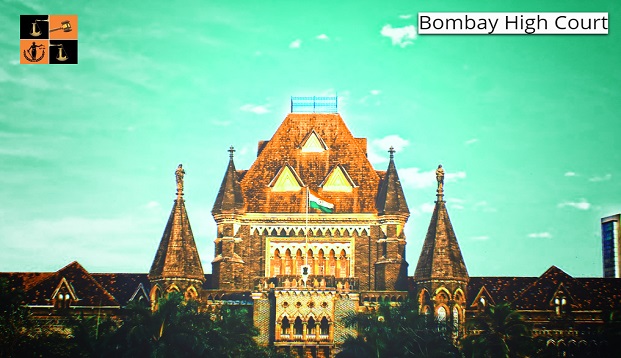
The division judge bench of the Bombay High Court ruled that a daughter would not have any right, either limited or absolute, by inheritance prior to coming into force of the Act of 1956 in the property of her deceased father, who died prior to 1956 leaving behind him in addition to such daughter, his widow as well.
Brief Facts:
The factual matrix of the case is that the Yeshwantrao had two wives, Laxmibai and Bhikubai – Yeshwantrao had two daughters from Laxmibai, namely Sonubai and Radhabai. From his marriage with Bhikubai, he had a daughter, Champubai. Laxmibai pre-deceased her husband in 1930. Sonubai expired in 1949, while Yeshwantrao expired in 1952. Thereafter, Bhikubai expired after executing a will in the favour of her daughter. However, Radhabai filed a suit for declaration that she had half share in the properties left behind by her father and sought partition of the same, and the trial court dismissed the suit on the ground that Bhikubai alone inherited the suit properties given the provisions of the Hindu Women’s Right to Property Act, 1937 and she became the absolute owner in 1956 given the provisions of the Hindu Succession Act, 1956. Furthermore, the appeal was preferred, which was also dismissed. Therefore, the present second appeal is filed.
The issue before the Court:
“Whether a daughter could acquire any right, either limited or absolute, by inheritance prior to coming into force of the Hindu Succession Act, 1956 in the property of her deceased father, who died prior to 1956, leaving behind him in addition to such daughter, his widow as well?”
Observations of the Court:
The Hon’ble Court discussed the provisions of The Hindu Succession Act 1956 and The Hindu Women’s Rights to Property Act 1937.
The court noted that under Hindu customs, a daughter, when born, on reaching marriageable age, is married and sent to her in-law’s house. Therefore, a daughter was never considered a part of the family in the era when the 1937 Act was in operation. It is also important to note that the 1937 Act is a Pre-Independence enactment. During that period, a widow had to be protected from the death of her husband since she could not go back to her parent’s house, and at the same time, her husband could not take care of her since he was no more. To get over such a situation, limited rights were conferred on a widow by the Act of 1937. A daughter was, however, excluded from claiming any inheritance right before the enactment of the Act of 1956.
The court furthermore noted that provisions of Section 6 of the Act of 1956, which provides for devolution of interest of co-parcenary property, begins with the phrase “when a male Hindu dies after the commencement of this Act....” his interest in the property shall devolve by survivorship upon the surviving members of co-parcenary ...... This indicates the intention of the legislature that provisions of the Act of 1956 would not be applicable in case of a person who expired before the enactment of the 1956 Act. Section 6(3) post amendment of 2005 also provides that the same would apply to a Hindu who dies after the commencement of the Amendment Act of 2005.
The court furthermore relied upon the judgments titled Gurudayalsing Vs. Basant Singh, Kasabai Tukaram Karwar and Ors. Vs. Nivruti (Dead Through Legal Heirs and Ors., Pranjivandas Tulsidas and Jagmohandas Jamnadas Vs. Devkuvarba wd/o Ramdas Hirchand, and Arunachala Gounder Vs. Ponnusamy & Ors.
The court observed that a daughter would not have any right, either limited or absolute, by inheritance prior to coming into force of the Act of 1956 in the property of her deceased father, who died prior to 1956, leaving behind him in addition to such daughter, his widow as well.
The decision of the Court:
The Hon’ble Court then placed the second appeal before the learned single-judge bench to decide the case on merits.
Case Title: Radhabai Balasaheb Shirke V. Keshav Ramchandra Jadhav
Coram: Hon’ble Mr. Justice A.S. Chandurkar and Hon’ble Mr Justice Jitendra Jain
Case No.: Second Appeal No. 593 of 1987
Advocates for the Appellant: Mr. S. G. Deshmukh a/w. Mr. Uday B. Nighot and Adv. Sulajja Patil, Mr. Ram S. Apte, Senior Advocate a/w. Mr. Mayuresh Lagu and Mr. Sagat Patil.
Advocates for the Respondents: Mr. Drupad Patil a/w. Mrs. Rutuja Ambekar, Mr. Namit Pansare, Mr. Rugved Kinkar and Ms. Srushti Chalke, Mr. Abhijit B. Kadam a/w. Mr. Ashish Chavan, Mr. Ashutosh A. Kumbhakoni, Senior Advocate a/w. Mr. Sarthak S. Diwan, Mr. Manoj Badgujar and Ms. Sneha S. Bhange, Mr. R. M. Haridas a/w. Mr. Pratik Rahade, Mr. Somnath Thengal and Mr. Sumeet Khaire i/b. Mr. Anil Shitole.
Read Judgment @Latestlaws.com
Picture Source :




















