









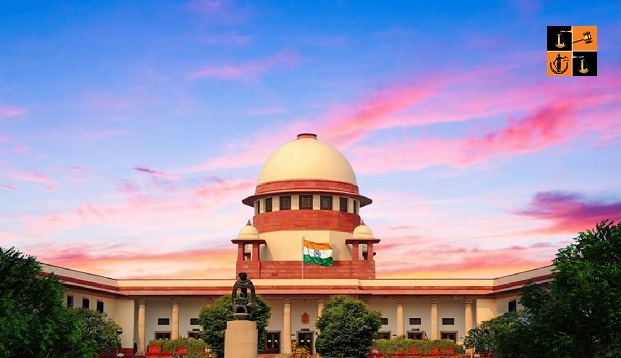
Recently, while addressing the rights of complainants in cheque dishonour cases, the Supreme Court examined whether a private complainant who suffers financial loss qualifies as a “victim” under the Criminal Procedure Code, 1973, and if such a victim can directly file an appeal claiming acquittal without seeking special leave under Section 378(4). Read on to explore how the Court interpreted legislative intent, redefined the scope of the complainant, and expanded access to appellate remedies in financial offence cases.
Brief facts:
M/s. Celestium Financial, a finance firm, extended multiple loans totaling over ₹1 crore between 2015 and 2017 to R.R. Caterers (Respondent No. 1) and others. In partial repayment, five cheques were issued by the respondents, all of which were dishonored for insufficient funds between October 2018 and June 2019. After issuing statutory notices under Section 138 of the Negotiable Instruments Act, 1881 (NI Act), the appellant filed criminal complaints. On 07.11.2023, the Judicial Magistrate acquitted the respondents, holding that the debt was not legally enforceable and the presumption under Section 139 of NI Act stood rebutted. The Madras High Court dismissed the appellant’s plea for special leave to appeal. The appellant then moved to the Supreme Court.
Contentions of the Appellant:
The appellant argued that the Madras High Court erred in denying leave under Section 378(4) CrPC despite a prima facie case, leaving no remedy. It was contended that as a complainant under Section 138 NI Act, the appellant qualifies as a “victim” under Section 2(wa) CrPC and can appeal under the proviso to Section 372 of the CrPC without special leave. Since Section 372 of the CrPC grants victims an unconditional right to appeal, it was urged that the impugned order be set aside and the appellant be allowed to pursue the appeal before the competent court.
Contentions of the Respondent:
The respondents contended that the High Court’s order was justified, as the appellant failed to establish the existence of a legally enforceable debt, and the Magistrate’s acquittal was based on sound reasoning. They argued that the High Court rightly declined to grant special leave under Section 378(4) CrPC, as the appellant, being merely a complainant, did not demonstrate any perversity or legal error in the Magistrate’s findings. It was further submitted that the appellant’s appeal was devoid of merit since the appropriate course for a complainant in a Section 138 NI Act case is to seek special leave under Section 378(4), which was rightly denied.
Observation of the Court:
The Court addressed the question of whether a complainant in a case under Section 138 of the NI Act, qualifies as a “victim” under Section 2(wa) of the CrPC, and can thus appeal an acquittal under the proviso to Section 372 without seeking special leave under Section 378(4).
The Bench, aligning with the view of Justice Lokur in Mallikarjun Kodagali v. State of Karnataka (2019), emphasized the liberal and progressive interpretation of victims’ rights. It held that “the complainant under the Act also qualifies as a victim within the meaning of Section 2(wa) of the CrPC,” as they suffer economic loss and injury due to the dishonour of a cheque, deemed an offence under Section 138 of the NI Act. Further, the Court noted that the proviso to Section 372, grants victims an unconditional right to appeal against acquittals, distinguishing this from the restrictive requirements under Section 378(4) for complainants.
The Court analyzed the definition of “victim” under Section 2(wa), which includes “a person who has suffered any loss or injury caused by reason of the act or omission for which the accused person has been charged,” encompassing financial loss as a form of injury. It clarified that “the expression ‘victim’ has been couched in a broad manner so as to include a person who has suffered any loss or injury,” including legal heirs or guardians, thus extending to complainants in cheque dishonour cases.
The Division Bench of Justice B. V. Nagarathna and Justice Satish Chandra Sharma observed, “the complainant under the Act also qualifies as a victim within the meaning of Section 2(wa) of the CrPC. Consequently, such a complainant ought to be extended the benefit of the proviso to Section 372, thereby enabling him to maintain an appeal against an order of acquittal in his own right without having to seek special leave under Section 378(4) of the CrPC.” The Court further reasoned that requiring a victim to seek special leave under Section 378(4) would render their right to appeal “illusory” and contradict the legislative intent behind the 2009 amendment to Section 372, which aims to provide victims with an absolute right to appeal. It distinguished the roles of a complainant and a victim, stating, “if the complainant is also a victim, he could proceed under the proviso to Section 372, in which case the rigour of sub-section (4) of Section 378, which mandates obtaining special leave to appeal, would not arise at all.”
The Apex Court stressed that “the right of a victim of a crime must be placed on par with the right of an accused who has suffered a conviction,” as the latter can appeal under Section 374 without conditions. It rejected the respondent’s contention that the complainant must be restricted to Section 378(4), noting that such an interpretation would undermine the victim’s statutory rights under Section 372. The Adjudicating Authority also highlighted the absence of State involvement in Section 138 cases, as they are initiated via private complaints under Section 200 of the CrPC, reinforcing that the complainant is the victim. It concluded that “the victim of an offence has the right to prefer an appeal under the proviso to Section 372 of the CrPC, irrespective of whether he is a complainant or not,” ensuring access to justice without procedural barriers.
The decision of the Court:
Under the light of the foregoing discussion, the Top Court set aside the Madras High Court’s order and granted liberty to the appellant to file an appeal(s) under the proviso to Section 372 of the CrPC within four months from 08.04.2025, with the direction that the issue of limitation shall not be raised by the respondents or the appellate court if filed within this period.
Case Title: M/s. Celestium Financial Vs. A. Gnanasekaran Etc.
Case No: Special Leave Petition (Crl.) Nos. 137-139/2025
Coram: Justice B. V. Nagarathna and Justice Satish Chandra Sharma
Counsel for Appellant: Advocate Danish Zubair Khan
Counsel for Respondent: Advocate G Sivabalamurugan
Read Judgment @ Latestlaws.com
Picture Source :




















