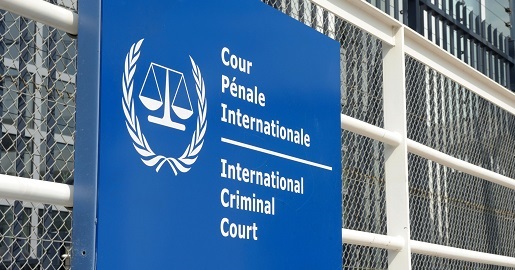
The author Karan Sharma graduated with Honours in International Relations from King’s College London.  To what extent have politics restricted the International Criminal Court’s effectiveness? INTRODUCTION The International system seldom allows justice to be carried out independent of politics. And in all practicality, it is unfair to expect an international institution to completely disentangle itself from the realities of the international system and power politics they engage with whilst it thrives to carry out justice. However, such an influence should never lead to the undermining of the ICC as an International legal institution. The International Criminal Court is an intergovernmental organization and International tribunal that sits in The Hague in the Netherlands. The premise of its establishment was based on the predicament that as national governments might be effective in providing a system of judiciary that effectively monitors and controls national laws, the national judiciaries often find themselves helpless in dealing with crimes that go beyond borders. National judicial systems are inherently unequipped to deal with issues of genocide or mass crimes against humanity. The ICC was established on this backdrop of bringing to justice certain crimes committed that require international attention. In this paper, my thesis shall help explain how the structural framework of the ICC limits the impact politics can have on its proceedings, however its lack of overarching authority and executive force preclude it from exercising independent control of the International Judicial System, leaving it sensitive of politicization whenever it interacts with individual States or state actors. DISCUSSION At the structural level, the ICC is entirely detached from the political implications one would expect to be brought upon an institution of such high political relevance. However, structure alone does not determine operation independent of political influence for a world court. Due to the lack of an operational force and overarching authority, the functioning of the ICC is highly dependent on Individual States and political bodies within States. The ICC is unique as unlike most other International Institutions, it wasn’t established by the UN. It is an intergovernmental organization that came into being via a treaty signed by several nation-states. The ICC is an International court but that does not automatically permit it to have jurisdiction all around the world. The ICC has the jurisdiction to operate only in countries where genocide, crimes against humanity or mass atrocities were committed after the Rome Statute came into force. The Statute reads the ICC’s jurisdiction as applicable where “the crimes were committed by a State Party national, or in the territory of a State Party, or in a State that has accepted the jurisdiction of the Court; or the crimes were referred to the ICC Prosecutor by the United Nations Security Council (UNSC) pursuant to a resolution adopted under chapter VII of the UN charter (Icc-cpi.int, 2018). To discuss how its effectiveness is affected by politics, we need to first establish the purposes of ICC’s establishment, which will make clear how the ICC ideally can function for being optimally effective in carrying out its role. It will then be more understandable to discuss the political obstacles in the way of ICC’s optimal success. It can be safely said that ICC’s short journey as a world court has been promising. It has been successful in prosecuting military and political leaders. But as would be obvious, trying and prosecuting such high-ranking officials does not come with much ease to the court. The ICC is often constrained by financial burdens or issues of legality or pressure from the UNSC. Despite its stature as a world court, the ICC ironically does not exercise jurisdiction in a significant part of the globe which undermines its stance of being a World Court. Countries prone to being tried by the ICC have restrained from ratifying the Statute. The International Criminal court finds jurisdiction in countries which have signed and ratified the Rome Statute. Therefore, the ICC cannot legally try individuals committing crimes in over one third of the world. For instance, American foreign policy has throughout history been a matter of contended debate in academia and amidst scholars of legality and ethics. The United States’ conduct in Iraq raised a lot of questions as stories about their prison camps unravelled. The most controversial was the CIAs and US Army’s human rights violations in Abu Ghraib prison. According to reports the US Army and the CIA committed a series of human rights violations against detainees in the Abu Ghraib Prison in Iraq. “These violations included physical and sexual abuse, torture, rape, sodomy, and murder” (Hersh, 2004). The abuses became popular to media and public attention with the publication of photographs of the abuse by a news channel. “The incidents received widespread condemnation both within the United States and abroad, although the soldiers received support from some conservative media within the United States” (Sontag, 2004). Human rights organizations stated that the “abuses at Abu Ghraib were not isolated incidents, but were part of a wider pattern of torture and brutal treatment at American overseas detention centres, including those in Iraq, Afghanistan, and Guantanamo Bay” (Smeulers & van Neikerk, 2008). Scholars and commentators also stated that the abuses in Abu Ghraib constituted State-sanctioned crimes. Such patterns of human rights violations should have brought the UNSC to refer the cases to the ICC, however due to an American veto this would not possibly reach the court. “The Prosecutor of the ICC reported in February 2006 that he had received 240 communications in connection with the Iraq invasion in 2003 alleging that various war crimes had been committed. The overwhelming majority of these communications came from individuals and groups within the United States and the United Kingdom” (Norton Taylor, 2005). The American government’s reluctance of ratifying the statute is viewed by many as a highly hypocritical stand to defend American nationals from being tried by an International Court while going on a quest to punish the rest of the world. American Foreign policy experts similarly agree that “American people and its government are extremely concerned with helping people across the world that suffer from violations of their human rights, but that like all issues in politics presents a substantial disagreement on how we can best do this while preserving their own political traditions. There is also a concern from some American lawmakers that if as a country the United States joins the court, individuals from the global community will punish America for its aggressive foreign policy by using the ICC to prosecute American soldiers and other military actors” (Bulger, 2013). The United States using its political leverage to safeguard its citizens humiliates the ICC as an institution. If major States not ratifying the Rome Statute was already not enough of a setback for the ICC, the US diplomacy had more upsets aligned the ICC’s way. Since according to the statute, the ICC could still prosecute US nationals committing crimes on the territory of states that were party to the ICC. That would mean that US military officials or Special agents could be tried for humanitarian crimes in any State which is party to the ICC, as the ICC would have jurisdiction over all crimes committed on that territory. Therefore, despite the US not ratifying the Rome Statute, the United States could find its citizens being prosecuted for crimes committed in all 123 states party to the ICC. To securitize American personnel from this phenomenon, the American diplomats went around the world and cracked bilateral agreement deals asking for non-surrender of American citizens to the ICC. As mentioned in the Statute, “the international agreements mentioned in Article 98(2) of the Rome Statute are referred to by several terms, including Article 98 agreements, bilateral immunity agreements (BIAs), impunity agreements, and bilateral non-surrender agreements. Starting in 2002, the United States began negotiating these agreements with individual countries, and has concluded at least one hundred such agreements. Countries that sign these agreements with the United States agree not to surrender Americans to the jurisdiction of the International Criminal Court” (georgetown.edu). “Dubbed bilateral immunity agreements (BIAs) by leading experts, these U.S. agreements provide that current or former U.S. government officials, military and other personnel (regardless of whether or not they are nationals of the state concerned, i.e., foreign sub-contractors working for the U.S.) and U.S. nationals would not be transferred to the jurisdiction of the ICC. Many governments, NGO’s, and other international law experts argue that the US is misinterpreting Article 98 of the Rome Statute, the provision of the ICC’s governing treaty that the US is using to justify seeking these agreements. Legal experts further contend that such agreements constitute a breach of international law if signed by ICC States Parties. The ICC advocates acknowledge this rupture in the system and condemn the U.S. Bilateral Agreements as an attempt to gain impunity from the crimes defined in the Rome Statute of the ICC, namely: genocide, crimes against humanity and war crimes” (iccnow.org, 2006). This is one example of diplomatic politics defeating the vision of a world court, as what good is a world court that has its hands tied to try one-third of the global population. The effectiveness of the ICC is weakened and its authority undermined by States manipulating the system to take control over the outcomes of an international institution, and successfully doing so. After debating a host of limitations hurdling the ICC’s effectiveness, it naturally leads one to question: How effectively can the ICC deter atrocities? Part of its effectiveness lies in preventing on-going mass crimes from carrying on unattended. “The Rome Statute also reserves a role for the United Nations Security Council. The Council can refer situations in which one or more such crimes appears to have been committed in any State, regardless of whether it has ratified the Statute of the Court, under Chapter VII of the Charter of the United Nations” (Intelmann, 2016). “This avenue was considered necessary to end impunity and to provide the Council with the ability to use the ICC instead of having to set up new ad hoc tribunals in situations where international crimes were taking place outside the Rome Statute system and no domestic investigation of these crimes was taking place” (Intelmann, 2016). However, the usefulness of the UNSC is questioned when a humanitarian crisis like Syria is not referred to the court because the security council resolution can’t be passed. This is the underlying problem of deterrence of atrocities. France prepared a resolution for the security council highlighting the grave humanitarian crisis in the region and the mass atrocities being committed to stress on the need for the Security Council to responsibly refer the situation to the ICC, but at the same time knowing it was a lost cause as it would be vetoed by Russia and maybe China. This did in fact happen, the resolution was dropped due to the Russian and Chinese VETO. This politicization of the humanitarian crisis in Syria again undermined the purposes of an International court. If an ad hoc tribunal has to be later established for the crimes committed in Syria it will be a marked failure for the ICC as an institution even when the Statute gives room for a legal intervention via the UNSC referral. Despite efforts to grant the ICC enough independence at its inception, it is falling prey to the politicization of events where it is unable to act against interests of certain states. In an extensively globalizing world, it is impossible for a World court to be successful if the Major Powers do not contribute to the cause of justice. This interplay of politics amongst the major powers presents a serious challenge to the ICC’s effectiveness. Another major problem that arises with the functionary of the ICC is that unlike other domestic judicial bodies in every country, the ICC is not a state body. It does not have the tons of authority and forces at its disposal that a national judicial body does. The ICC relies on support from the States to cooperate for providing necessary intel and workforce. However, we do not live in an ideal world and this does not always happen. “Time has also shown that the legal and diplomatic means at the disposal of the Court and the States Parties are not enough in cases where the referred country refuses to cooperate. This constitutes a serious weakness of the system, produces a delay in delivering justice and ultimately a feeling of abandonment, desperation and continued injustice in affected communities” (Intelmann, 2016). If a State refuses to cooperate, the ICC does not have either the executive force to coerce its authority over the state nor the legal authority. As supported by Bethel Aregawi in her paper discussing the politicization of the ICC, she argues that “a quintessential element that significantly affects the work of the ICC is the consistent cooperation of states. Yet, some non-state parties and parties to the Rome Statute refuse to comply with its obligation to cooperate with the ICC, such as in the case involving al-Bashir. The ICC does not have enforcement forces; it relies on states’ willingness to assist to execute its mission. This is indicative of its lack of full authority and influence. The ICC can be deemed compromised, as it relies on the UNSC to back up the ICC with its power to mandate cooperation from all UN member states” (Aregawi, 2017). Discussing the same subject, David Bosco in his book ‘Rough Justice’ talks about how “arrests cannot be successfully conducted without serious planning and preparation, which takes time. The international community should take steps now to assist on such practical planning. As UN Secretary-General Ban Ki-moon reflected in Kampala, “now we have the ICC, permanent, increasingly powerful, casting a long shadow. There is no going back” (Bosco, 2013). “The perception that the Security Council was instrumentalizing the court—referring situations with strict conditions and then not providing financial or political support—had become widespread. In private meetings with ICC officials, non-major-power national diplomats voiced concern that the court was coming under the control of the Council. “If the Prosecutor cannot start proprio motu investigations due to financial constraints but continues with Security Council referrals then the independence of the ICC is at risk” (Bosco, 2013). While making the argument Bosco acknowledges that “the ICC operates in a political world and all the cases it handles are highly politically charged and the institution is politically charged. He argues that the court can’t let those aspects govern its decisions but it can’t be oblivious to them either. We’re (ICC) building an institution here. We’re not a national justice ministry, which has tons of authority through years of operation and acceptance in society. They can throw their weight around. We have no weight. We’re the Wizard of Oz behind the curtain. If we were purists about everything we did, we’d quickly run into trouble” (Bosco, 2013). There is awareness amongst the ICC that their institution does not exist in a utopian world. The ICC has to therefore be sensitive in exercising its authority. Additionally, ICC’s duty to try high ranking individuals is in itself a highly political process. It brings with it a lot of resentment and assertions. At the same time, the UNSC’s referrals to the ICC for majorly African States brings a lot of criticism to the ICC labelling it as a political tool carrying out western interests. Diplomacy does not stop here to limit the ICC in its active role internationally. There has been active dissent against this trend by African States. For instance, in its efforts to prosecute President Kenyatta and Deputy President Ruto, the case became so sensitive throughout Africa that it threatened to pose a real challenge to the court’s authority. “the Kenyan government successfully lobbied AU members to adopt a resolution calling for the cases to be referred to Kenya for national proceedings to be taken, rather than being left to the ICC” (Du Plessis, Maluwa & O’Reilly, 2013). The resolution demanded for a referral by the Security Council of the matter back to the Kenyan Courts. Another challenge that often comes up to the ICC while carrying out its trials is its Witness Protection Programme. The crimes the ICC tries are of high political magnitude, it is therefore difficult to obtain witnesses to testify, what is more challenging is to ensure the safety of theses witnesses to ensure they do not turn hostile or remain unharmed. Due to the lack of ICC’s operational administration, it has to again rely on the States to ensure the witnesses security and protection, and that leads to a lot of room for corruption and politicization affecting the ICC’s effectiveness. As highlighted in the journal on Africa and the ICC: “One of the main problems with the ICC’s witness protection programme is that it must rely on local partners to carry out protection measures. In Kenya, for instance two witnesses have disappeared, while others are ‘recanting’. Were these cases to be referred back to Kenya, where the witness protection agencies are accountable to the accused, it is extremely unlikely that the necessary testimonies would be obtained” (Du Plessis, Maluwa & O’Reilly, 2013). IN CONCLUSION The aim of this paper was to discuss the extent to which politics has restricted the ICC’s effectiveness. It has been discussed how the structural framework of the ICC limits the impact politics can have on its proceedings, however its lack of overarching authority and executive force preclude it from exercising authoritative control over the International Judicial System, leaving it sensitive to politicization whenever the ICC interacted with States or Statesmen. It has been discussed how the structural framework of the ICC is strangely independent from political influence unlike most other International institution, however, it has at length been discussed how politically active States like the US that are aware of the sensitivity of the International exercise of the ICC are able to overwhelm the role of the ICC. The phenomenon has been explained via examples of instances of human rights abuses by the US going unchecked due the lack of Jurisdiction of the court. The politics of the setting was further highlighted by discussing the bilateral immunity agreements between the United States and numerous other States safeguarding US Personnel from the ICC. I mentioned how the ICC would be optimally effective if it could try individuals and crimes indiscriminately from every part of the world. Later it was discussed how the effectiveness of the ICC to deter atrocities as an International court are challenged, discussing the role of the UNSC in politicizing the ICC and restricting its effectiveness in humanitarian crisis zones requiring International judicial intervention. I spoke about how the internal politics of the UNSC effects its role of positively supporting the ICC’s mandate. I then moved to the Operational assessment of the ICC’s guard against political influence. I discussed the gruesome reality of the lack of executive force holding the ICC back, talking about how the ICC is dependent on the UNSC and other States to carry out its investigations, gathering intelligence and protecting its witnesses. This dependence weakens the ICC’s structural immortality against politicization. State compliance and cooperation begins to impact the court’s operation which hinder effective trials. The ICC is a highly politically charged institution with a deeply political role in the international system, it must not let politics govern its functionary but at the same time it cannot remain oblivious to it. Bibliography • Bosco, D. (2014). Rough Justice: The International Criminal Court in a World of Power Politics. Oxford University Press. • Max du Plessis, Tiyanjana Maluwa, Annie O’ Reilly. (2013). Africa and the International Criminal Court, Chatham House. • Editorial, O. (2017). The Observer view on the effectiveness of international law | Observer editorial. [online] the Guardian. Available at: https://www.theguardian.com/commentisfree/2017/dec/17/observer-view-international-law-criminal-court. • HuffingtonPost. (2016). The International Criminal Court and the United Nations Security Council: Perceptions and Politics. [online] Available at: https://www.huffingtonpost.com/tiina-intelmann/icc-un-security-council_b_3334006.html. • Hrw.org. (2013). Syria and the International Criminal Court. [online] Available at:https://www.hrw.org/sites/default/files/related_material/Q%26A_Syria_ICC_Sept2013_en_0.pdf. • Jerusalem Centre For Public Affairs. (n.d.). Politicizing the International Criminal Court. [online] Available at: http://jcpa.org/politicizing_the_international_criminal_court/. • Iccnow.org. (2006). STATUS OF US BILATERAL IMMUNITY AGREEMENTS (BIAs). [online] Available at: http://www.iccnow.org/documents/CICCFS_BIAstatus_current.pdf. • E-International Relations. (2015). To what Extent Have Politics Restricted the ICC's Effectiveness?. [online] Available at: https://www.e-ir.info/2015/12/20/to-what-extent-have-politics-restricted-the-iccs-effectiveness/. • Guides.ll.georgetown.edu. (n.d.). International Criminal Court - Article 98 Agreements Research Guide. [online] Available at: http://guides.ll.georgetown.edu/article_98 • Bethel Aregawi, The Politicization of the International Criminal Court by the United Nations Security Council Referrals, African centre for the Constructive Resolution of Disputes, 2017 • Hersh, S. (2004). Chain of Command. [online] The New Yorker. Available at: https://www.newyorker.com/magazine/2004/05/17/chain-of-command- • Sontag, S. (2004). Regarding The Torture Of Others. [online] Nytimes.com. Available at https://www.nytimes.com/2004/05/23/magazine/regarding-the-torture-of-others. html. • Smeulers, A. and van Neikerk, S. (2008). Abu Ghraib and the War on Terror – A Case Against Donald Rumsfeld?. [online] Papers.ssrn.com/sol3/papers.cfm?abstract_id=2388266. • Norton-Taylor, R. (2005). International court hears anti-war claims. [online] the Guardian. Available at: https://www.theguardian.com/politics/2005/may/06/uk.Iraq2 • Bulger, M. (2013). The International Criminal Court: Why is The United States not a member? – TheHumanist.com. [online] Available at https://thehumanist.com/news/international/the-international-criminal-court-why=is-the-united-states-not-a-member • Icc-cpi.int. (2018). Home. [online] Available at: https://www.icc-cpi.int/.
Picture Source :
Karan Sharma






























