Speculation is rife for what the new Prime Minister intends for employment law, but as John Hayes explains, the most likely outcome would be mere tinkering.
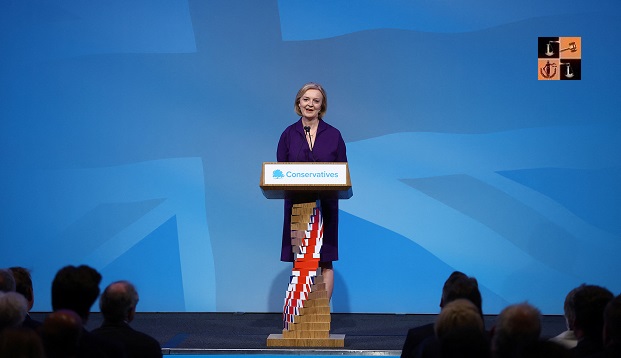
Reports over the weekend have suggested that there could be a “bonfire of workers’ rights,” if Liz Truss is appointed, as we now know to be the case, as the new Prime Minister.
According to a report in The Times, Truss and her new cabinet are likely to look at the Working Time Regulations, which came into force in the UK in 1998 on the back of the EU Working Time Directive.
These rules impose limits on weekly working hours, although workers can opt out of this as part of their employment contract. The legislation protects workers from discrimination if they choose not to opt out.
However despite her “messaging” as an avowedly right-wing Tory leader, I believe this is unlikely to happen.
Firstly, we have one of the best employment law systems in the world, and it doesn’t need much change. Most of the challenges with UK productivity have nothing to do with UK employment law.
Secondly, the “big ticket stuff” such as tax rates or energy shortages, which will dominate the new PM’s in-tray will have nothing to do with employment law. The biggest single change for employers would be a reduction in the rate of NICs (recently introduced by a Conservative government, in part to pay for the Covid response).
Thirdly, there may be some “tinkering” but it won’t be very significant in the overall scheme of things. These are the areas where we may see something happen:
- There won’t be wholescale repeal of the Working Time Regulations: given that the main effect of WTRs was to introduce a right to statutory holiday for the first time. The 48-hour working week may go but this is a purely totemic point given that most private sector organisations negotiate contractual “opt-outs” and, in terms, those that want to work 48+ hours per week, do;
- There may be some sensible reforms under WTR in terms of the calculation of holiday pay, which is now fiendishly complicated and could (and should) be simplified;
- There may be some amendment to TUPE rights (in particular the ability to make post-TUPE contractual variations) which are difficult under this EU-derived law. However, TUPE as a whole is unlikely to be repealed because business is largely happy with the certainty it provides;
- The Agency Workers Regulations may be repealed; AWR came from an EU directive and this could well be part of the “Brexit dividend”;
- There could be some curtailing of the right to strike, particularly around balloting requirements, but this would clearly attract severe opposition from the unions and their members and could make already fragile industrial relations worse. Indeed the TUC has contacted the International Labour Organization, a UN body, to share its concerns over government plans;
- Perhaps the government may begin to enact some of its plans made in the Employment Bill? It will be interesting to see whether some of the more progressive recent announcements, such as the right to apply for flexible working from “day one”, will be actioned.
But all the major planks of current employment law will stay: the two- year qualifying period for unfair dismissal, the 2010 Equality Act and anti-discrimination legislation (most of which originates from EU directives).
We will see the equivalent of slight tweak on the tiller, but nothing radical. More fundamental changes would happen with a change of Government. Opposition parties would likely reduce the qualifying period for unfair dismissal to one year (possibly even six months) and bring in more sweeping changes to the equality agenda.
Whether the election of Liz Truss to Tory leader makes a change of government at the next election more likely – setting us on the course of such change – of course remains to be seen, but I believe Truss and her new cabinet colleagues will have more pressing matters in their sights.
(Only the headline and picture of this report may have been reworked by the LatestLaws staff; the rest of the content is auto-generated from a syndicated feed.)
Source Link