September 20,2018:
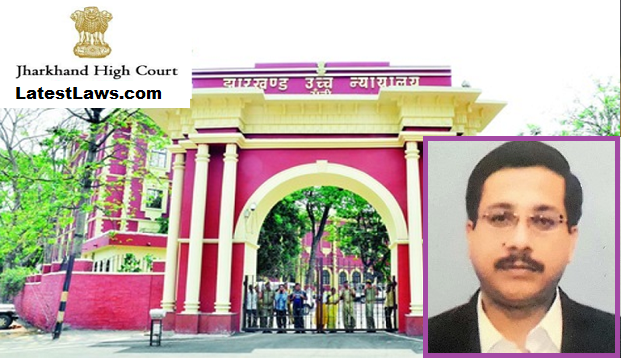
Name of Legal Stalwart: Advocate Sri Atanu Banerjee
Area of Practice – Constitutional Law, Taxation Laws, Service Laws, Civil & Criminal Laws.
Enrolment No. 1760/1999
Office Address - Room No.-18, Advocates’ Association, JHC, Ranchi./B.N. Banerjee House, Haidar Ali Road, Kokar, Ranchi, Jharkhand
Contact no. 0651-2543453, 9835163582
The Author, Aakanksha Derashree is a student of 3rd Year student of National University of study and Research in Law, Ranchi. She is currently interning with LatestLaws.com.
Q1. Why have you opted law as a career?
Ans. The Legal Profession is in fact a ‘Noble Profession’. Not only a Legal Professional can earn recognition, repute besides name and fame but can also protect the interest of the society at large. My inclination towards law was essentially a product of my innate endeavour to be of use to the society at large and to protect the interests of the simple downtrodden poor man. People from almost all walks of life come to me for my legal opinion or engagement, of which a large chunk are the poor and the downtrodden, so the object sought to be achieved by me through this profession is being accomplished and this gives me a sense of job satisfaction.Q2. How was your experience as law student?
Ans. The entire journey of my legal education can be summarized as an “Educational Adventure”. Obviously, we did not have the top colleges or law schools at that point of time in India, and the concept of Moot Courts, Trails etc. was not prominent. I as a student was confined to my books, used to read a lot and research a lot in any given subject area and there I found my penchant and appreciation for the law.
Q3. Do you think the process of education has evolved since then? If yes in what way?
Ans. Yes, the process of teaching law has evolved with time in a very positive manner. The approach towards law today is more competitive which never the scenario was in our time. Back then, there was no concept of Internships, Mock Trails, just a few moot courts and that’s all. All we used to focus on was the theoretical aspect rather than the practical aspect. The inclusion of all these co-curricular activities in law schools has resuscitated and revolutionized this process of education of law. This practical approach makes law more usefully applicable, acceptable and indulging.
Q4. Would you like to share your views about your first case or any other memorable case?
Ans. The first case that I actually argued out was an application for regular bail. I still remember the charges against my client and the prosecution story. The bail application was to be heard by Hon’ble Justice Nagendra Rai and after arguing the matter at length he did not seem very much inclined to grant bail, and then he suddenly asked me “Young lawyer, since when you are practicing” and I replied that “this is my very first case, your lordship”. He went over the records and heard my arguments again and finally granted me bail. So that was my first experience.
Before the bail, I had also filed a writ petition against my university on account of its failure to declare results even after due competition of the examination. I myself had drafted the writ petition with some help of my senior advocate. The university declared the results just before the matter could be heard at the first instance and as a result, my writ became infructuous. So, it was almost my first case.\
Q5. We often come across the cases in which justice has been delayed in our courts. So what do you think where does the actual fault lies?
Ans. It should not be always proper to say that justice has been delayed, this is mainly because the procedural law has to be thoroughly complied with which makes it a lengthy and tedious process. No one in the judicial system delays justice intentionally, but sincerity on the part of everyone associated with the judicial system, specially the lawyers will certainly aid in curbing the delay.
Q6. For expediency of justice our legal system has come with system like ADR. How far do you think this mechanism is efficient? If not what are the measures to curb the same?
Ans. ADR is very efficient method as it is based on mutual understanding of both the parties. It’s a win-win situation for both the parties and it’s in contrast with the tedious, time-consuming and costly processes of the courts. This mechanism saves the precious time of courts as well. Since its inception in the legal system, it has served the needs and demands of the society, individuals and corporates in a very comprehensive and fruitful manner.
Q7. Our justice system is liberating the society from ancient social evils like acceptance of homosexuality, debarring women to enter into temple at the time of their menstrual cycle. What are your views on these judgments?
Ans. Law is a dynamic pursuit. The only thing that is constant here is change. These types of judgments are very much necessitated for the growth of our constitutional setup and also to adopt to the changing public morality. A society may not accept these unorthodox concepts but the law needs to recognize it. Not all socially unaccepted things can be made illegal per se. These are just like the social reforms brought earlier by the Raja Ram Mohan Roy and others. So the parliamentarians need to make laws or bring some changes in accordance with it.
Q8. Do you think judges sometimes get influenced by the emotional aspect of the facts?
Ans. No, so far as my experience is concerned, judges are truly unbiased in the discharge of their duty. Every judge you come across, is essentially a very well read person and he is aware of these factors which may influence their judgements, and since they themselves are aware of these key aspects, they are able to wield the sword of justice in a very sacrosanct and impartial manner.
Q9. Any Advice you would like to recommend to your juniors, freshers and graduating students regarding their law career, what they should do and they should not, where they must spend their time in the correct direction?
Ans. Whoever opt law as a career must do it because of their inner motivation to pursue the profession and not because of any extraneous factor. They must go through all the basics of law, keeping in mind a sure fact that they have to apply it someday in their future. I would also advise them to be diligent in their work and also inculcate in them a habit of reading. And finally, there is no substitute of hard work, and this applies to this profession in a very apposite manner.