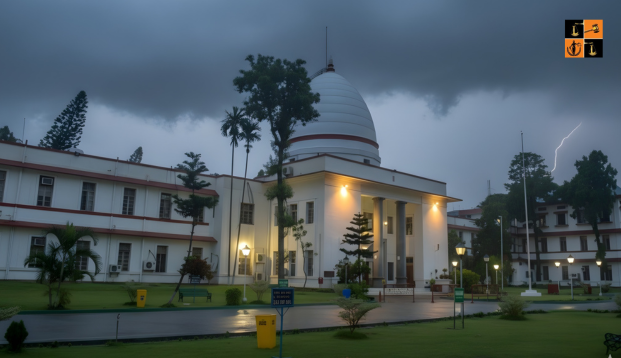
Recently, the Gauhati High Court upheld that minor defects in the authorization to file a complaint under Section 138 of the Negotiable Instruments Act, 1881, do not invalidate proceedings. The Court emphasized that deficiencies in initial corporate approval are curable and do not justify quashing a complaint outright, noting that “early authorization deficiency is a correctable flaw that can be fixed even later with Board approval.”
Brief Facts:
The case arose when M/s Gupta Hardware Pvt. Ltd. filed a complaint against M/s Amprolisa Construction and Marketing Pvt. Ltd. for dishonour of a cheque under Section 138 of the Negotiable Instruments Act. The complaint was lodged by the company’s marketing manager, Manab Lahkar, before the Chief Judicial Magistrate, Kamrup (Metro). After initial scrutiny on August 26, 2015, the Magistrate issued summons to the accused. Over the course of proceedings, the complainant submitted additional evidence, including a General Power of Attorney and a Board Resolution, seeking to clarify the authority of the individual who filed the complaint.
The Trial Court admitted the additional evidence under Section 311 CrPC on December 7, 2019, noting no prejudice to the accused. Subsequently, the accused challenged the proceedings under Section 482 CrPC, claiming lack of proper Board authorization. The High Court reserved judgment on November 4, 2025, and delivered its ruling on December 3, 2025.
Contentions of the Petitioner:
The accused contended that the complaint was invalid because the marketing manager who filed it lacked proper authorization from the Board of Directors. The petitioner argued that the initial General Power of Attorney was executed by a director acting individually and not on behalf of the company, thus violating Section 291 of the Companies Act, 1956 (now Section 179 of the Companies Act, 2013). It was further argued that the Magistrate failed to verify the complainant’s authority before taking cognizance, and allowing additional evidence post hoc was improper, as it strengthened the complainant’s position unfairly. The petitioner relied on precedents including Ashok Bampto Pagui v. Agencia Real Canacona Pvt. Ltd., State Bank of Travancore v. Kingston Computers, to emphasize the necessity of prior Board authorization.
Contentions of the Respondent:
The complainant argued that the marketing manager was duly authorized through a General Power of Attorney to represent the company in financial matters, including filing complaints. Any initial defects in authorization were later rectified by a Board Resolution and a fresh Power of Attorney, which made the defect curable.
The respondent maintained that these deficiencies were purely technical and cited precedents supporting this view, including Bhupesh Rathod v. Dayashankar Prasad Chaurasia, TRL Krosaki Refractories Ltd. v. SMS Asia Pvt. Ltd., demonstrating that authorization flaws can be remedied and should not invalidate proceedings.
Observations of the Court:
The High Court examined the intersection of corporate authorization and cheque dishonour law, recognized that a company acts through its Board of Directors and that directors cannot act unilaterally. However, the Court noted that the marketing manager represented the company in filing the complaint and that the filing in the company’s name was legally adequate.
Citing Bhupesh Rathod and TRL Krosaki Refractories, the Court reinforced that a natural person can represent a firm and that this representation suffices at the initial stage. It further relied on Apex Court rulings such as MMTC Ltd. v. Medchl Chemicals and United Bank of India v. Naresh Kumar, which emphasize that early defects in authorization are curable. The Court stated that, “It would be excessively severe to reject a case at the outset for lack of authorization. Based on the evidence, the authorization question may be investigated during the trial.” The Court also upheld the Trial Court’s use of Section 311 CrPC to admit additional evidence, observing that such measures serve merely to clarify authority without prejudicing the accused.
The decision of the Court:
The Gauhati High Court dismissed the criminal petition under Section 482 CrPC and allowed the cheque dishonour proceedings to continue. The Court held that any initial defect regarding authorization was a curable defect, subsequently remedied through a Board Resolution and fresh Power of Attorney. The operative principle established is that technical deficiencies in corporate authorization for filing a Section 138 NI Act complaint are not fatal and can be corrected during trial, ensuring justice is not defeated by procedural formalities.
Case Title: M/S Amprolisa Construction And Anr, Vs. Gupta Hardware Private Limited And Anr.
Case No.: Crl.Pet./1263/2022
Coram: Hon’ble Mr. Justice Sanjeev Kumar Sharma
Advocate for the Petitioner: Sr.Adv. K Bhattacharjee, Adv. A Barman, Adv. B Talukdar, Adv. M Saikia
Advocate for the Respondent: Adv. PP ASSAM , Adv. M J Hazarika, Adv. P Gupta, Adv. C S Ray
Read Judgment @Latestlaws.com