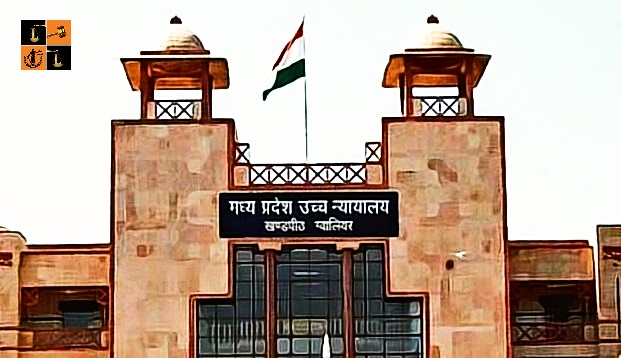
Recently, the Madhya Pradesh High Court set aside the Family Court’s decision and granted divorce to a husband, holding that false allegations of alcoholism made by the wife amounted to mental cruelty. The Court observed that levelling unfounded accusations which damage a spouse’s social reputation and dignity constitutes a grave form of mental cruelty within the meaning of matrimonial law.
Brief Facts:
The appellant-husband had approached the Family Court seeking divorce on the grounds of cruelty and desertion. The parties were married in 2004 and had two children. Both were employed in public service. The husband alleged that the wife’s behaviour had become intolerable and that she had been living separately since 2017.
The wife, in her defence, claimed that she had been subjected to physical and mental cruelty, which compelled her to file a complaint under the Domestic Violence Act. She further stated that the husband was suspicious of her character and habitually consumed alcohol, leading to frequent disputes. She maintained that she never wished to dissolve the marriage but was compelled to live separately for her safety and the welfare of the children. The Family Court, after examining the evidence, dismissed the husband’s petition for divorce, prompting him to challenge the decision before the High Court.
Contentions:
Counsel for the appellant contended that the trial court’s findings were contrary to the evidence on record. It was argued that the wife’s persistent false allegations of alcoholism and her unwillingness to resume cohabitation amounted to cruelty. It was further submitted that there was no credible evidence to prove the allegations of physical assault or addiction, and that the Family Court erred in relying upon unsubstantiated testimony and documents beyond the scope of pleadings.
On the other hand, the counsel for the respondent maintained that the wife was forced to live separately due to the husband’s cruel behaviour and that the divorce petition was only an attempt to secure freedom for a second marriage.
Observations of the Court:
The Court observed that the parties had been living separately since June 2017, but the statutory period of two years required to establish desertion was incomplete at the time of filing the divorce petition. Hence, the plea of desertion could not be sustained. Turning to the ground of cruelty, the Court examined the records relied upon by the Trial Court, including documents from the Lok Adalat proceedings in which the husband had earlier apologised for past conduct and agreed to reconcile. The Court noted that there was no evidence suggesting any continued misconduct or habitual consumption of liquor thereafter.
The Court found that the Trial Court had erred in relying upon the testimony of the wife’s brother concerning an alleged incident of drunken behaviour, as no such allegation was pleaded in the written statement. Such reliance, the Court held, was contrary to the settled principles of civil law. Quoting precedents including Samar Ghosh v. Jaya Ghosh, Chanderkala Trivedi v. Dr. S.P. Trivedi, and V. Bhagat v. D. Bhagat, the Court observed, “An unjustified behaviour of one spouse actually affecting the physical or mental health of the other spouse has been considered as a serious and grave case of mental cruelty.”
Further, the Court noted that by repeatedly declaring her husband to be an alcoholic and thereby ridiculing him in his social circle, the wife had subjected him to mental agony and humiliation. Such baseless accusations, the Court held, strike at the very foundation of marital trust and constitute mental cruelty.
The decision of the Court:
Allowing the appeal, the High Court held that the wife’s unfounded allegations of intoxication and her persistent refusal to resume cohabitation amounted to mental cruelty. The judgment and decree of the Family Court were set aside, and the marriage solemnized in 2004 was declared dissolved from the date of the High Court’s order.
The Registry was directed to draw the decree accordingly.
Case Title: X Vs. Y
Case No.: First Appeal No. 334 of 2021
Coram: Justice Vishal Dhagat and Justice Anuradha Shukla
Advocate for Petitioner: Adv. Pradeep Kumar Naveria
Advocate for Respondent: Advs. Jagadish Prasad Kanojia
Read Judgment @Latestlaws.com