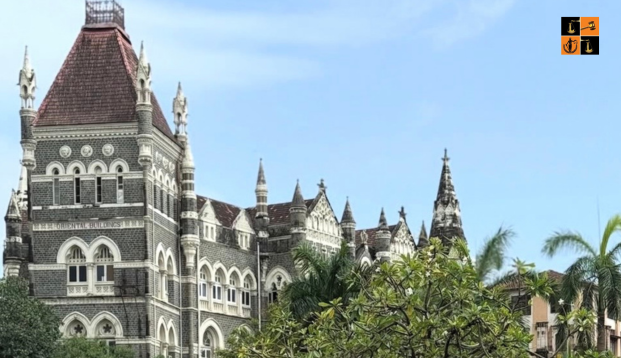
Recently, the Bombay High Court was hearing a second appeal filed by a cooperative housing society challenging concurrent judgments dismissing its suit seeking declaration of title and development rights over land reserved for a shopping centre under a sanctioned layout. The appeal raised substantial questions of law regarding divesting of title based solely on a possession receipt, without formal acquisition under statutory provisions.
Brief Facts:
The case arose from a dispute concerning land purchased by the appellant society through registered sale deeds in 1967. After acquiring the land, the society developed a residential layout which was sanctioned by the municipal corporation. Under the applicable development regulations, the society was required to retain 10% of the plot area as open space. Since it was not feasible to accommodate all members while complying with this condition, the society sought relaxation. The municipal corporation agreed to waive the open space requirement on the condition that land equivalent to the reservation for a shopping centre would be surrendered free of cost. Accordingly, a possession receipt dated October 9, 1970 was executed. Nearly three decades later, the society instituted a civil suit seeking declaration and permanent injunction, contending that no lawful acquisition had taken place under Section 126 of the Maharashtra Regional and Town Planning Act, 1966, or under Sections 77 and 78 of the Bombay Provincial Municipal Corporation Act, 1949.
Contentions of the Appellant:
The counsel for the appellant argued that execution of a possession receipt could not result in vesting of land in favour of the corporation in the absence of acquisition proceedings contemplated under Section 126 of the MRTP Act, 1966, read with Section 4 of the Land Acquisition Act, 1894. It was contended that compulsory surrender of land reserved under a development plan free of cost, as a precondition for sanctioning a layout, was contrary to law. The appellant further submitted that no registered agreement for transfer was executed and that physical possession of the land was never handed over, rendering the possession receipt void ab initio.
Contentions of the Respondents:
On the other hand, the counsel for the municipal corporation submitted that the society had voluntarily surrendered the land pursuant to a concluded agreement permissible under Section 126(1)(a) and (b) of the MRTP Act, 1966, in lieu of planning benefits such as waiver of the mandatory open space requirement and grant of development permission with higher permissible construction potential. It was argued that the society, having accepted these benefits, was estopped from challenging the surrender after an unexplained delay of several decades. The corporation also relied on Section 34 of the Specific Relief Act, 1963, to contend that declaratory and injunctive reliefs were discretionary and rightly refused by the courts below.
Observation of the Court:
The Court observed that the central issue was whether the land reserved for a shopping centre continued to vest in the society despite execution of a possession receipt and availing planning benefits. The Court noted that the society had sought waiver of the mandatory requirement of retaining 10% open space and had, in lieu thereof, agreed to surrender land equivalent to the reserved area. The Court recorded that “but for the waiver of the condition requiring the retention of 10% of the area as open space, the society would not have been able to obtain construction permission to accommodate all its members,” and therefore, the surrender of land could not be said to be without consideration.
Dealing with the argument that no statutory acquisition had taken place, the Court held that Section 126(1)(a) and (b) of the Maharashtra Regional and Town Planning Act, 1966 permits acquisition of reserved land by agreement, and such agreement need not necessarily involve monetary compensation. The Court observed that “FSI has monetary value” and that acquisition of land in lieu of development rights or higher FSI constitutes a valid consideration under the statute. Consequently, once possession was handed over pursuant to such an agreement, the land stood vested in the municipal corporation.
The Court distinguished the judgments relied upon by the appellant, including Yogendra Pal v. Municipality, and Pt. Chet Ram Vashist v. Municipal Corporation of Delhi, holding that those cases dealt with compulsory transfer without statutory backing or consideration, whereas the present case involved a concluded agreement supported by reciprocal benefits. The Court also relied on the Division Bench decision in Jayshakti Cooperative Housing Society Ltd. v. Pune Municipal Corporation, observing that a party which has taken advantage of development permission granted on specific conditions cannot be permitted to challenge those very conditions after an inordinate delay.
On the issue of declaratory and injunctive relief, the Court referred to Executive Officer, Arulmigu Chokkanatha Swamy Koil Trust v. Chandran and reiterated that such reliefs under Section 34 of the Specific Relief Act, 1963 are discretionary. The Court observed that “the society, after taking advantage of the waiver of the condition requiring retention of 10% open space, challenged the surrender only after 28 years,” and held that granting relief in such circumstances would be contrary to principles of equity and justice.
The decision of the Court:
The High Court dismissed the appeal, holding that the land was validly acquired by the municipal corporation through an agreement under Section 126 of the Maharashtra Regional and Town Planning Act, 1966. It ruled that surrender of land in lieu of planning benefits amounted to valid consideration and that no declaratory or injunctive relief could be granted after prolonged delay.
Case Title: Milan Cooperative Housing Society Limited v. Pune Municipal Corporation & Ors.
Case No.: Second Appeal No. 1400 of 2005
Coram: Hon’ble Mr Justice Gauri Godse
Counsel for the Appellant: Adv. Siddharth R. Ronghe
Counsel for the Respondent: Adv. Rishikesh M. Pethe
Read Judgement @LatestLaws.com