The Author, Himanshu Bodwal, is the Principal Founder of Medhavi Law Partners. He has over seven years of standing as an Advocate before the Hon’ble High Court of Delhi and Trial Courts all over Delhi, NCR.
“Policy making invariably involves taking measured risks in the face of uncertainty, for one has neither a prior template nor the luxury of indecision” -Raghuram G. Rajan
EDUCATION is the bedrock of any thriving society, serving as the primary tool for achieving full human potential and promoting ‘National Development.’ India, poised to have the largest young population in the world over the next decade, stands at a critical crossroads. The trajectory of transforming ‘India’ into a ‘Global Knowledge Superpower’ through education requires more than just mundane Policy making; it requires a shift in the "Spirit and Intent" of how we educate our vast pool of human resources. By moving away from the primitive learning and addressing the structural inequities that contributes to high dropout rates, the New Education Policy, 2020 (NEP 2.0) Framework seeks to build not just workers, but good human beings capable of rational thought and action. The success of this vision depends on a comprehensive and uniform implementation that reaches every corner of the nation.
INTRODUCTION:
The Viksit Bharat Shiksha Adhishthan Bill, 2025, introduced on December 15, 2025, serves as a legislative cornerstone for the Viksit Bharat 2047 vision by streamlining India’s complex educational regulatory landscape. The introduction of the Viksit Bharat Shiksha Adhishthan Bill, 2025 in the Lok Sabha on December 15, 2025, marks a historic pivot in India's educational governance. Championed by Union Minister Dharmendra Pradhan, this legislation is the legislative realization of the National Education Policy (NEP) 2020. It aims to replace outdated, overlapping bureaucracies with a streamlined, Light-but-Tight regulatory framework designed to foster global excellence.
Drawing authority from Entry 66 of the Seventh Schedule’s Union List of the Constitution of India, the Bill proposes the creation of a centralized umbrella body to replace the maze of approvals and overregulation currently hindering academic growth. This reform involves repealing legacy frameworks like the University Grants Commission Act (1956), All India Council for Technical Education Act (1987), and National Council for Teacher Education Act (1993), shifting governance toward three specialized councils dedicated to Regulation, Accreditation and Standards.
Each council is designed to be expert-led, comprising a President and up to 14 members with significant academic experience. Beyond administrative restructuring, the Bill reinforces the NEP 2020 5+3+3+4 model and prioritizes capacity building, reasoning-based learning, and the adoption of global best practices. By establishing a single-window system and enhancing technological integration, the Act aims to transform India into a global education hub that empowers youth while moving away from a grant-based dependency model to one focused on high-level academic quality.
PRESENT CHALLENGES AND SHORTCOMINGS:
The current Indian education system faces several critical "loopholes" that have led to a persistent learning crisis, which the National Education Policy (NEP) 2020 aims to fix through fundamental structural and pedagogical shifts
Critical Loopholes in the Education System:
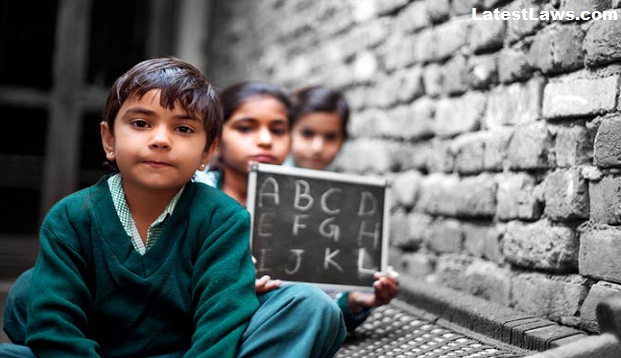
- Foundational Learning Crisis: Approximately 5 crore students in elementary school currently lack foundational literacy and numeracy, meaning they cannot read basic text or perform simple addition and subtraction.
- High Dropout Rates: While enrolment is high in early years, there is a sharp decline in later grades; the Gross Enrolment Ratio (GER) falls from 90.9% in Grades 6–8 to only 56.5% in Grades 11–12.
- Rote Learning Culture: The existing system is characterized by a culture of rote learning (involves process of learning something by repeating it until you remember it rather than by thinking about it carefully and understanding it completely) and high-stakes coaching culture driven by traditional summative assessments.
- Rigid Academic Segregation : There are currently hard separations between arts and sciences, academic and vocational streams, and curricular versus extra-curricular activities. These hierarchies often stigmatize certain areas of study (like vocational crafts) and prevent students from pursuing a multidisciplinary education.
- Higher Education Fragmentation: The higher education sector is severely fragmented, suffering from a lack of multidisciplinary research and the presence of thousands of small, low-quality affiliated colleges.
- Chronic Underfunding: Public investment in education has historically hovered around only 10% of total government spending, significantly lower than in many other nations.
How the New Education Policy, 2020 (NEP 2.0) Addresses These Loopholes:
- New 5+3+3+4 Structure: The policy replaces the old 10+2 model with a 5+3+3+4 structure to include Early Childhood Care and Education (ECCE) starting at age 3, because over 85% of a child’s cumulative brain development occurs before the age of 6, and a lack of quality Early Childhood Care and Education (ECCE) leads to many children falling behind before they even start Grade 1.
- Holistic & Multidisciplinary Learning: The policy eliminates rigid boundaries between subjects, allowing students to choose creative combinations of disciplines and learning motivated by curiosity.
- Higher Education Overhaul: It envisions moving toward large, multidisciplinary universities and phasing out the affiliated college system over 15 years to promote institutional autonomy.
- Assessment Reform: The policy shifts focus from summative exams to regular formative assessments for learning, supported by a new national assessment centre called PARAKH.
A Unified Regulatory Architecture:
The core objective of the Bill is to subsume existing fragmented regulatory bodies into a single, cohesive entity. The Viksit Bharat Shiksha Adhishthan (the Commission) will serve as the apex body, replacing the following three major institutions:
- University Grants Commission (UGC): The University Grants Commission (UGC) Act of 1956 was established to provide a statutory framework for the coordination, determination, and maintenance of standards in higher education, serving as the primary link between the Union and State governments for the systematic development of Indian universities. While it successfully unified a fragmented post-independence system, it is now being slated for replacement by the Higher Education Commission of India (HECI) because the current model is viewed as "over-regulated but under-governed," suffering from bureaucratic delays and an "inspection raj" that stifles institutional innovation. The shift aims to separate the grant-disbursal power (moving it to the Ministry of Education for greater transparency) from academic regulation, allowing the new body to focus strictly on learning outcomes and global benchmarks. This reform, driven by the National Education Policy (NEP) 2020, seeks to replace the outdated, one-size-fits-all approach of the 1956 Act and empowers universities with greater autonomy while ensuring stricter accountability for academic quality.
- All India Council for Technical Education (AICTE): The All-India Council for Technical Education (AICTE) Act of 1987 was established to provide a statutory basis for the coordinated development and proper planning of technical education, ensuring that the rapid expansion of engineering and management institutions did not come at the cost of academic quality. However, the current landscape is hindered by regulatory fragmentation and overlapping mandates between the AICTE, UGC, and other bodies, which create a "command and control" environment that stifles institutional autonomy and cross-disciplinary innovation. The National Education Policy (NEP) 2020 and the Viksit Bharat Shiksha Adhishthan Bill (formerly the HECI Bill) seek to replace this outdated architecture with a single umbrella regulator that separates four distinct functions: Regulation, Accreditation, Standard-setting, and Funding. By dissolving the AICTE into this unified framework, the government aims to eliminate the inspection raj, promote graded autonomy for high-performing institutions, and foster a multi-disciplinary ecosystem essential for a Viksit Bharat (Developed India), where technical skills are integrated with holistic education rather than taught in silos.
- The National Council for Teacher Education (NCTE) Act of 1993 was established as a statutory response to the systemic decline in teacher training, aiming to achieve the planned and coordinated development of the teacher education system and to strictly maintain norms and standards for the teaching profession. However, the current regulatory landscape is hampered by a siloed approach and a surge in substandard, commercialized standalone teacher education institutions that operate in isolation from mainstream academic research and multidisciplinary environments. To address these structural failures, the National Education Policy (NEP) 2020 and the Viksit Bharat Shiksha Adhishthan Bill propose replacing the NCTE with a unified regulatory framework where teacher education is integrated into multidisciplinary colleges and universities by 2030. This shift is strategically designed to move away from mere procedural compliance toward an outcome-based model, transforming the NCTE’s role into a Professional Standard Setting Body (PSSB) that focuses on developing the National Professional Standards for Teachers (NPST) while a single umbrella regulator ensures that future educators are trained in diverse, high-quality academic settings essential for a Viksit Bharat.
The Viksit Bharat Shiksha Adhishthan Bill, 2025 introduces a sophisticated governance architecture designed to modernize higher education through a three-pillar council system that ensures a functional separation of powers. By dividing responsibilities among the Viksit Bharat Shiksha Viniyaman Parishad (Regulatory Council) for digital-led coordination, the Viksit Bharat Shiksha Gunvatta Parishad (Accreditation Council) for quality assurance, and the Viksit Bharat Shiksha Manak Parishad (Standards Council) for academic benchmarking, the Bill effectively eliminates conflicts of interest that previously plagued monolithic bodies. This structural reform is governed by an apex Commission of 13 members, led by an honorary chairperson of high eminence and supported by a balanced mix of council presidents, union officials, and academic experts. To uphold the principles of cooperative federalism, the system incorporates rotating state-level representation and mandates that all council leadership consists of seasoned professors with at least a decade of experience. Ultimately, this "light but tight" framework, where appointments are vetted by a specialized committee and finalized by the President of India, shifts the focus from rigid bureaucratic control to an expert-driven model centred on transparency and academic excellence.
The Viksit Bharat Shiksha Adhishthan Bill, 2025 produces a transformative regulatory philosophy centred on institutional transparency and student-centric growth. By stripping the new regulatory body of the power to disburse funds—a task now separated from academic oversight—the Adhishthan can focus exclusively on elevating educational standards and strategic governance. This shift is powered by a "faceless" technology-driven system where institutions must practice public self-disclosure of finances, faculty, and outcomes; this reduces the intrusive "inspection raj" and replaces it with a` trust-based, single-window interactive portal. To ensure accountability, the Bill establishes a rigorous penalty framework, with fines for non-compliance ranging from 10 lakhs to 70 lakhs, while severe violations, such as operating without authorization, can incur penalties starting at 2 crores. Ultimately, these reforms aim to turn India into a global "Knowledge Hub" by fostering large multidisciplinary research clusters, granting high-performing institutions greater autonomy to innovate, and providing students with robust grievance redressal mechanisms, all of which are essential for achieving a self-reliant India.
CONCLUSION :
The transition toward the ‘VIKSHIT BHARAT’ through Viksit Bharat Shiksha Adhishthan, 2025 framework is more than just a change in laws; it is a promise to the youth of India. For decades, the education system was held back by a one-size-fits-all approach and a focus on memorizing facts rather than understanding concepts. The shift to a Light-but-Tight regulatory model ensures that while schools and universities have the freedom to grow and innovate, they remain strictly accountable for the quality of education they provide. By prioritizing foundational literacy in early years and multidisciplinary research in higher education, this reform addresses the very roots of the learning crisis.