









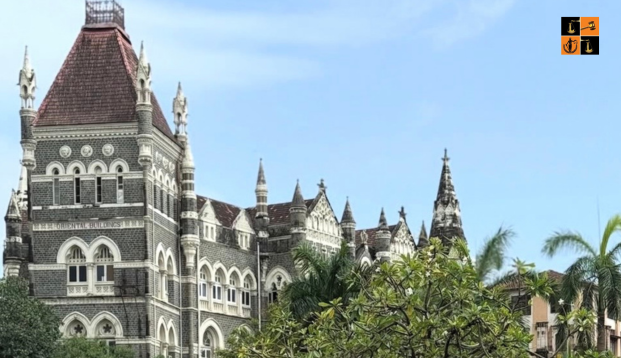
On Wednesday, the Bombay High Court delivered a significant ruling in the 2006 Malegaon blast case, observing that a criminal trial cannot be built on imagination or conjecture. Setting aside the trial court’s order, the Court discharged four accused persons, noting serious inconsistencies and lack of admissible evidence in the prosecution’s case.
The case arises from the Malegaon blasts in Nashik district, where multiple explosions killed 31 persons and injured over 300. Initially investigated by the Anti-Terrorism Squad (ATS), nine individuals linked to SIMI were arrested. The probe was later transferred to the CBI, and subsequently, in 2011, the National Investigation Agency (NIA) filed a supplementary chargesheet introducing a new set of accused.
Notably, the original nine accused were discharged earlier. The present proceedings concerned four individuals against whom charges were framed by a Special NIA Court in 2016.
The accused argued that the prosecution’s case was fundamentally flawed, relying on inadmissible confessions, retracted statements, hearsay evidence, and a delayed test identification parade conducted after six years. It was further contended that the NIA had conducted an impermissible fresh investigation, disregarding earlier findings of the ATS and CBI.
On the other hand, the NIA maintained that the charges were based on additional incriminating material and that interference at the stage of framing of charge was unwarranted.
The High Court found substantial merit in the defence arguments and highlighted glaring contradictions between the ATS and NIA versions. It observed that the two investigative narratives were irreconcilable and mutually destructive.Importantly, the Court noted that “A criminal trial is not like a fairy tale where one is free to give flight to one’s imagination and fantasy.”
The Court held that the NIA’s case rested largely on hearsay evidence, inadmissible confessions, and retracted statements of previously discharged accused. It also emphasized that a test identification parade conducted after an inordinate delay lacks evidentiary value.
Further, the Court found that alleged recovery of incriminating material from public places after several years could not be treated as reliable evidence. It also questioned the legality of relying on disclosure statements not recorded before a Magistrate, reiterating the bar under the Indian Evidence Act, 1872 on confessions made to police officers.
The Court criticized the trial court for failing to properly assess contradictions and improbabilities in the prosecution case, observing that no sufficient material existed to justify framing of charges.
Allowing the appeals, the High Court set aside the trial court’s order framing charges and discharged all four accused. The Court concluded that the evidence on record was insufficient and legally inadmissible to proceed to trial, and that continuing the prosecution would amount to an abuse of process.
Picture Source :



















