The Author, Aldanish Rein is a practicing Advocate On Record in the Supreme Court of India and a Former Member Executive of the Supreme Court Advocates on Record Association.
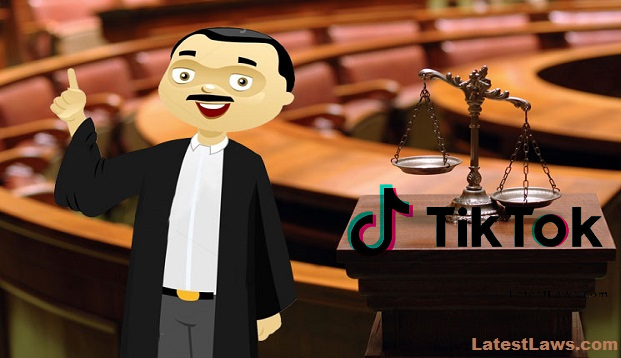
Recently two very well-known learned Sr. Advocates of the Hon’ble Supreme Court of India have refused to appear for a Chinese App against the Government of India. The same became the talk of the town to the extent that social media started praising the Learned Sr. Advocates for showing their Patriotism towards the Country.
That this obviously meant that any other lawyer accepting the brief for the Chinese App would be considered either less patriotic or as they say ‘ANTI NATIONAL’. As a result, the Chinese App also released a press statement that it does not wish to pursue legal action.
Be that as it may, the above refusal of accepting a brief of a Chinese App in the background of the INDIA – CHINA Tension has surely opened up a discussion amongst the lawyers of the Bar, especially when the profession demands that an advocate is bound to accept any brief and the refusal to accept a brief “must be exceedingly rare” and “reserved only for exceptional circumstances,”.
Now what is an exceptional circumstance for an advocate to refuse a brief, has not been defined anywhere, but if one wants to know the answer, it could be traced to the customs and traditions followed by the bar since time immemorial.
The variety of cases handled by the above learned Sr. Advocates and the likes of the above learned Sr. Advocates itself could tell us, the kind of matters, that an advocate can and should accept, irrespective of the fact that the same could be considered as less Patriotic or Anti – National for a common man. Few of them are mentioned below:
- Appear and represent another Country such as the United Kingdom, of whom India has a dreadful & devastating history, and appearing in India also for the government and private parties. (we have renowned Indian Lawyers Appointed as Queens Counsel in the United Kingdom).
- Appear and represent on behalf of another country in India. (We have seen renowned lawyers appearing for countries like Italy, in a case where Indian fisherman were Killed by Italian Soldiers.)
- Appear and represent on behalf of a foreign company having its base in an enemy country, such as we see in international commercial arbitration cases.
- Appear and represent on behalf politicians accused of economic offences affecting the economy of the country as a whole and thereby posing serious threat to the financial health of the country.
- Appear and represent on behalf of persons / companies accused of serious financial crimes in India affecting the economy of the country as a whole.
- Appear and challenging the policies of the Government of India, claiming it to be arbitrary, unjust and unreasonable.
- Appear and represent on behalf a Terror accused, Riot accused, Sedition accused, etc.
- Appear and represent on behalf Rapist, Murderers, Crime Lords, Drug Lords etc.
- Appear and represent on behalf of a certain political party or a certain class of people.
That looking at the above variety, it becomes impossible to ascertain an exceptional circumstance, under which an advocate could refuse to accept a brief and therefore it becomes important to understand if at all under any circumstance, acceptance of a brief by a lawyer could be considered as less Patriotic or ANTI NATIONAL.
Lets Evaluate :
- Laws and Rules
- The Bar Council of India Rules, 1975 provides that “An Advocate is bound to accept any brief in the Courts or Tribunals or before any other authority in or before which he professes to practise at a fee consistent with his standing at the Bar and the nature of the case. Special circumstances may justify his refusal to accept a particular brief.”
- The Bar Council of India Rules, 1975 also provides that “Every Advocate shall in the practice of the profession of law bear in mind that any one genuinely in need of a lawyer is entitled to legal assistance even though he cannot pay for it fully or adequately and that within the limits of an Advocate’s economic condition, free legal assistance to the indigent and oppressed is one of the highest obligations an Advocate owes to society.
- The Bar Council of India Rules, 1975 also provides that “It shall be the duty of an Advocate fearlessly to uphold the interests of his client by all fair and honourable means without regard to any unpleasant consequences to himself or any other. He shall defend a person accused of a crime regardless of his personal opinion as to the guilt of the accused, bearing in mind that his loyalty is to the law which requires that no man should be convicted without adequate evidence”
- Article 22(1) of the Constitution of India gives the fundamental right to every person not to be denied of the right to be defended by a legal practitioner of his or her choice.
- Article 14 of the Constitution of India provides for equality before the law and equal protection of the laws within the territory of India.
- Article 39A, of the Constitution of India and part of the Directive Principles of state policy, states that equal opportunity to secure justice must not be denied to any citizen by reason of economic or other disabilities, and provides for free legal aid.
(A Bare reading of the above would show that an advocate has an important role to play in the administration of Justice. It also shows that the access to justice delivery system is an integral part of the Constitution of India and the state is under an obligation to ensure a legal system which promotes justice on the basis of equal opportunity to all.)
- The Hon’ble Supreme Court in the case of A.S.Mohammed Rafi vs State Of Tamilnadu has observed:
“ 16. In our opinion, such resolutions are wholly illegal, against all traditions of the bar, and against professional ethics. Every person, however, wicked, depraved, vile, degenerate, perverted, loathsome, execrable, vicious or repulsive he may be regarded by society has a right to be defended in a court of law and correspondingly it is the duty of the lawyer to defend him.
17. We may give some historical examples in this connection.
18. When the great revolutionary writer Thomas Paine was jailed and tried for treason in England in 1792 for writing his famous pamphlet `The Rights of Man' in defence of the French Revolution the great advocate Thomas Erskine (1750-1823) was briefed to defend him. Erskine was at that time the Attorney General for the Prince of Wales and he was warned that if he accepts the brief, he would be dismissed from office. Undeterred, Erskine accepted the brief and was dismissed from office.
19. However, his immortal words in this connection stand out as a shining light even today :
"From the moment that any advocate can be permitted to say that he will or will not stand between the Crown and the subject arraigned in court where he daily sits to practice, from that moment the liberties of England are at an end. ……
20. Indian lawyers have followed this great tradition. The revolutionaries in Bengal during British rule were defended by our lawyers, the Indian communists were defended in the Meerut conspiracy case, Razakars of Hyderabad were defended by our lawyers, Sheikh Abdulah and his co-accused were defended by them, and so were some of the alleged assassins of Mahatma Gandhi and Indira Gandhi……”
- The Supreme Court of India Conducts Exams for AOR and there is some very interesting study material uploaded on the website of the Supreme Court for the purposes of learning more about Professional Ethics. One such study material is an interesting Journal named “ARE THERE PUBLIC INTEREST LIMITS ON LAWYERS ADVOCACY” by MONROE H. FREEDMAN. Some of the excerpts from it is as under:
- The classic statement of the role of the zealous advocate was expressed by Lord Brougham in Queen Caroline's case, a case in which Brougham threatened, literally, to bring down the kingdom.
“Brougham said: . . . An advocate, in the discharge of his duty, knows but one person in all the world, and that person is his client. To save that client by all means and expedients, and at all hazards and costs to other persons, and, amongst them, to himself, is his first and only duty; and in performing this duty he must not regard the alarm, the torments, the destruction which he may bring upon others. Separating the duty of a patriot from that of an advocate, he must go on reckless of the consequences, though it should be his unhappy fate to involve his country in confusion.”
Let justice be done-that is, for my client let justice be done-though the heavens fall. That is the kind of advocacy that I would want to have as a client and that is the kind of representation I feel bound to give as a lawyer. It is fair to note again, however, that that quotation tells only part of the story. There is also an advocate on the other side and an impartial judge and/or jury sitting over both. The heavens do not really have to fall, therefore, unless justice indeed requires that they do.
- “Under our adversary system, the interests of the state are not absolute, or even paramount. The dignity of the individual is respected to the point that even when the citizen is known by the state to have committed a heinous offense, the individual is nevertheless accorded such rights as counsel, trial by jury, due process, and the privilege against self-incrimination. Thus, although the defendant may be confronted by the entire "Commonwealth of Virginia" or all of "The People of the State of New York" (which is the way criminal prosecutions are captioned), the defendant is at least afforded that one advocate, that "champion against a hostile world," whose zealous allegiance is to him or her alone.”
- A lawyer as a member of the legal profession is an officer of the legal system and to keep the legal System intact, the “access to court of Law” is of utmost importance and to refuse to appear for a client would only be denial of justice to the person who wants to use the legal system.
History is replete with instances of distinguished services by lawyers who have represented unpopular clients and causes. Regardless of his personal feelings, a lawyer should not decline representation because a client or a cause is unpopular or community reaction is adverse. It is the lawyer's important task to see to it that the constitutional principles are adhered to despite public excitement, and without regard to personal enthusiasm or hate for the particular litigant.
A lawyer’s duty is to advise by the law of the land and to see that his clients receive that measure of shelter the law says they are entitled to.
In order to more clearly define this responsibility, duty, or obligation, owed to the unpopular client, Charles W. Wolfram, in The Good Lawyer, draws a comparison between the duty of a lawyer and recusal of a lawyer. In determining if there is indeed a duty to recuse, or a duty to represent, a number of considerations exist;
(1) Is the lawyer competent to handle the legal service which has been asked of him?
(2) Is there an economic risk that the attorney will be taking upon acceptance of the client?
and (3) is there a high likelihood of imminent danger to the client? in other words, are there many other lawyers available and willing to handle this case; if other lawyers, for economic or morally objectionable reasons cannot accept the employment, it would appear to increase the danger to the client. The small unlikelihood that other lawyers would be available and willing to accept a particular unpopular client creates a stronger obligation for the attorney to accept such employment.”
- The lawyers are bound by very strict rules of conduct and an equally strict code of honour, especially designed to allow them to discharge their duties in the administration of justice. The function of the advocate is to present one side of the case with all the skill available, so that the judge can compare counsel's presentation with that of the advocate on the other side, and then decide, after full investigation, where the truth lies. This pursuit of justice is the essence of the adversarial system. The purpose of this procedure in our law is not that a guilty person shall escape, but to make certain, so far as human fallibility can do so, that no innocent person shall suffer.
Ultimately, the effectiveness of the above principles is contingent upon the conduct of the lawyers, and whether they are willing to respect or whether they will neglect those principles. The lawyer's function is to defend the rights that are guaranteed to every individual under the Constitution. The constitutional rights of every individual are at risk when they are stripped from even one individual, no matter how unpopular the individual may be. If the system allows lawyers to determine the fate of a client by denying the constitutional right of representation by counsel, then the system lies precariously in unworthy and unconstitutional hands.
To conclude, just as a doctor has the sacred duty to treat the patient to the best of his abilities and accept every patient irrespective of his caste, creed, country etc, A Lawyer is duty bound to accept every client to protect the physical, moral, and intellectual integrity of the individual to the best of his abilities.
If there are Chinese Patients in India, our doctors are bound to treat them, if there are Chinese clients with there briefs in India, our lawyers are bound to accept the same.
AND ANY DEVIATION FROM THE ABOVE IS AGAINST THE TRADITION OF THE BAR.