









May 4, 2019:
Preface:
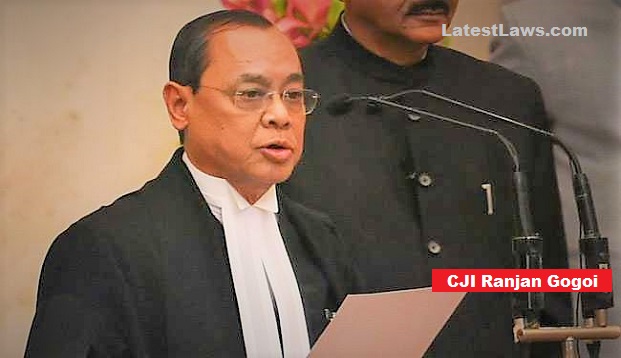
In the recent episode related to some sexual allegations made against the current CJI by an ex-employee of the Supreme Court, it seems that everyone has some or the other opinion. General public and persons of legal field are commenting on social media, news papers, Web portals. It seems not only the general public but also some of the legally trained persons have been commenting in the matter without either giving any serious consideration to the law or without contemplating the available legal options.
Purpose:
In such a situation, it would be more proper if we try to understand the whole episode in a neutral manner. Therefore, we are bringing a series which will provide factual and legal position.
Part-1 of the Series:
In the first part of the series, we will try to ascertain about the legal representation to the victim. The web portals are having numerous reports and comments in which the issue of legal representation has been raised at the highest pitch. We without being commenting on fault, default or righteousness of either party to the whole episode, will bring the relevant legal position to the knowledge of the readers and the readers shall be left to decide for themselves.
Base guidelines:
The most basic guidelines for prevention of sexual harassment is available in a judgment delivered by the Supreme Court itself in Vishaka & Ors vs State Of Rajasthan & Ors on 13 August, 1997. Rather, the persons of legal field while opining on the web portals have mostly referred this judgment and claimed that the same has been violated.
Details of guidelines in Vishaka case:
In the judgment, 12 items have been mentioned by the Supreme Court while issuing directions. First relates to the duty of employer, second relates to the definition, third relates to preventive steps, fourth to criminal proceedings, fifth to disciplinary action, sixth to the complaint mechanism, seventh relates to complaint committee, eighth to workers initiatives, ninth to awareness, tenth to third party, eleventh relates to request for proper legislation and the twelfth relates to human rights act.
It is clear that only the sixth and seventh items are relevant for the present purpose. These read as under:
Relevant Guidelines:
Item No.-6 guidelines : Complaint Mechanism:
Whether or not such conduct constitutes an offence under law or a breach of the service rules, an appropriate complaint mechanism should be created in the employer's organization for redress of the complaint made by the victim. Such complaint mechanism should ensure time bound treatment of complaints.
Item No.-7 of the guidelines : Complaints Committee:
The complaint mechanism, referred to in (6) above, should be adequate to provide, where necessary, a Complaints Committee, a special counsellor or other support service, including the maintenance of confidentiality.
The Complaints Committee should be headed by a woman and not less than half of its member should be women.
Further, to prevent the possibility of any under pressure or influence from senior levels, such Complaints Committee should involve a third party, either NGO or other body who is familiar with the issue of sexual harassment.
The Complaints Committee must make an annual report to the government department concerned of the complaints and action taken by them. The employers and person in charge will also report on the compliance with the aforesaid guidelines including on the reports of the Complaints Committee to the Government department.
Does the guidelines provide for the requirement of lawyer:
Now, if one sees the above, he will not be able to find any reference for a lawyer to be provided to any of the affected parties be it the victim or the defaulter. Be it noted that this part of the series is presently considering the requirement of a lawyer and therefore, some other part of the present series will cover any other requirement.
The Act:
The second significant guidelines are available in the legislative enactment called the Sexual Harassment at Workplace (Prevention, Prohibition and Redressal) Act, 2013.
Section-9 of the Act talks about the complaint and empowers a woman to make complaint through different manners. Section-10 talks about settlement. None of the Sections available in the Act says that a lawyer shall be provided to any of the parties be it the victim or the defaulter.
However Section-11 deals with the process of inquiry and is therefore relevant for the present purpose. It says that the inquiry shall be made in the manner prescribed. Now, the meaning of “prescribed” has been provided in Section-2 and indicates that it is as per rules made under the Act.
The Rules:
Central Government had in the year 2013 made rules under the Act and the rules were to be called the Sexual Harassment at Workplace (Prevention, Prohibition and Redressal) Rules, 2013.
Rule-7 talks about the manner of inquiry into the complaint. Sub rule-6 is of significance interest. It reads as:
Rule-7(6):- “The parties shall not be allowed to bring in any legal practitioner to represent them in their case at any stage of the proceedings before the Complaints Committee”.
Does the Rules provide for the requirement of lawyer:
Clearly, instead of saying that a victim or defaulter should be provided with legal assistance or lawyer, the aforesaid statutory rule prohibits any party from brining any lawyer.
The In-House Procedure:
Then comes the In-house procedure adopted by the Full Court in the Supreme Court of India in the year 1999. It provides for the mechanism to inquire into the complaint. At a given point, it specifically deals with the nature of the inquiry and representation and provides as:
“The inquiry shall be in the nature of a fact finding inquiry wherein the Judge concerned would be entitled to appear and have his say. [But it would not be a formal judicial inquiry involving the examination and cross- examination of witnesses and representation by lawyers.]”
Does the Procedure provides for the requirement of lawyer:
The aforesaid shows that even in the In-house proceedings adopted by the Full Supreme Court, the representation by lawyers has been prohibited.
Be it noted that in the present part of the series, the consideration is not on the issue as to which law/procedure will apply when allegations are made against a sitting CJI. The consideration is only in respect of the issue as to whether there is any law/rules/procedure under which a claim for lawyer can be made either by the victim or by the defaulter judge in case an inquiry is conducted.
None of the available guidelines, statute, rules, procedure provides for a claim of lawyer and rather they prohibit representation by lawyers. If inquiry is conducted or is being conducted under any of the aforesaid procedures against the CJI, none of the parties can claim a right to bring lawyer.
Readers may form their own opinion in their wisdom.
Next part of the present series shall take some other issue pertaining to the current episode of sexual allegations made by Ex-employee against the CJI.
Picture Source :



















