









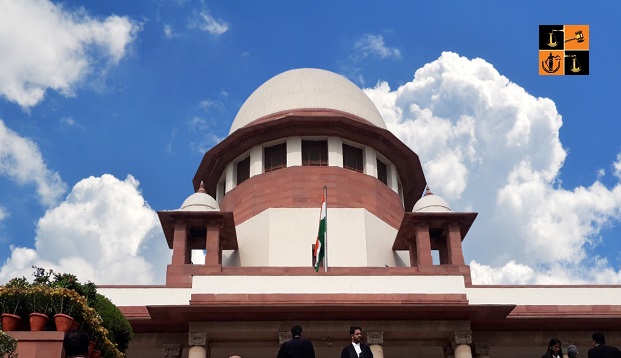
The Supreme Court has barred Supertech Realtors, a subsidiary of the Supertech Group, from selling or creating third-party rights in its Supernova project at Noida, which is presently under insolvency proceedings. The Court signaled that it may soon explore a Court monitored resolution mechanism as suggested by amicus curiae Rajiv Jain, rather than accepting the one-time settlement proposed by the developer.
A Bench comprising Justice Surya Kant, Justice Ujjal Bhuyan, and Justice N. Kotiswar Singh adjourned the matter to October 8, assuring homebuyers that if a committee is appointed, the Court itself would shoulder the responsibility of ensuring its effectiveness. Permitting the Supernova Apartment Owners Association to intervene, the Bench remarked, “Once we appoint a committee, the moral responsibility is on us to see to it that it succeeds.”
During the hearing, a separate association of buyers supported the proposal by Parmesh Constructions, Supertech’s co-developer, which has already infused ₹20 crore and pledged to bring in an additional ₹150 crore. Represented by Senior Advocate Gaurav Bhatia, nearly 250 buyers favored Parmesh’s reverse CIRP plan, though both the NCLT and NCLAT had earlier rejected it after objections from a consortium of banks led by the Bank of Maharashtra.
The Court, however, emphasized that a court-supervised mechanism had delivered results in past housing crises like Amrapali and Unitech, observing, “What objection can you have to a court-monitored process that has proved to be a success story in the past?” The Bench further noted that on three previous occasions it had consciously avoided sending the matter back to the NCLT, recognizing that the Supernova project was substantially complete.
On behalf of Supertech, counsel sought clarifications on the amicus’ report but conveyed willingness to cooperate with the Court’s directions. Jain, in his submissions, recommended a hybrid resolution mechanism under judicial supervision, highlighting that former director R.K. Arora had not yet furnished essential documents to the Interim Resolution Professional (IRP).
Accepting this concern, the Court directed, “The appellant and his associates are restrained from alienating and/or creating third-party rights in the subject property. The appellant shall fully cooperate with the IRP and provide the required documents and assistance.” The Bench further ordered that digital copies of all relevant records be handed over to both the IRP and the amicus curiae.
The amicus was earlier tasked with consulting stakeholders and suggesting the most viable way forward, especially in light of Arora’s appeal against the NCLAT’s August 13 order, which had declined Supertech’s one-time settlement offer. After examining alternatives of CIRP, reverse CIRP, and a court-monitored plan, Jain favored the last, citing its proven success in large stalled housing projects.
In Amrapali, the Court had appointed a receiver and entrusted NBCC to complete the construction. In Unitech, a government-backed board, supported by court orders, facilitated project approvals to expedite delivery. Jain proposed that a similar judicially-supervised hybrid structure, possibly under a former Chief Justice of India or High Court Chief Justice, would balance the interests of creditors while safeguarding thousands of homebuyers awaiting possession for years.
Picture Source :




















