









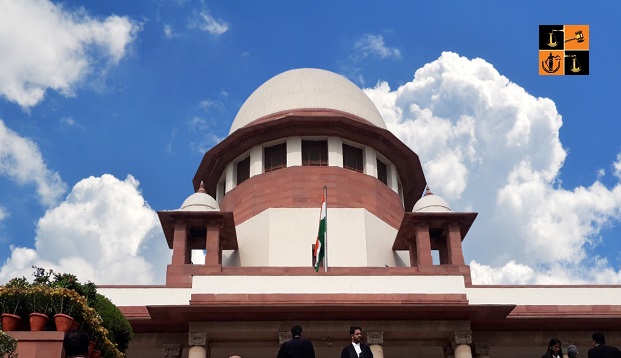
On Wednesday, the Supreme Court observed that the power to determine the timing and manner of conducting a Special Intensive Revision (SIR) of electoral rolls lies exclusively with the Election Commission of India (ECI). The Division Bench of Justice Surya Kant and Justice Joymalya Bagchi stated that neither statutory provisions nor election rules support the contention that the ECI is barred from undertaking such an exercise.
The remarks came during a hearing on a challenge to the ongoing SIR in Bihar, in which Senior Advocate Gopal Sankaranarayanan, appearing for the Association for Democratic Reforms, assailed the exercise as “unconstitutional” and aimed at deleting voters from the draft rolls. He argued that the process was being conducted arbitrarily and without mandatory consultation with state governments.
While rejecting the suggestion of a complete absence of power, the Bench clarified that “It is the exclusive prerogative of EC to decide how and when to conduct special revision of electoral rolls.” The Court added that while irregularities or errors in the Bihar process could be examined and rectified if proven, the SIR itself could not be struck down on jurisdictional grounds.
The Court noted that the ECI had adopted the 2003 voter list as a baseline, presuming the pre-existence of those voters, and had expanded the range of acceptable identification documents from seven to eleven, an approach the Bench described as “voter friendly and not exclusionary.”
Senior Advocate A.M. Singhvi proposed that the 2003 list, with additions from the last general election, be used as the electoral roll for the upcoming Bihar polls, with a fresh SIR conducted in December 2025 over a one-year period. The Bench, however, disagreed, emphasising that electoral rolls “cannot be static” and must undergo periodic revision to maintain accuracy.
The State of West Bengal, through Senior Advocate Sankaranarayanan and Senior Advocate Kalyan Banerjee, also voiced concerns over the SIR being initiated without consultation. The Court indicated that West Bengal’s challenge could await the outcome of the Bihar matter. Advocate Prashant Bhushan claimed that in districts such as Darbhanga and Kaimur, booth-level officers had arbitrarily withheld recommendations for inclusion of 10–12% of applicants. He alleged that more than 65 lakh names had been deleted from the draft rolls and cited the ECI’s removal of the draft list from its website shortly after a political press conference.
The Bench, while declining to comment on the political allegations, observed, “We cannot bring the dead back and make them vote,” signalling that names of deceased voters could not be restored.
Picture Source :




















