









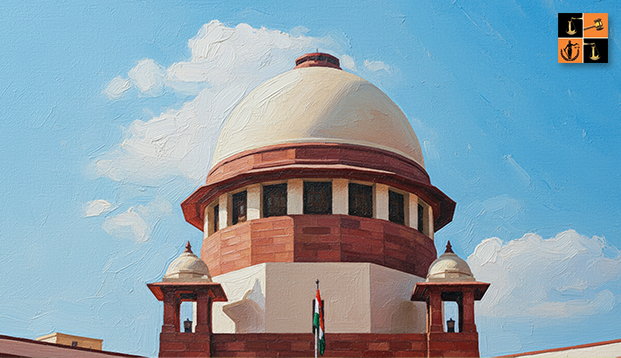
The Central government and the Ladakh administration justified the preventive detention of climate activist Sonam Wangchuk under the National Security Act (NSA) before the Supreme Court, asserting that all statutory safeguards were complied with and that the detention was necessary in the interest of national security and public order in a sensitive border region.
The case arises from Wangchuk’s detention following protests in Leh in September 2025 over demands for statehood and Sixth Schedule status for Ladakh. His wife, Gitanjali J Angmo, has challenged the detention, arguing that Wangchuk was exercising his democratic right to protest and criticise the government, which by itself could not justify the invocation of the NSA.
The Union government, however, has alleged that Wangchuk’s speeches went beyond dissent, accusing him of instigating unrest, invoking examples of violence in neighbouring countries, and creating an “us versus them” narrative against the Indian State, particularly dangerous in a region bordering Pakistan and China.
Appearing before a Bench of Justice Aravind Kumar and Justice P.B. Varale, Solicitor General Tushar Mehta argued that Wangchuk was afforded fair treatment and that the NSA framework allows a degree of latitude to detaining authorities. He told the Court that Wangchuk’s speeches threatened national security and public order, stressing, “There is no us and them. We are all Indians.”
The government maintained that the detention was preventive in nature, aimed at stopping the repetition of such statements in a region with “region specific sensitivities.” The Bench recorded the submissions as Mehta concluded arguments for the Centre, with further arguments to continue.
Picture Source :




















