









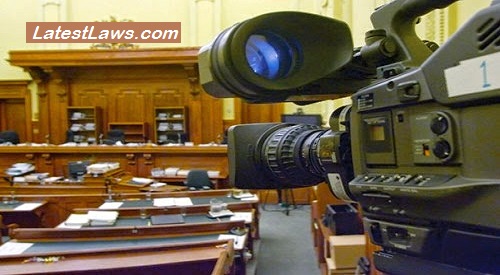
The Delhi High Court has notified High Court of Delhi Rules for Video Conferencing for Courts 2021 seeking to consolidate, unify and streamline the procedure relating to use of Video Conferencing for Courts
The official gazette for the same was released on October 26th, 2021. These are formulated in exercise of its powers under Section 7 of the Delhi High Court Act, 1966 and Article 227 of the Constitution of India, with the prior approval of the Lieutenant Governor of Delhi.
The Rules consist of five Chapters provide for definitions, general principles and procedure for virtual conferencing, there are two schedules setting out the Code of Conduct and the request form for video conference.
Now, any party to the proceeding or witness may move a request for video conferencing by making a request via request form and the Court shall allow it given that the application isn't filed to impede a fair trial or to delay the proceedings
The Rules also states that before commencement of Video Conferencing all participants shall have their presence recorded.
To avoid glitches and disfunction, it is specified that in order to ensure that video conferencing is conducted seamlessly, the difficulties, if any, experienced in connectivity must be brought to the notice of the Court at the earliest on the official email address and mobile number of the Court Point Coordinator which has been furnished to the participant before the commencement of the virtual hearing.
The Rules are also fomed to pave way for Live Streaming, In that regard, Rule 16 provides for allowing persons, who are not parties to the case, to view the proceedings.
It is also specified that the requirement of an open Court proceeding, members of the public will be allowed to view Court hearings conducted through video conferencing, except proceedings ordered for reasons recorded in writing to be conducted in-camera.
"To observe the requirement of an open Court proceeding, members of the public will be allowed to view Court hearings conducted through video conferencing, except proceedings ordered for reasons recorded in writing to be conducted in-camera. The Court shall endeavour to make available sufficient links (consistentwith available bandwidth) for accessing the proceedings. The Court shall endeavour to make available sufficient links (consistent with available bandwidth) for accessing the proceedings. No complaint shall subsequently be entertained,"
Rule 10 which provides for the process to ensure seamless video conferencing, states that the Advocate or Required Person, shall address the Court by video conferencing from a specified Remote Point on the date and time specified in the order issued by the Court.
Coming to the Schedules, Schedule 1 states that all the participants shall wear sober attire consistent with the dignity of the proceedings is formed with regards to the Code of Conduct to be followed in such hearings
Advocates are required to be appropriately dressed in professional attire prescribed under the Advocates Act, 1961 whereas Police officials are directed to appear in the uniform prescribed for police officials under the relevant statute or orders.
It reads to this regard:
"The attire for judicial officers and court staff will be as specified in the relevant rules prescribed in that behalf by the High Court. The decision of the Presiding Judge or officer as to the dress code will be final. Every participant shall adhere to the courtesies and protocol that are followed in a physical Court. Judges will be addressed as "Madam/Sir" or "Your Honour". Officers will be addressed by their designation such as "Bench Officer/Court Master". Advocates will be addressed as "Learned Counsel/Senior Counsel."
Read Gazette Here:
Share this Document :Picture Source :




















