









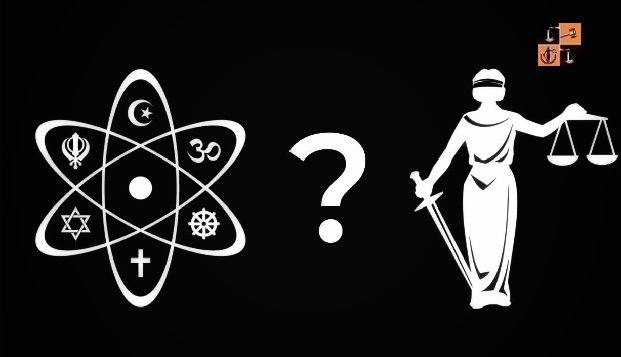
The Madhya Pradesh High Court has issued a directive to the State Government, emphasizing that religious education should not be imparted to children residing in shelter homes registered under the Juvenile Justice (Care and Protection of Children) Act, 2015.
In a recent ruling, Justice Vishal Dhagat stated that only secular and modern education, as defined in Section 53 of the Juvenile Justice Act, should be provided to children in these institutions.
The court's decision came in response to an application for anticipatory bail filed by the Arch Bishop of the Roman Catholic Church and a Sister of Convent Institute. The applicants were accused of allegedly forcing Hindu children in a Child Care Institute to read the Bible and attend church services. The complaint also alleged that the children were not allowed to celebrate Diwali, the Hindu festival of lights, and were compelled to participate in Christian prayers.
The applicants' counsel argued that they were innocent and falsely implicated in the case. They cited Section 54 of the Juvenile Justice Act, which stipulates that Child Care Institutes should be inspected by a committee comprising at least three members, including a woman and a medical officer. In this instance, however, the inspection was conducted solely by the complainant, raising concerns about the validity of the inspection process.
Furthermore, the applicants contended that the FIR (First Information Report) could not have been registered based on the complaint filed by the individual inspector. They pointed out that the Madhya Pradesh Freedom of Religion Act, 2021, specifies that a police officer should not inquire or investigate a complaint unless it is submitted in writing by the person converted, their parents or siblings, or, with the court's permission, by a blood relative, a relative by marriage or adoption, or a guardian or custodian of the aggrieved person. They argued that the alleged activities, such as children having Bibles or participating in church prayers, did not constitute religious conversion.
The Additional Advocate General representing the State countered that the applicants' actions fell squarely within the purview of Section 3 of the Madhya Pradesh Freedom of Religion Act, which prohibits forced conversion. The State argued that the case involved mass conversion, as more than two children in the Child Care Home were allegedly coerced into reading the Bible, attending church, and engaging in prayers.
In its ruling, the High Court clarified that the term "education" in Section 53(1)(iii) of the Juvenile Justice Act did not encompass religious education. It stressed that shelter homes should provide secular education that promotes the growth and future livelihood of the children. The Court highlighted that children between the ages of 6 and 14 have the right to receive free and compulsory education under the Free and Compulsory Education Act, 2009, which focuses on skill development, occupational therapy, and life skills, but does not include religious education.
The Court specifically directed Asha Kiran Institute in Katni, a shelter home registered under the Juvenile Justice Act, not to provide religious education to the orphaned or admitted children. Instead, they should adhere to the education defined in Section 53 of the Juvenile Justice Act. The Court further emphasized that if there is a violation of Section 53 and sectarian education is provided to children, the State Government is free to take action against the institution in accordance with the Juvenile Justice Act.
Regarding the complaint's maintainability, the Court agreed with the applicants' argument that, in the absence of a written complaint by the person converted, the person aggrieved, or their relatives, the police lacked jurisdiction to inquire or investigate the offense under Section 3 of the Madhya Pradesh Freedom of Religion Act.
Picture Source :




















