









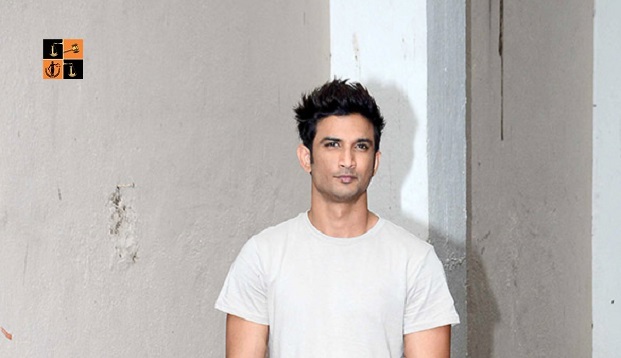
On Friday, the High Court of Bombay remarked that the media has become “highly polarised” & the journalists were neutral & responsible in the past.
A division bench of Chief Justice Dipankar Datta & Justice Girish S Kulkarni was hearing PILs by 8 Ex-Senior Police Officers from Maharashtra, as well as activists, Advocates & NGOs, seeking restraining orders against “media trial” in the case.
On Oct 20, the HC had sought to know from Republic TV how its statements that asked the public to decide on who should be arrested in actor Sushant Singh Rajput’s death case amounted to investigative journalism. It also asked the News Broadcasters Federation (NBF) why no suo motu action can be initiated for “irresponsible coverage” of criminal sensitive matters & “media trial” in the case.
On Friday, the HC made the observations after Lawyer Ankit Lohia representing Zee News, one of the respondent news channels, maintaining that the channel wasn't guilty of allegations made by the petitioners, submitted a report authored in 1947 by a European institute, which analysed options between self-regulation & statutory regulation for the media & had suggested that there was no need for Govt control.
To this, CJ Datta orally remarked, “We are ruled by the rule of law in India. How do you advocate that people who go around accusing others can find shelter of freedom of press? Journalists back then were responsible & neutral, now the media is sharply polarised.”
Justice Kulkarni then asked Lohia as to why he referred to the 1947 report, whereas the 1983 Law Commission report had compared the media regulation model in India with the European countries along with other international models & had suggested that there was a need for checks & balances in the functioning of the media in India.
When Lohia responded that the media wasn't averse to being regulated, the bench said, “This is not a question of regulation. This is a question of checks & balances. People forget where to draw lines. Do it within lines. You (news media) want to criticise government, do it. The issue in the present case is that someone had died & the allegation is you are interfering".
Thereafter, Lawyers Alankar Kirpekar for India TV news & Zeeshan Hashmi for News Nation submitted & said that the media trial in the actor’s death is one of the cases & hence the court should not insist on having statutory regulation on the electronic media.
They further submitted that the media was controlled by the Govt in countries such as China & Bangladesh, which resulted in low ranking of media independence in these countries.
Meanwhile, Additional Solicitor General Anil Singh representing Central Bureau of Investigation (CBI), Narcotics Control Bureau (NCB) & Enforcement Directorate (ED) said that the petitioners’ claims that information related to investigation in the Sushant death case being leaked to selective media was misconceived & the three agencies had categorically denied the allegations through their affidavit in reply to the pleas.
The Court will continue hearing public interest litigations on Thursday, Oct 29.
Source Link
Picture Source : <a href="https://commons.wikimedia.org/wiki/File:Sushant_Singh_Rajput_snapped_at_the_promotions_of_%27M.S._Dhoni_-_The_Untold_Story%27.jpg">Bollywood Hungama</a>, <a href="https://creativecommons.org/licenses/by/3.0">CC BY 3.0</a>, via Wikimedia Commons




















