









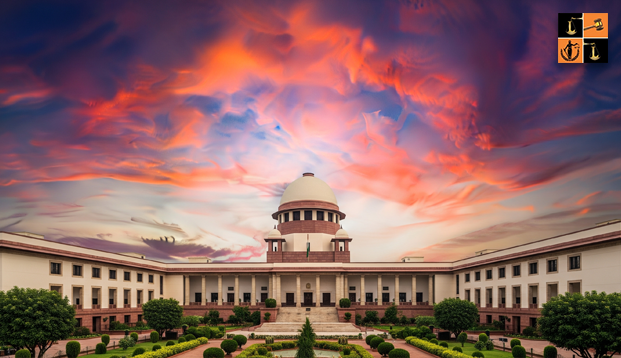
On Monday, the Supreme Court stayed the operation of certain provisions of the Waqf (Amendment) Act, 2025, while leaving the question of the law’s constitutional validity open for final adjudication.
A Bench comprising Chief Justice of India B.R. Gavai and Justice Augustine George Masih observed that a blanket suspension of the entire amendment was unwarranted at this stage but directed a stay on provisions likely to result in arbitrariness or encroach upon constitutional principles.
Key provisions stayed include:
-
The requirement that a person must be a practicing Muslim for five years before dedicating property as waqf, in the absence of State rules to verify religious adherence.
-
The authority vested in Collectors to adjudicate private rights, which the Court held violates the principle of separation of powers. Until matters are decided by the Waqf Tribunal, no third-party rights shall be created.
-
The inclusion of non-Muslims in waqf boards has been restricted, with the Court capping their representation at three members in State Boards and four in the Central Waqf Council.
The Court, however, declined to interfere with the requirement for registration of waqf properties, noting that such a mandate has historically existed. It clarified that its observations are prima facie in nature and do not preclude further submissions by the parties.
The Waqf (Amendment) Act, 2025, amends the Waqf Act, 1995, and was passed by Parliament earlier this year, receiving Presidential assent on April 5. It seeks to regulate the administration of waqf properties dedicated for religious and charitable purposes.
The amendment has been challenged before the Supreme Court by Congress MP Mohammad Jawed, AIMIM MP Asaduddin Owaisi, and others, who contend that the provisions disproportionately target Muslim endowments and infringe the community’s constitutionally protected right to manage its own religious affairs.
Central to the dispute is the omission of “waqf by user” from the statutory definition of waqf, which, according to the petitioners, would strip historic mosques, graveyards, and charitable institutions of their waqf status.
Six BJP-ruled States, Haryana, Maharashtra, Madhya Pradesh, Rajasthan, Chhattisgarh, and Assam, have intervened in support of the law.
The Union government has defended the amendment as a measure to prevent misuse of waqf provisions and illegal occupation of public land. Solicitor General Tushar Mehta, appearing for the Centre, argued that tribal lands were being claimed as waqf property and that reforms were necessary.
On the issue of non-Muslim representation in waqf bodies, the Centre submitted that their presence is minimal and intended to promote inclusivity.
The Central government has already assured the Court that contentious provisions will not be implemented immediately. A detailed order from the Court is awaited.
Picture Source :




















