









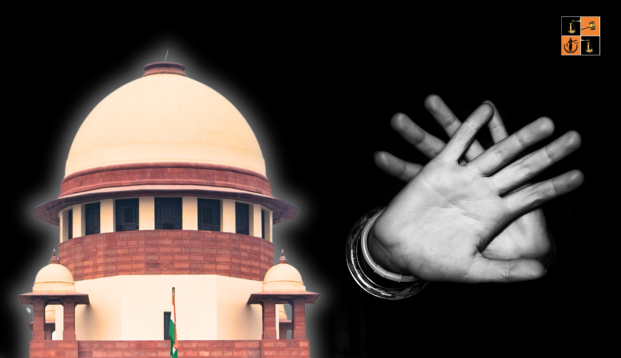
Recently, the Supreme Court issued notices to the Union and States in a public interest litigation seeking pan-India guidelines for women’s safety. The PIL raised concerns over the inadequate implementation of laws addressing sexual offences and called for reforms, including regulating social behaviour in public transport, banning online pornography, and fast-tracking sexual harassment cases. Highlighting the innovative yet controversial nature of some proposals, the Court observed that achieving justice requires systemic reforms rather than extreme punitive measures, ensuring alignment with constitutional principles.
The PIL, filed by the Supreme Court Women Lawyers Association (SCWLA), sought directives for pan-India guidelines to ensure the safety of women, particularly the most vulnerable sections, including those on the streets. The petitioner raised concerns over the ineffective implementation of existing laws addressing sexual offences. Among other reliefs, the PIL called for regulation of social behaviour in public transport, a ban on free online pornography, mandatory installation of CCTVs in workplaces, fast-tracking of sexual harassment cases, and prohibiting MPs and MLAs accused of crimes against women from contesting elections until acquitted. Additionally, the petition controversially sought chemical castration for those convicted of sexual offences.
Senior Advocate Mahalakshmi Pavani, representing the petitioner, argued that stringent laws and punishments already exist but their enforcement remains questionable. She emphasized the need for innovative measures, such as social behaviour guidelines in public transport, to create safer environments for women. Pavani highlighted the alarming frequency of sexual crimes, citing underreported incidents in smaller cities and towns. She also referred to past judicial interventions, including the 2016 case of SCWLA v. Union of India, where suggestions by the Court led to amendments in the POCSO Act. She urged the bench to consider a complete ban on online pornography, linking its accessibility to a rise in sexual offences.
The bench, comprising Justices Surya Kant and Ujjal Bhuyan, acknowledged the innovative nature of certain issues raised in the petition, particularly the proposal for public transport behaviour guidelines. Justice Kant remarked, “Some of the issues are very innovative, we strongly appreciate and admire. But some of the directions you are seeking are also barbaric.” Referring to chemical castration as a proposed punishment, the bench noted that such measures may not align with the principles of a society governed by the rule of law. Justice Kant observed, “India, as a rule-of-law society, must examine why existing punitive measures fail to achieve their objectives. The issue may not lie in the quantum of punishment but in the laxity of implementation.”
The Court further noted that regulating social behaviour in public spaces is an essential reform, requiring both education and visible messaging in public transport systems like buses, railways, and airports. The bench emphasised that achieving justice for vulnerable women demands systemic changes rather than extreme punitive measures.
The Court issued notices to the Union and States, directing the Union to respond through the Attorney General’s office. The matter has been listed for further hearing in January 2025. While expressing appreciation for some of the petitioner’s proposals, the Court made it clear that any measures must align with constitutional values and the principles of justice.
Picture Source :




















