









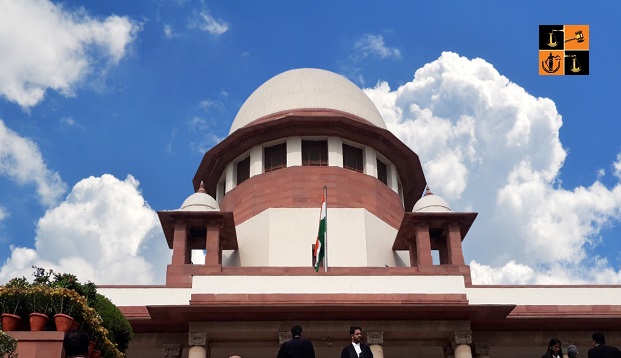
The Supreme Court on Thursday, February 20, raised serious concerns regarding the existing process for the designation of lawyers as Senior Advocates. Highlighting key issues in the framework laid out by previous judgments in the Indira Jaising case of 2017 and 2023, a two-judge bench comprising Justice Abhay S Oka and Justice Ujjal Bhuyan referred the matter to Chief Justice of India (CJI) Sanjiv Khanna to consider whether a larger bench should address these concerns.
The bench clarified that its intent was not to question the binding decisions of the past but to ensure that procedural shortcomings are examined in the best interest of the legal profession. "We mean no disrespect towards the two binding decisions [in Indira Jaising case] and we are recording our concerns only to enable the Chief Justice to decide whether the doubt expressed by us needs to be considered by a larger bench," the Court stated.
One of the fundamental concerns flagged by the Court was the very premise of an advocate seeking designation. According to Section 16(2) of the Advocates Act, the privilege of being designated as a Senior Advocate is conferred by the Supreme Court or the High Court, and the lawyer does not have an inherent right to apply for it. The Court also questioned the effectiveness of a short interview in evaluating an advocate’s merit. "It is doubtful whether by interviewing a candidate for a few minutes, his personality and suitability can be tested," the Court observed, emphasizing that the current system assigns 25 out of 100 points to the interview alone.
Another issue highlighted was the lack of scope for reducing marks if an advocate is known to lack integrity or if there are pending complaints against them before Bar Councils. The Court stated, "Even if members of the Permanent Committee know that the applicant-advocate lacks integrity or is not fair, or does not act as an officer of the court or against whom complaints are pending for professional misconduct, there is no scope to reduce the points on the account."
The Court also pointed out the impracticality of expecting the Permanent Committee, which consists of three senior judges, including the CJI, and two senior advocates, to thoroughly review the numerous judgments and publications submitted by each applicant. It questioned whether such an extensive review process is feasible. "Whether the members of the Permanent Committee need to spend hours together for one candidate is a question that needs serious consideration," it remarked.
Considering the defects in the current points-based assessment, the Court left it to the full court to deliberate whether this method is the best way to evaluate an advocate’s suitability for designation. "When the points-based assessment is not free from defects, the question is whether it can form the basis of assessment of an advocate," the Court posed.
The Supreme Court’s scrutiny of the senior designation process originated from concerns raised in a case involving Senior Advocate Rishi Malhotra. Malhotra was found to have made false statements and suppressed material facts in multiple remission pleas. The Court had previously issued a notice to Advocate-on-Record (AoR) Jaydeep Pati, questioning his practice of filing petitions without verifying facts. While addressing these issues, the Court also set forth clear guidelines on the responsibilities of AoRs.
"An AoR is answerable to this Court since he has a unique position under the Rules [Supreme Court Rules] of 2013. Therefore, when incorrect facts are stated in the petitions or when material facts or documents are suppressed, the AoR cannot shift the entire blame on either the client or his instructing advocates, therefore, it is his duty to be cautious [and] careful," the Court stated.
On the question of Malhotra’s designation, the bench refrained from making a recommendation and left the matter to the discretion of the CJI. "Regarding the designation of Rishi Malhotra, we leave it to the Hon'ble CJI to take a call," Justice Oka remarked.
Picture Source :




















