









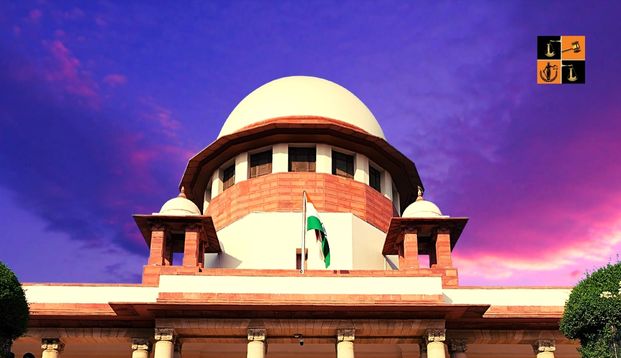
The Supreme Court while hearing a matter involving prominent content creators including Samay Raina and Ranveer Allahbadia, emphasised that freedom of expression cannot be exercised without responsibility, particularly in the digital space. The matter arose from controversies over an episode of the YouTube show India’s Got Latent, which drew public criticism for allegedly objectionable content.
During the proceedings, Solicitor General Tushar Mehta, appearing for the government, submitted that digital content cannot operate in an unrestricted manner under the guise of free speech and suggested the need for regulatory oversight of user-generated material.
Chief Justice of India Surya Kant observed that while free speech is constitutionally protected, platforms streaming adult content should provide pre-emptive warnings for parental control. He remarked, “It is strange that I create my own channel and keep doing things without being accountable,” highlighting the challenges of unregulated digital content.
The Bench comprising CJI Surya Kant and Justice Joymalya Bagchi noted that self-regulatory mechanisms are insufficient to address all issues in online content moderation. Justice Bagchi specifically pointed out, “When content is anti-national or disruptive to social structure… will self-regulation suffice? The difficulty lies in response time, and by the time government intervention occurs, content may have already gone viral with billions of views.”
The Court further underscored the necessity of an autonomous regulatory framework to monitor online content, balancing constitutional rights with societal interests. On the issue of obscenity, CJI Kant remarked, “Obscenity can exist in books, paintings, etc., but the moment you switch on your phone and are forced to see content you do not wish to, it becomes problematic.” Justice Bagchi suggested advance warnings for all user groups to prevent exposure to inappropriate content. The CJI also proposed measures for adult verification, such as linking content access to Aadhaar, while emphasising the need for pilot testing to avoid undue restriction on free speech.
On the specific petition filed by the Cure SMA Foundation against comedians, including Samay Raina, for allegedly mocking persons with disabilities, the Apex Court directed the content creators to feature specially-abled individuals on their shows and organise at least two fundraising events per month. The Court stated, “We are confident that if the respondents show sincerity about showcasing these achievements, specially-abled individuals will participate, thereby enhancing visibility for their cause. Let such programs be held twice a month.”
Picture Source :



















