









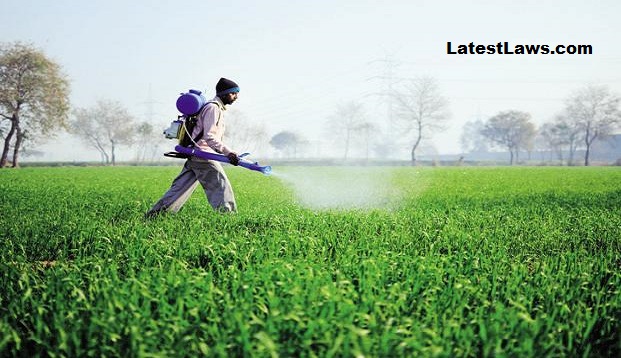
The Supreme Court of India raised serious concerns on Tuesday over the repeated formation of expert committees by the Union Government to review the banning of pesticides in the country. The court questioned the rationale behind appointing several committees when the initial expert committee had already recommended the banning of 27 pesticides.
The bench, led by Chief Justice of India DY Chandrachud, along with Justice JB Pardiwala and Justice Manoj Misra, expressed scepticism over the government's approach, suggesting that it appeared as if the Union Government kept appointing committees until they obtained a favourable decision.
The issue arose from reports submitted in December 2015 by the Dr. Anupam Varma Committee, which recommended a ban on 13 out of 66 pesticides under scrutiny. Subsequently, objections were raised by the pesticide industry association regarding the committee's recommendations. In response, the government formed the Dr. SK Malhotra Committee in 2017 to review the status of 27 pesticides. This committee also reiterated the need for a continued ban on those 27 pesticides in 2018. Surprisingly, another sub-committee was later formed by the Pesticide Registration Committee (RC) to review the same 27 pesticides. This newly established committee, led by Dr. SK Khurana, recommended a draft notification in May 2020, proposing to ban certain pesticides.
During the hearing, the Central government's Additional Solicitor General (ASG) Vikramjit Banerjee defended the government's actions, stating that they followed a systematic process based on scientific advice. However, Advocate Prashant Bhushan, representing the petitioner, questioned the need for forming additional committees when the first two committees had already recommended a ban. The Chief Justice also sought clarification on the basis of the Rajendran committee's differing stance from the Khurana committee's recommendation.
The plea filed through Advocate Prashant Bhushan seeks the elimination of harmful pesticides in India and the enforcement of the right to health of farmers, farm workers, and consumers. It cites severe health and environmental hazards caused by pesticides, including cancer, DNA damage, Parkinson's disease, birth defects, and adverse effects on children's physical and mental development. The Supreme Court scheduled the case for further hearing on August 1, giving the Central government time to present a detailed note regarding the matter.
The court's decision on this matter will have significant implications for the agricultural sector and public health in India, as it addresses the critical issue of pesticide use and its potential impact on farmers, workers, and consumers. The balance between scientific evidence and public interest will be crucial in determining the government's stance on banning harmful pesticides in the country.
Source: Link
Picture Source :




















