









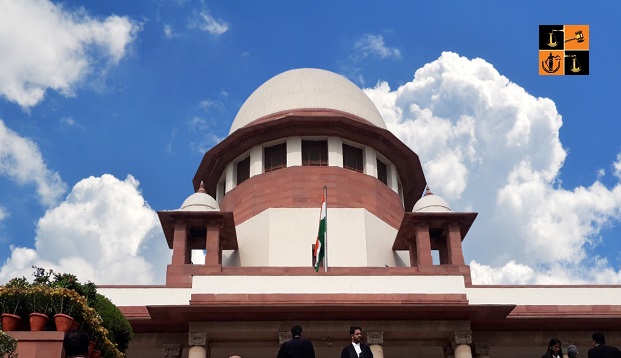
Recently, the Supreme Court addressed a petition seeking the registration of an FIR against Justice Yashwant Varma of the Delhi High Court following allegations of illicit cash discovery at his official residence. The petitioner challenged the in-house inquiry mechanism and contended that a criminal investigation under the Code of Criminal Procedure (CrPC) should be initiated. The Court, however, refrained from immediate intervention, directing the petitioners to check with the Registry for the listing of their plea.
The petition was mentioned before the Chief Justice of India, Sanjiv Khanna, by Advocate Mathews J. Nedumpara, seeking an urgent hearing. The plea sought to challenge the Supreme Court’s previous decision in K. Veeraswami v. Union of India, which mandates prior consultation with the Chief Justice of India before initiating criminal proceedings against a sitting High Court or Supreme Court judge. The petitioners argued that this precedent creates an undue immunity for judges from criminal prosecution. During the hearing, the CJI remarked, "Your matter has been listed... don’t make any public statements." The petitioner insisted that an FIR must be registered against the judge, to which the CJI responded, "Check up from the Registry, you will get the date." A co-petitioner emphasized that if such an incident occurred at a businessperson’s residence, investigative agencies like the Enforcement Directorate (ED) and Income Tax (IT) would have immediately intervened.
The petitioner asserted that the Supreme Court’s direction in K. Veeraswami has been misinterpreted, leading to an unjust privilege shielding judges from criminal accountability. The plea stated, "The said direction creates a special class of privileged men/women, immune from the penal laws of the land. While the judiciary is largely composed of individuals of integrity, instances of judicial misconduct, as seen in the present case, must be subjected to the prescribed criminal procedures." The petition further criticized the Supreme Court collegium’s decision to form a three-member in-house inquiry committee instead of directing the registration of an FIR. The plea emphasized that such an approach undermines public trust and judicial accountability.
The Supreme Court noted that its earlier ruling in K. Veeraswami provides specific safeguards concerning the criminal prosecution of judges and reiterated that any departure from the prescribed procedure requires a substantive legal challenge. The petitioner’s plea read, "Even the King is not considered above law, but under God and the law. However, the ruling in K. Veeraswami has hindered the registration of an FIR even in cases involving grave offenses." The petitioners contended that restraining law enforcement from registering an FIR against a judge is legally untenable.
The plea further argued, "While the judiciary is sovereign in adjudication, the investigative function remains with the police, and any obstruction to this process violates fundamental legal principles."
The Supreme Court did not pass any immediate orders on the registration of an FIR but assured that the matter would be listed as per procedural requirements. The bench did not entertain further arguments and deferred the hearing to a later date, instructing the petitioners to follow the Registry’s schedule for listing.
Picture Source :



















