









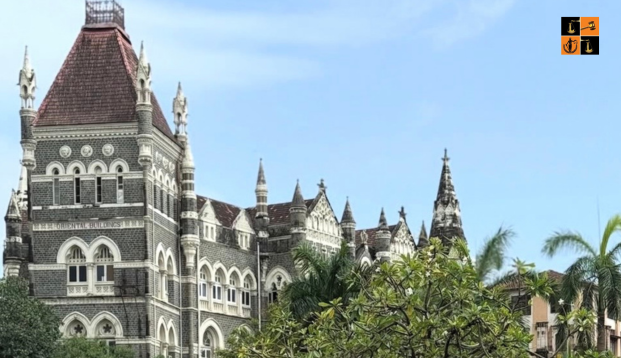
Recently, the Bombay High Court highlighted the everyday reality of Mumbai’s suburban rail network, observing that commuters travelling during peak hours often have no option but to stand close to the doorway due to severe overcrowding. The Court noted that such a situation cannot automatically be treated as negligence on the part of the commuter.
The case arose from an incident of October 2005, when a man travelling from Bhayendar to Marine Lines fell from a Western Railway local train during morning rush hours and later died from his injuries. The Railway Claims Tribunal granted compensation to his family in 2009, but the Railways challenged this, alleging that the fall resulted from his negligent act of standing on the footboard.
The Railways argued that the victim had endangered himself by standing near the door and that this conduct caused the accident. It also contended that no ticket or pass was found on his body, suggesting he was not a bona fide passenger.
The claimants responded that overcrowding on Mumbai’s suburban trains routinely forces passengers to stand near the doorway, especially during peak hours. They also produced the deceased’s valid season pass and identity card before the Tribunal, establishing his status as a regular commuter.
The Court acknowledged the extreme crowding on Virar–Churchgate locals during morning hours, noting that passengers often struggle even to enter the compartment at stations like Bhayendar. The judge observed that this situation leaves daily travellers with little choice but to stand near the door, and such a compelled position cannot be treated as negligent behaviour. The Court further remarked that railway law does not exclude compensation merely because a person fell while standing near the door due to overcrowding, and such a fall continues to fall within the definition of an "untoward incident."
On the issue of the missing pass, the Court accepted the evidence produced by the deceased’s wife and held that forgetting to carry a season pass on one day does not invalidate a claim for compensation.
Finding no flaw in the Tribunal’s reasoning, the High Court upheld the award of compensation. It affirmed that the deceased was a bona fide passenger and that the accident could not be attributed to negligence. The Railways’ appeal was accordingly dismissed.
Disclaimer: This news/ article includes information received via a syndicated news feed. The original rights remain with the respective publisher.
Picture Source :




















