









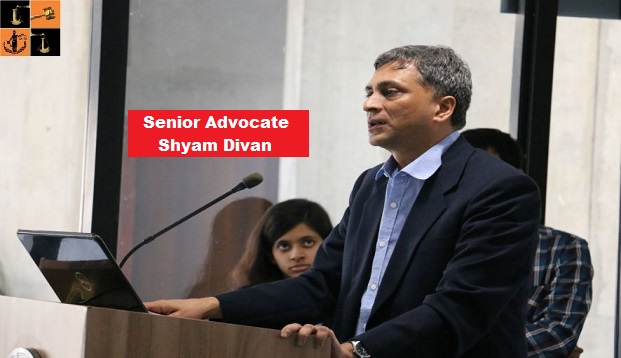
On Sunday, speaking in a Webinar Senior Advocate Shyam Divan called for adoption of an approach in Arbitration which is consistent with global norms
He remarked that when parties refer their dispute to an arbitration forum, it should be the end of the case and the award should not be set aside unless in the rarest of rare cases.
He quoted saying:
"When parties go before an arbitration forum or tribunal, that's the end of the case. You cannot really expect the award to be set aside except in- rarest of rare cases. That perhaps is also too wide. I think we need a statistical analysis in terms of how many (commonwealth) courts..as a percentage..upset an arbitration award and let us try to move towards that percentage."
 In his address, Senior Advocate Shyam Divan spoke at length on the need of minimal judicial interference and at the same time urged the Courts to look away in cases of individual injustices.
He said:
"No matter how clear the language of the statute is going to be unless our superior courts are willing to say (that) there will be individual cases of injustices but to remedy those individual cases, we are not going to drive coach and four through the general principles of law.. Unless you are willing to give up and allow individual case injustices, I don't think we can save even the 1996 Act post all the amendments."
He explained that the moment a 'the door is opened even a little', there will be several cases before the High Courts for judicial review of arbitral awards, trying to wedge the 'little exception' wider.
"We failed in 1940 Act to limit it.. I think the language in the 1996 Act was clear that you, the courts, have very limited roles but the cases came up.."
Divan also spoke on Arbitration being the only option for persons who want quick commercial dispute resolution and emphasized on the high level of effort which goes in preparing witness statement, pleading and arguments in an International Arbitration as opposed to a domestic arbitration. He called for transcription of proceedings even in domestic arbitrations.
Speaking about the COVID-19 pandemic, her termed it as a volatile, uncertain, complex and ambiguous stage, and stated that unlike the criminal justice system, arbitrations were still going on. He pointed that technological constraints were present even in developed countries.
Answering to a query, he told that once you have institutional arbitration, a specialized Arbitration Bar will automatically develop.
Responding to the question of Indian arbitrators being dominated by foreign arbitrators in International Commercial Arbitrations, Divan remarked that while some Indians have an outstanding reputation in the international arena, some are completely unfamiliar.
He said:
"Here, one must, I'm sorry to say, blame the Government of India because in a large number of high-stake public sector kind of arbitration, I have seen the kind of orders, transcripts and the conduct of the appointed arbitrator and it is really, really unfortunate. And that it what gives you a very poor name and standing."
Senior Advocate Shyam Divan stated that conducting an arbitration was a learning process for all.
"..there is a considerable amount of learning for judges who are entering, moving forward into an area where they are conducting or participating in an international arbitration. That is a nice thing. There is learning. But that requires giving up the fact that you were a Supreme Court of India judge, forgetting that and starting all over again. I think that is a human challenge..."
In his closing remark, he added that commanding control over an arbitration in international arbitration required very hard work.
Picture Source :



















